Red Bull’s team principal, Laurent Mekies, asserts that Max Verstappen, despite his disapproval of the upcoming 2026 Formula 1 regulations, continues to push the team for enhancements across all areas as he typically does.
Verstappen has emerged as the most outspoken critic of the next generation of F1 vehicles, which will significantly rely on electrical power and incorporate adaptive aerodynamic elements at both the front and rear.
The Dutch driver famously labeled the 2026 F1 cars as “Formula E with extra power” during initial testing sessions and reiterated his sentiments at the recent Australian Grand Prix, the season’s opening event.
After experiencing a profound sense of “emptiness” regarding the cars’ behavior when pushed to their limits in qualifying, Verstappen urged the FIA to intervene, highlighting broader worries among both drivers and spectators concerning the new rules.
These remarks have further fueled speculation that he might depart from F1 once his current Red Bull agreement concludes at the end of the 2028 season. Nevertheless, Mekies believes Verstappen’s drive within Red Bull remains unchanged, citing his ongoing commitment to working diligently behind the scenes as proof.
When questioned about any concerns regarding the four-time world champion’s desire to continue competing in the current F1 cars, Mekies responded: “Not at all. When he is with us, concerning his relationship with the team, there is absolutely no difference compared to the previous year in terms of how intensely he scrutinizes every detail and the precision of his feedback on every single aspect.”
“Therefore, he is capable of setting aside his personal opinions when he debriefs with us and when we are jointly striving for performance.”
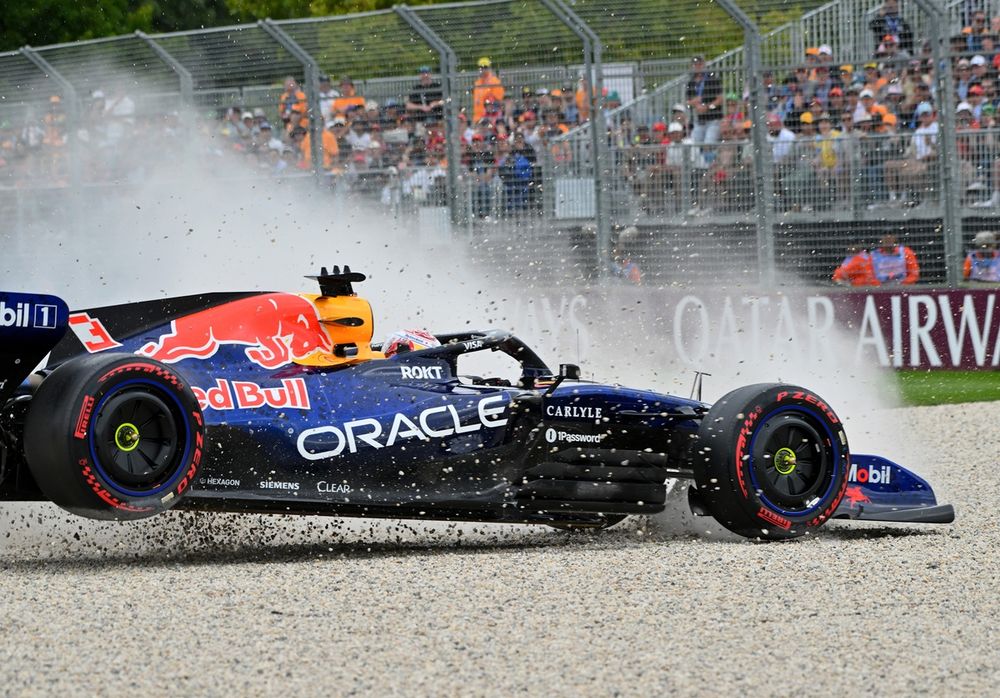
Max Verstappen, Red Bull Racing crash
Photo by: Getty Images
The newest hybrid power units in F1 are designed with an equal distribution of power generation between the internal combustion engine and their electrical counterparts, fundamentally altering how drivers compete and manage energy throughout a lap.
Given that the Albert Park Circuit features extensive stretches lacking significant braking zones, cars were frequently observed losing velocity even when drivers maintained full throttle.
When asked if Verstappen might eventually change his perspective on F1’s future car designs, Mekies emphasized the importance of first assessing their performance across a broader range of circuits. However, he did not discount the possibility of teams, F1 management, and the FIA collaborating to implement adjustments if deemed necessary.
“I believe Max genuinely cares about the sport and provides us with valuable insights into potential improvements,” the Frenchman commented.
“We are receptive. As a sport, there are ongoing discussions among the teams, the FIA, and F1 to determine the best path forward.”
“Clearly, this track [Albert Park] presents one of the greater challenges. It will be intriguing to observe after China what impact a less energy-intensive track makes. And then, if modifications are required, I am confident that as a sport, we will identify a method to implement them.”