James Vowles, who leads the Williams team, states that Formula 1 squads still have advancements to make in order to alleviate worries from racers regarding the amplified strain that will accompany the entirely redesigned 2026 vehicles. However, he downplays initial apprehensions related to the sweeping alterations.
The coming year will witness F1 undergoing alterations to both its chassis and power units, representing what is considered one of the most substantial regulatory shifts in the sport’s history. This transition places a significantly heightened emphasis on electrical energy, aiming for an almost even split with the internal combustion engine.
This adjustment implies that managing energy throughout a lap will emerge as a much more prominent factor. Preliminary findings from driver-in-the-loop simulators indicate that the 2026 models not only present a stark contrast in driving experience compared to the current generation but also impose a considerably heavier mental burden on the individuals behind the wheel.
Charles Leclerc from Ferrari expressed his discontent with how the fresh regulations influenced his driving within the team’s simulator. Nevertheless, it is understood that the majority of drivers who have experimented with the updated machinery in a virtual setting have done so using early models that do not entirely mirror the final version set to debut on the track at the close of January for winter testing.
Alex Albon, a driver for Williams, provided a more calculated assessment following his trial of what is believed to be a more advanced simulator concept. Yet, he too drew attention to the considerable effort required in managing the new car’s energy levels.
“It’s quite premature to form definite opinions at this stage, but drawing parallels with Formula E, which represents a more radical version of the direction we’re heading in, one can observe how drivers influence the race and qualifying through tactics such as energy deployment to enhance performance,” he remarked.

Alexander Albon, Williams
Photo by: Sam Bloxham / LAT Images via Getty Images
“While the changes won’t be quite as drastic, the drivers who possess the mental capacity to comprehend and effectively manage these demands will likely excel. Consequently, simulator work will receive significantly more emphasis during the off-season, ensuring we grasp the intricacies of the system and experiment with diverse driving techniques.”
Vowles, Albon’s team principal, advised against drivers overreacting to their initial impressions of the new regulations, while recognizing that efforts are needed to lighten the load on drivers.
“During the initial runs with our simulator drivers using the 2026 regulations, challenges were apparent due to the comprehensive changes in driving dynamics,” he clarified. “However, the subsequent runs revealed a gradual acclimatization, even though some concerns persisted. By the fourth iteration, discussions surrounding these challenges had diminished substantially, signaling a transition towards normalcy.”
“Hence, I urge caution when interpreting feedback. Inquire about the number of simulator sessions a driver has undertaken before evaluating their comments. Often, it reflects a preliminary assessment following a single session. Those who have engaged in four or five sessions tend to express a clearer understanding.”
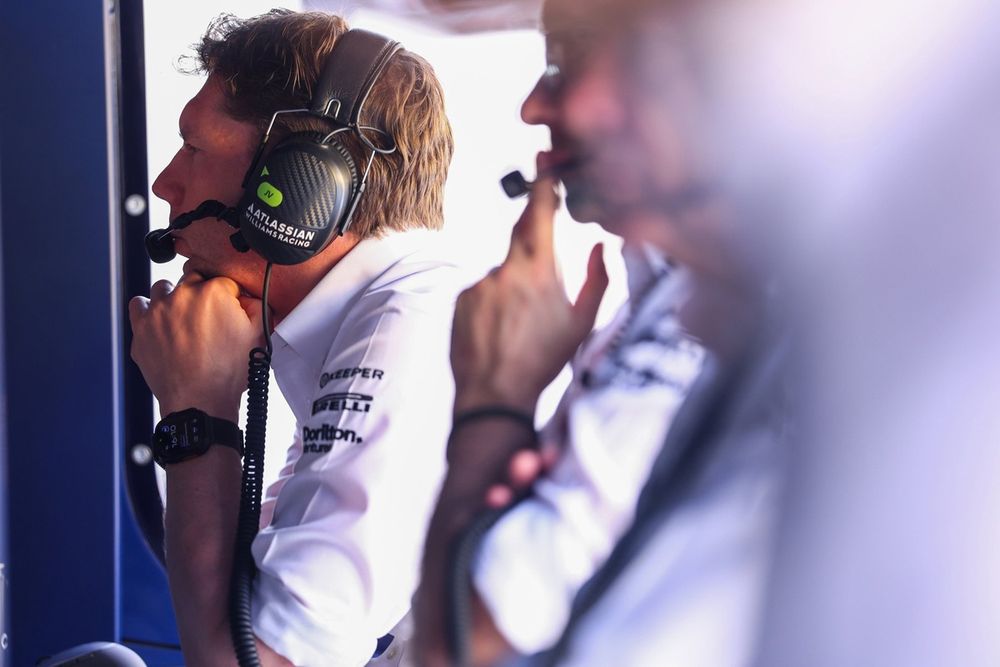
James Vowles, Williams
Photo by: Peter Fox / Getty Images
“Is it sufficiently refined? Considerable effort remains in optimizing the system and alleviating the workload on the drivers, as it presently presents a significant challenge. Nevertheless, with six months remaining, I am optimistic that we can resolve these issues.”
Vowles does not resonate with apprehensions over a potential decline in overtaking maneuvers resulting from the adoption of active aerodynamics on both the front and rear wings. Moreover, the current Drag Reduction System (DRS) is slated to be supplanted by a power-unit-driven overtaking mechanism termed “manual override mode.”
“I anticipate more pronounced variances in straight-line speeds along certain stretches of the track due to the increased flexibility in managing energy and utilizing various modes,” he elaborated. “Consequently, I believe that, at some junctures, overtaking opportunities may be amplified rather than hindered as a result.”
“The revised racing framework implies that drivers with faster vehicles will have access to a broader array of tools compared to the current season, even when accounting for the inclusion of DRS.”
In this article
Be the first to know and subscribe for real-time news email updates on these topics