With over a week remaining before the action resumed at Zandvoort for the Dutch Grand Prix, the Formula 1 community received a sudden wake-up call during its summer hiatus.
Precisely at 3:00 PM BST, Cadillac chose to drop an unexpected bombshell, revealing that Marcin Budkowski would be taking over from Graeme Lowdon as team principal, effective immediately.
In isolation, certain aspects of this revelation are not entirely shocking. Paddock insiders had long sensed that although the highly respected Lowdon played an indispensable role in establishing the team’s foundations, his tenure as team boss was never envisioned as a long-term arrangement.
Similarly, Cadillac’s choice of Budkowski raises few eyebrows. The Polish engineer, who completed his studies in France, boasts a diverse and extensive Formula 1 background, having held engineering positions at McLaren, Ferrari, and Prost, monitored regulations during a tenure at the FIA, and managed operations at Alpine.
Transition Occurred Sooner Than Anticipated, Cadillac Acknowledges
Instead, the primary uncertainty surrounds the schedule: what prompted this immediate change, and why has it occurred so rapidly?
While Cadillac emphasized across its official statement and subsequent press briefings that this swap was part of an “orderly succession,” the timing remains remarkably peculiar. Taking place during the traditional August shutdown and only midway through their debut campaign in grand prix racing, the move is exceptionally premature.
“As everyone is well aware, executing a leadership shift in Formula 1 is always a complex task,” Towriss remarked, suggesting that a flawless moment for such a restructure simply does not exist.
Nevertheless, the 54-year-old American executive conceded that the original roadmap did not involve executing this transition so rapidly. While parting ways with Lowdon was always on the agenda, it was not slated to happen quite this quickly.
“Graeme and I had ongoing discussions regarding an eventual handover,” he explained further. “Ultimately, I made this call because I believe we have a highly restricted timeframe to act.
“As we construct this project, we have the chance to create a fresh and groundbreaking setup. My goal was to avoid replicating existing models and then merely attempting to upgrade them. Consequently, I felt the moment to pivot arrived more quickly than we had first projected.”
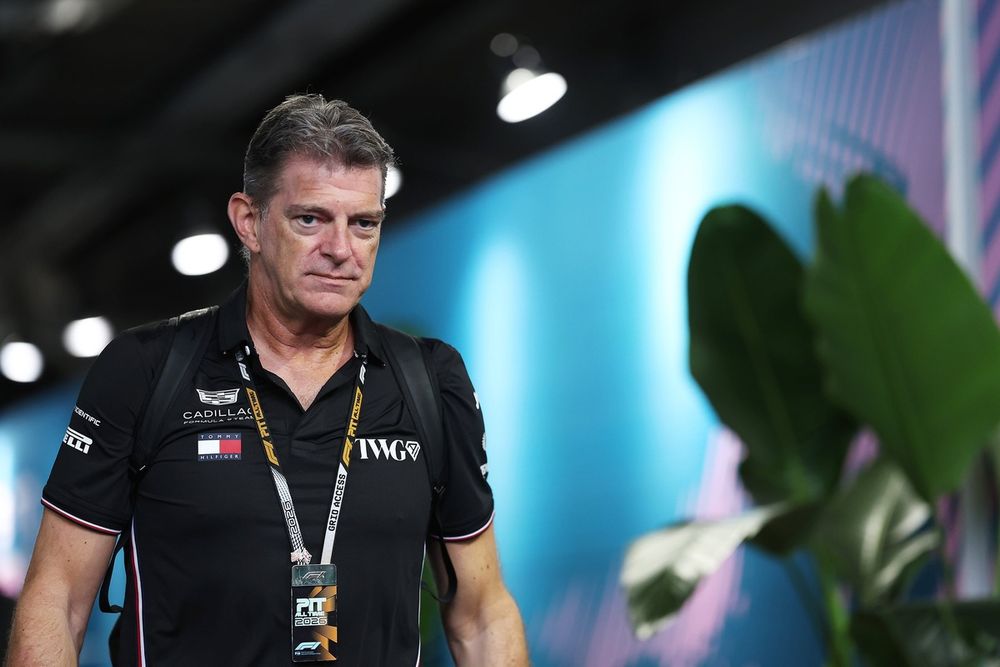
Cadillac reveals the decision was unilateral, with Lowdon receiving notification only on the morning the news broke
Photo by: Alastair Staley / LAT Images via Getty Images
This inevitably sparks speculation regarding Cadillac’s original schedule for phasing out Lowdon.
Yet, when prompted by Autosport on whether the initial strategy was to wait until their inaugural season concluded, Towriss remained evasive: “I prefer not to assign a specific timeline to it. It was really a matter of evaluating how things developed.”
Behind the scenes, certain aspects of the arrangement were finalized in a rush. Budkowski admitted to journalists that he had not yet had an opportunity to inspect the workshop fully, and Towriss confirmed that Lowdon was only briefed hours before the public disclosure.
“Graeme and I had our chat just this morning, so it was indeed a very late-stage discussion,” Towriss stated, while also confirming that the departure was not a joint agreement.
According to the team, their on-track performance was not the driving factor behind the shakeup. Rather, they wanted to ensure that the incoming team boss could directly shape the development of the 2027 car, an opportunity that would have vanished had they delayed the transition.
Why Restructuring is Vital: Communication, AI, and General Motors
More compelling than the timeline itself is the reasoning behind Cadillac’s desire for a fresh management style to guide their next chapter, alongside their selection of Budkowski.
Although the team’s relative competitiveness on the track is quite promising for a new entrant—perhaps even exceeding forecasts—behind-the-scenes workflows still require major adjustments. Chief among these issues is refining communication within the facility to prevent isolated divisions and ensure all areas collaborate with peak efficiency.
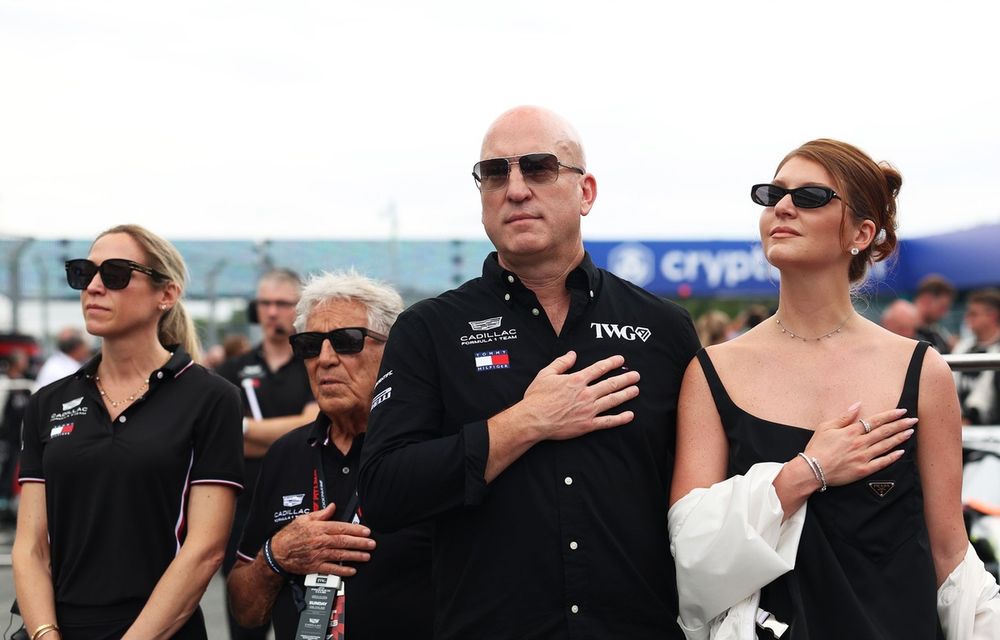
Towriss maintains that the US-based squad requires a fresh style of management for this upcoming phase
Photo by: Alastair Staley / LAT Images via Getty Images
Recognizing these challenges, Towriss views them as critical targets for the incoming management team to address.
“Many of these challenges, which definitely persist to varying extents, are simply part of our early growing pains,” the Cadillac Formula 1 chief executive remarked.
“For any startup venture, refining internal dialogue is a constant priority—ensuring structures are set up properly, targets are synchronized, and team spirit remains high during development. Such hurdles are entirely normal and are present in various forms.”
Beyond managing personnel, Towriss points out that a wealth of resources at General Motors remains underutilized. This includes GM’s proprietary artificial intelligence systems and computational tools, which Towriss expects Budkowski to exploit far more effectively than his predecessor.
In response to inquiries from Autosport about the future blueprint, Towriss explained: “Going forward, we want a structure headed by a highly technical team principal. Assessing Marcin’s record and his achievements in the sport, he perfectly matches that description.
“Additionally, Marcin’s recent spell outside the paddock gives him the objectivity to analyze the sport’s recent progress, evaluate the combined assets of TWG and General Motors, and formulate a modern blueprint for what a contemporary F1 organization should be.”
This vision directly connects to their technological ambitions: “Regarding artificial intelligence and related systems, we have barely begun to exploit the technological arsenal that GM can provide to our F1 operation via Cadillac, meaning there is significant untapped potential.”
During his initial press engagement as Cadillac’s team principal, Budkowski highlighted machine learning as a major focus, predicting that the grand prix teams of tomorrow will bear little resemblance to current operations.
“We are seeing massive shifts within F1 alongside broader global changes driven by the rapid adoption of AI,” he noted.
“While this technology is starting to penetrate F1, we are only in the pioneering stages. Ultimately, the structure of competitive teams will evolve dramatically compared to today’s setups.”
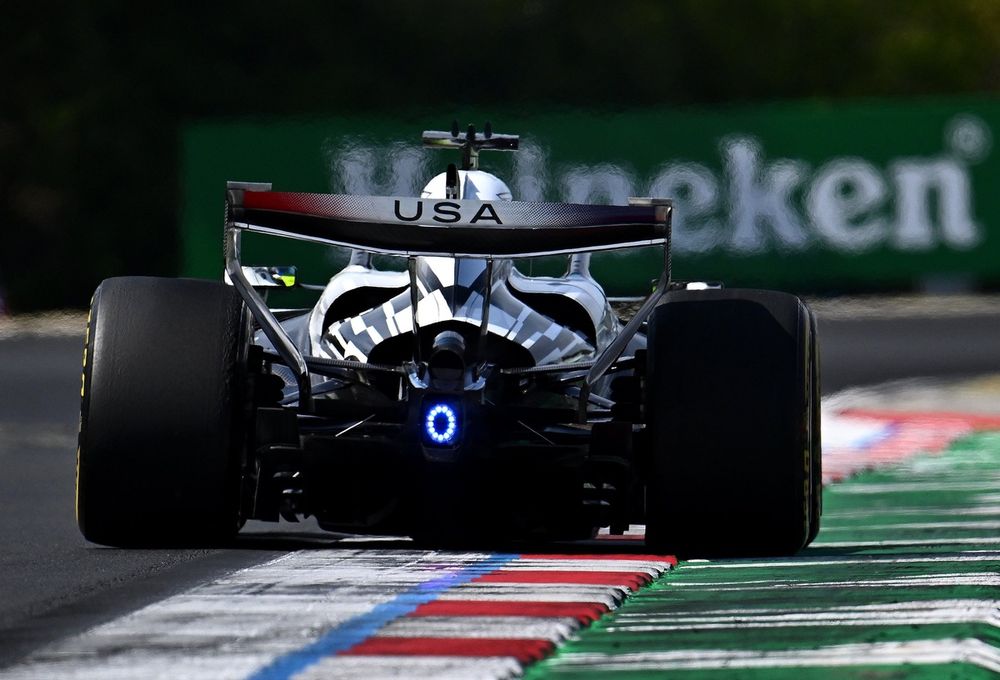
Towriss is convinced that the capabilities offered by GM’s resources remain largely untapped
Photo by: Guido De Bortoli / LAT Images via Getty Images
Budkowski must navigate these dual responsibilities simultaneously: accelerating development for the 2026 regulations and addressing immediate durability problems—which he labeled a top priority—while restructuring the team for the long haul and better leveraging General Motors’ technological stack.
This approach aligns with Cadillac’s desire to anchor more of the team’s core operations in America. Rather than scaling back their British base at Silverstone, they plan to integrate advanced resources and technical knowledge situated in the US.
“Naturally, because F1 expertise is heavily concentrated in Britain, we focused our initial hiring efforts there, but our expansion plans will now lean more heavily toward the US. We won’t be transferring staff, but rather expanding our operations in alternative sites,” Towriss clarified.
“We are exploring cutting-edge methods from external sectors, such as aerospace, which Marcin alluded to. Maximizing our synergy with GM’s existing tools is another key objective we plan to deploy across our various bases.”
Alongside resolving internal workflow barriers, this integration will form a cornerstone of Budkowski’s responsibilities. Despite the team’s youth, Cadillac management feels they have overlooked key assets, and unlocking GM’s engineering potential is seen as Budkowski’s primary mission.
Simultaneously, this sudden change highlights the ruthless nature of Formula 1, where job security is never guaranteed and immediate results are demanded, even for a brand-new project that might theoretically expect a grace period.
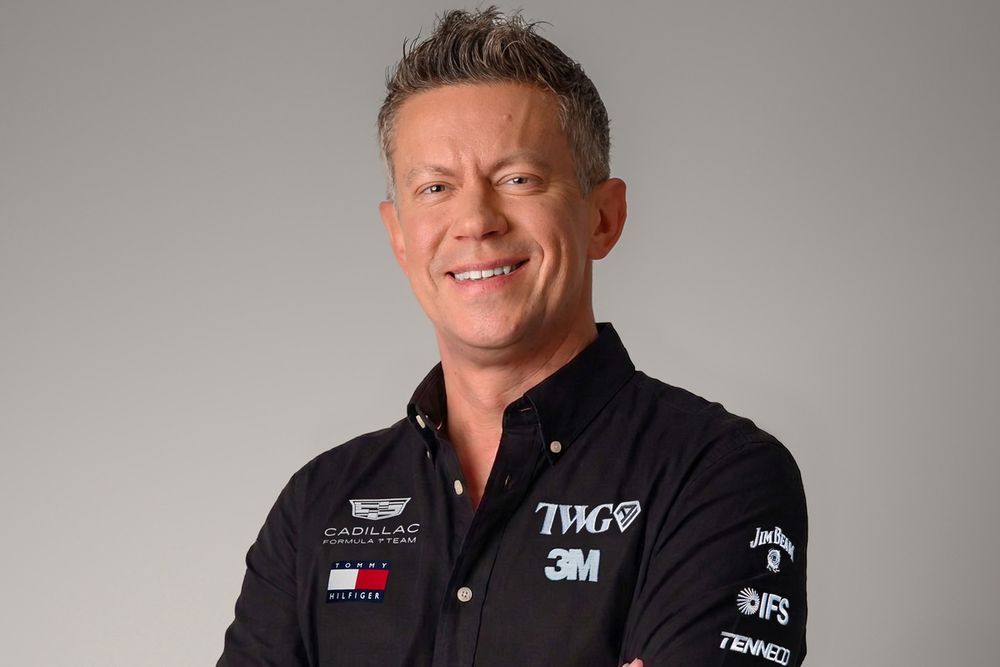
Budkowski is tasked with managing immediate priorities, especially tackling Cadillac’s reliability concerns, while defining a sustainable blueprint for the future
Photo by: Cadillac Communications
The newly appointed team principal will operate under identical high-stakes conditions: though his mandate is to build for the future, the weekly pressure of Sunday races remains the ultimate measure of success in F1.
“I do not feel overwhelmed by the pressure, but I fully expect high standards to be demanded of me. This is simply the nature of the job. Importantly, these demands are fair and align with the actualities of competing in F1,” Budkowski remarked.
“While everyone acknowledges the magnitude of the task we face, the resolve to succeed is unquestionable, and I am arriving with that very same determination.”
Cadillac’s approach is highly logical and reflects a growing trend among teams to install technical specialists in the top job—a move inspired by several recent success stories—though the abruptness of the transition remains startling for a freshman outfit.
Ultimately, it serves as a stark reminder of the uncompromising environment of Formula 1, where even the summer break offers no protection, and even the newest entry on the grid is subject to immediate pressure.
Your feedback matters!
Share your thoughts on what you would like to see us cover next.
Participate in our survey
– The Autosport.com Editorial Team