The recent Australian Grand Prix marked the conclusion of Formula 1’s preliminary “sham conflict,” as teams ceased concealing their actual capabilities, revealing the genuine competitive hierarchy.
Williams did not belong to this group, making their modest outcome more disheartening than truly unexpected. The team has lagged ever since being forced to cancel its participation in the Barcelona shakedown, prior to which reports indicated the vehicle had failed its crash test and exceeded its target weight by 20kg or more.
This largely explains the FW48’s performance gap to the leading contenders, though like other Mercedes engine clients, Williams lacks the same understanding as the factory team regarding how to fully exploit the power unit’s capabilities. Before the season, team principal James Vowles stated that fifth place in the constructors’ standings was their new minimum goal; however, in its current state, the team will find it challenging to secure the required top-10 finishes to maintain this position.
“Reducing the weight is not complex,” Vowles commented on the Sunday of the Australian race weekend. “I already have in my possession today all the technical plans not only to decrease it, but to achieve a significant underweight status. This information is available to us.”
“Were there no budget constraints, I would implement it immediately. It would be completed within a few weeks. That is not the case.”
Every composite part has a precisely determined “service life,” dictating how long it can stay on the vehicle before requiring replacement. The duration of each component’s life is assessed by the amount of operational stress it endures. Unlike materials like metal, carbon fibre exhibits minimal external indicators of wear prior to structural failure. Various non-destructive examination techniques, including X-rays and ultrasound imaging, exist, yet even these do not guarantee the detection of impending breakdowns.
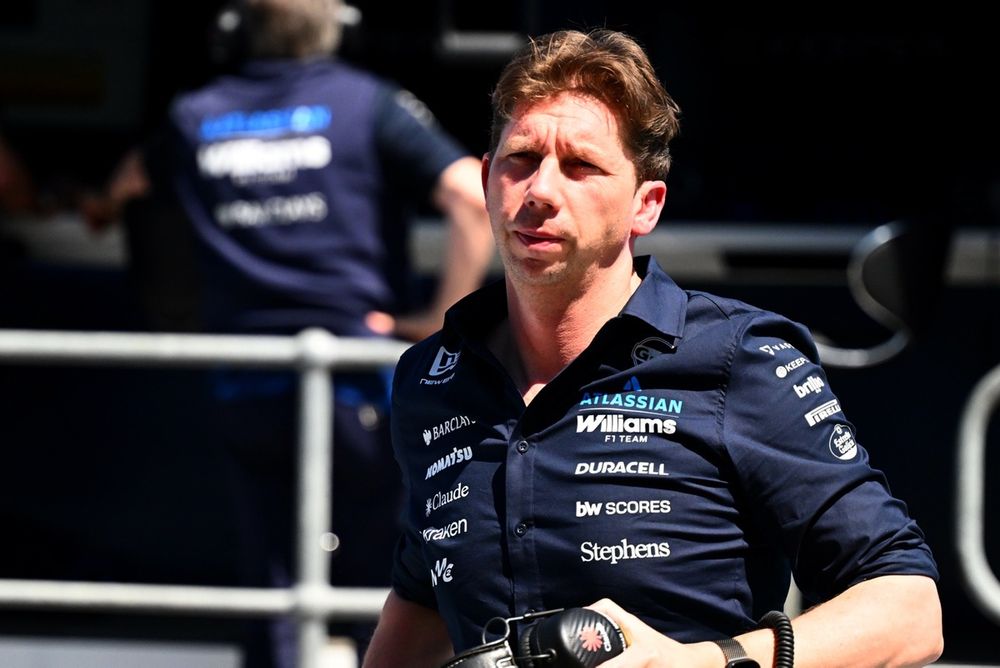
James Vowles, Williams
Photo by: Mark Sutton / Formula 1 via Getty Images
Vowles explained that it is more cost-effective within the budget cap to implement weight reduction through pre-planned mid-season enhancements and routine replacements for parts nearing the end of their service life, rather than attempting an immediate, comprehensive overhaul. This aligns with the principle of weight reduction as a strategy of incremental gains, meticulously trimming mass throughout the vehicle instead of targeting a single, excessively heavy component.
Additionally, shipping new parts incurs financial consequences, as transportation expenses are now subject to the budget limit.
“It presents a challenge,” Vowles remarked, “But it’s a beneficial challenge, if you understand my point. The cost cap remains, on balance, highly advantageous.”
Excessive weight now incurs a more severe penalty under the updated power unit regulations because its influence on cornering speed impacts energy recovery, subsequently affecting power delivery in other areas. As the energy storage system is continuously drained and replenished, this disadvantage tends to accumulate over the course of each lap.
“We have an ambitious strategy to regain our competitive position,” Alex Albon stated. “Despite our utmost efforts, it will still require time. Nevertheless, the team is working relentlessly.
“A massive effort is underway at the factory to restore us to our rightful place. I believe, theoretically, it’s quite evident to us where the performance gains lie. Considering weight alone, there’s clearly significant potential there.”
“Regarding the aerodynamic aspect, it’s been fascinating to observe how other teams have configured their vehicles. We’ve noticed various design philosophies in practice. I believe our approach represents an extreme interpretation of a particular concept.”
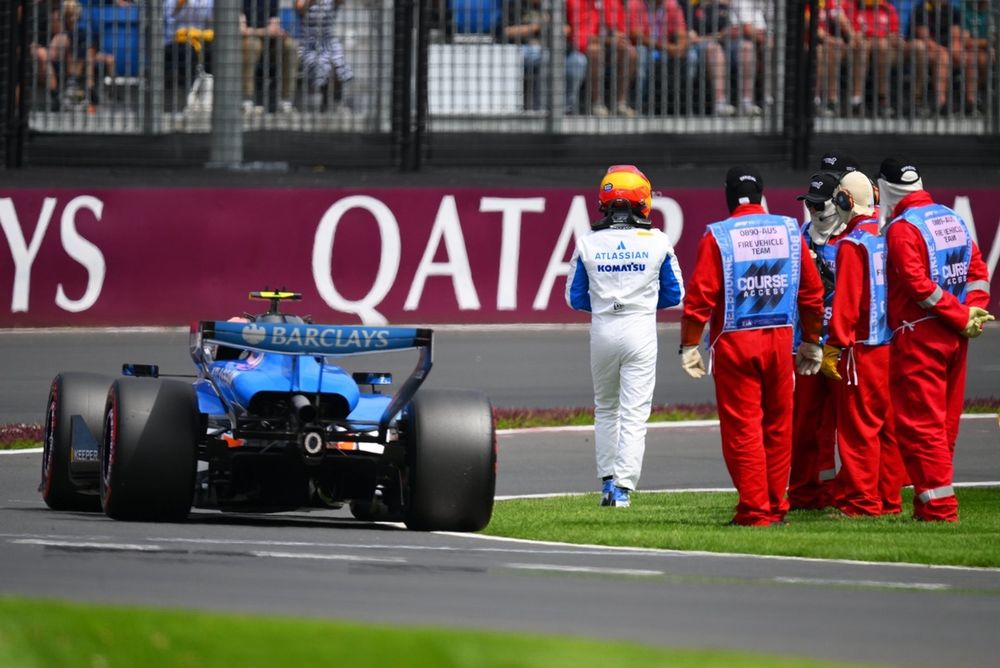
Carlos Sainz, Williams
Photo by: Simon Galloway / LAT Images via Getty Images
An additional performance factor that the team might be able to resolve more quickly is dependability. Carlos Sainz’s car stopped at the pit lane entrance during Free Practice 3 in Australia and could not be repaired in time for the qualifying session.
This marked the initial opportunity for Mercedes’ client teams to directly compare their electrical power management tactics with the factory team under identical conditions. Consequently, having only one of their two cars on track turned out to be detrimental, though considering the FW48’s weight problems, the primary concern was Williams’s standing among the other midfield competitors.
“It required a qualifying session for us to fully grasp our performance deficit concerning [Power Unit management],” Vowles noted. “That likely amounts to around three tenths of a second, in that approximate range.”
“Furthermore, I believe when only one car is operating, both are necessary to truly allow them to cross-reference and refine energy deployment techniques.”
“That also contributed to a minor disadvantage we experienced yesterday [during qualifying]. However, I believe the primary and most significant issue is weight.”