Given the unprecedented team valuations and inherent complexities, any proposed route for the Chinese automotive giant BYD to join Formula 1 as a twelfth participant faces significant obstacles.
The prominent Chinese electric vehicle manufacturer has expressed its aspiration to enter Formula 1; Stella Li, BYD’s Executive Vice President and CEO for the Americas, Europe, and the Middle East, has consistently articulated her view of the global championship as an ideal platform to enhance the company’s brand image.
The exact method by which BYD might secure an F1 slot continues to be a topic of discussion, but as previously analyzed, three plausible approaches seem to exist. One is a primary sponsorship deal, similar to Gucci, which secured co-naming rights for the Alpine team starting in 2027, or even a complete brand identity acquisition of an existing team, akin to Alfa Romeo’s arrangement with Sauber for several years. A second option involves acquiring an already established team, and finally, establishing an entirely new, twelfth expansion team from its inception.
Following initial discussions held earlier this year around the time of the Chinese Grand Prix, Motorsport understands that Li plans to attend the Monaco Grand Prix next week and will convene with F1 executives before the race weekend. However, it is understood that these are still preliminary investigative stages, far from any definitive decisions regarding BYD’s next steps.
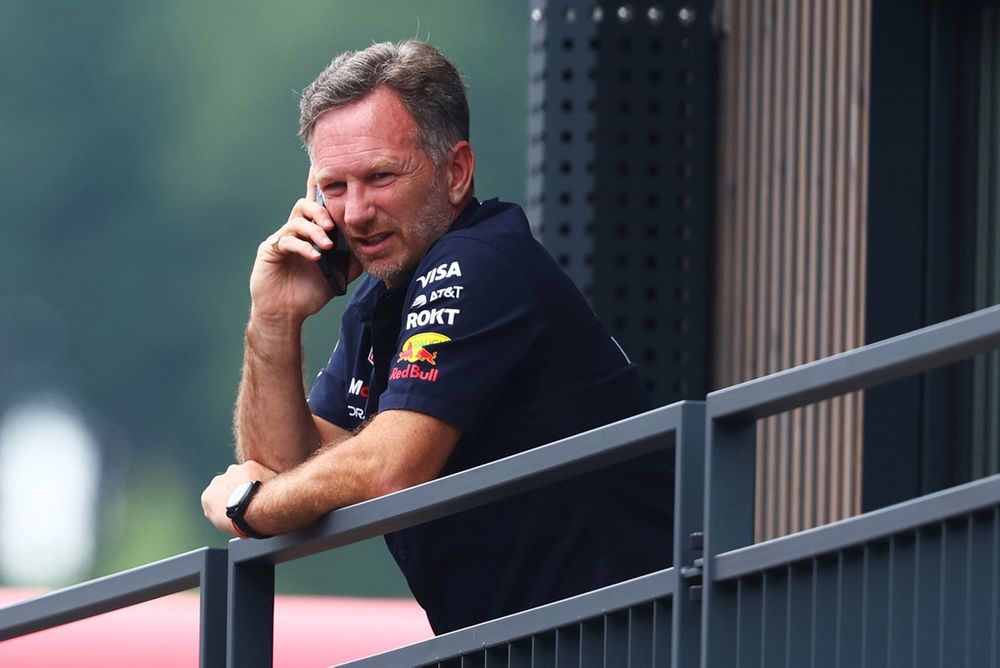
Photo by: Red Bull Content Pool
However, over the past few weeks, the prospective bid from the Chinese corporation has become associated with a possible re-entry into F1 for Christian Horner. Following his departure from Red Bull, Horner is now technically free to return to the world championship and is known to have engaged with various existing and potential F1 teams and investors regarding his future endeavors.
Horner was captured in photographs alongside Li at the Cannes Film Festival, an event that appeared to be a carefully orchestrated public relations opportunity. This might have aimed to lend additional credibility to BYD’s interest in an F1 entry or to keep Horner’s name prominent, potentially exerting leverage on other projects the former Red Bull F1 principal has been involved with.
Horner is also participating in a consortium aiming to acquire Otro Capital’s 24% stake in the Alpine team, a share his group is competing with Mercedes for. It is also believed that other brands are poised to rival entities like BYD for an eventual F1 entry.
Regardless, the option of sponsorship is readily attainable. However, if retaining ultimate control is paramount, then all avenues point towards either acquiring an existing team or establishing a new, twelfth expansion team. Nevertheless, these paths are likely to prove arduous.
In recent months, multiple investment funds and a significant automotive conglomerate are understood to have presented acquisition offers exceeding two billion dollars to various teams, only to be met with polite refusals. No entity is currently inclined to sell, even when presented with sums that, merely three or four years ago, would have vastly exceeded the valuation of a leading team. The prevailing sentiment is that team valuations will continue to escalate in the coming years. Consequently, no one desires to risk regretting a premature sale by losing patience before the opportune moment to sanction such a transaction.
The concept of founding a twelfth team is even more complex than purchasing an existing one, especially considering F1’s recent, drawn-out approval of the Cadillac-GM project for an eleventh team. F1 has yet to fully grasp the commercial or logistical implications of adding an eleventh team, and tightly packed grand prix paddocks, such as those in Monaco or Montreal, cannot instantly accommodate additional space. Furthermore, given the aforementioned team valuations, there is also the consideration of agreeing upon what will likely be an even higher anti-dilution fee.
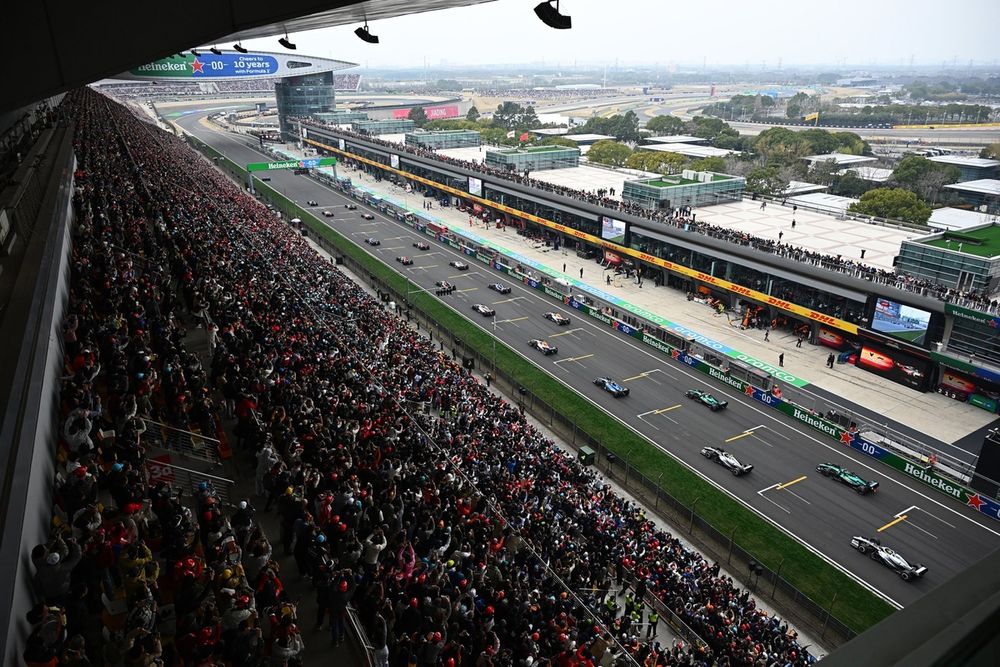
Photo by: Guido De Bortoli / LAT Images via Getty Images
BYD certainly possesses the financial capacity to comfortably manage such costs and partner with an existing OEM for initial technical assistance. However, according to sources within the Montreal paddock, the timing for introducing a twelfth team does not yet appear optimal, even though F1 currently has the regulatory framework to expand to twelve teams.
While the forthcoming Monaco race weekend might provide additional insights into the prospective direction, there is currently insufficient evidence to suggest that BYD’s interest will materialize into a serious endeavor, beyond carefully constructed speculation that has already generated considerable publicity for all parties involved.
Nonetheless, this situation underscores the notion of F1 as a seller’s market, and it highlights the burgeoning interest from the vast Chinese market, an area that both F1 CEO Stefano Domenicali and FIA president Mohammed Ben Sulayem are keen to further cultivate.