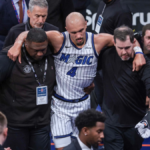
It has been a pair of nail-biting victories, yet the Milwaukee Brewers hold a 2-0 advantage over the Tampa Bay Rays in the World Series, putting them just two triumphs shy of securing the initial title in their team’s existence. Looking at history, clubs holding a 2-0 cushion in a seven-game matchup capture the overall victory 83 percent of the time. While Milwaukee currently occupies the dominant position, they remain fully aware that their task remains unfinished and still has a ways to go.
“That roster is talented,” Milwaukee manager Pat Murphy stated following Game 2. “They represent the premier squad in the American League, a fact I am fully conscious of. I recognize that numerous circumstances favored us, and I acknowledge that reality. I hold Tampa in high regard, and our journey remains far from complete.”
Action now transitions to Tropicana Field, where Tampa Bay will attempt to overturn the 2-0 margin—a feat untouched during the Fall Classic for three decades. On a positive note, one must only look as far as the previous year to find the most recent instance of an organization rallying from two games down in a seven-game set. Such a comeback is uncommon, yet far from unheard of, and this Tampa Bay squad possesses the capability to accomplish it.
Across 95 attempts, a total of 16 franchises have successfully rallied from an opening 2-0 disadvantage in a seven-game format. Half a dozen of these 16 instances took place prior to 1980, while three played out during 1985 by itself. Listed below are the six 0-2 turnarounds that transpired over the preceding four decades:
The two most recent 0-2 rallies in World Series history transpired during the sixth year of their respective decades. Could this serve as a favorable sign for Tampa Bay? They certainly ought to hope it does. The Rays require every possible advantage if they intend to defeat Milwaukee four times over the upcoming five contests. Keep in mind that the 2004 Boston Red Sox stand alone as the sole squad in baseball history to overcome an even steeper 3-0 hole.
Securing a victory in Game 3 is an essential requirement for Tampa Bay.
Milwaukee’s most recent stretch dropping four out of five contests occurred between August 10 and August 14 amid a West Coast road swing featuring matchups in San Diego and Dodger Stadium. They similarly dropped four of five games between July 8 and July 12 while away from home, during a road trip against St. Louis and Pittsburgh. Furthermore, the Brewers experienced losing skids of six and four games back in April. Therefore, a Tampa Bay resurgence may be unlikely, but it remains achievable.
Outlined below are the crucial elements that must unfold for Tampa Bay to pull off this unlikely turnaround and capture the World Series crown.
1. Eliminate unforced errors and poor execution
Typically, Tampa Bay is the club provoking opponents into careless mistakes, and indeed, Milwaukee has hardly been immaculate during this World Series. David Hamilton was thrown out attempting to turn a double into a triple during Game 1. Cooper Pratt bounced an opening throw in Game 1, paving the way for Tampa Bay’s four-run rally. The initial pair of contests has been noticeably lacking in clean execution.
Nevertheless, Tampa Bay has repeatedly sabotaged its own efforts. Most severely, Jonathan Aranda misplayed a foul popup during the opening inning of Game 1, extending the at-bat for William Contreras. Contreras subsequently produced a single that contributed to a two-run frame. Later in that same contest, Aranda allowed a grounder to trickle right through his legs in a manner reminiscent of Bill Buckner, directly accounting for Milwaukee’s third run.
Additional missteps have surfaced across the World Series, and Tampa Bay simply cannot afford to grant Milwaukee bonus outs, extra bases, or free runners. Milwaukee has continuously capitalized on these misplays. Errors are a natural part of baseball, but Tampa Bay must minimize them going forward, or preferably wipe them out altogether.
“We certainly did not deliver our most refined performance by any metric,” Tampa Bay manager Kevin Cash remarked following Game 2. “We take great pride in offering our pitchers maximum defensive support and making the plays required behind them. Today was likely not our finest outing.”
Tampa Bay is committing far too many errors to withstand the relentless Milwaukee squad
Matt Snyder

2. Receive an elite performance on the mound from Freddy Peralta
Every one of the 0-2 turnarounds referenced earlier shares a crucial detail: the Game 3 starting pitcher delivered a stellar performance. A year ago, Shane Bieber surrendered just two runs across six frames to ignite Toronto’s rally. During 2023, Brandon Pfaadt tossed 5 ⅔ scoreless innings for Arizona. In the 1996 World Series, David Cone stepped up for New York. Back in the 1986 World Series, Bob Ojeda delivered for New York as well.
Freddy Peralta, recognized as the ALCS Most Valuable Player and a former Milwaukee pitcher, carries the responsibility of providing Tampa Bay with a dominant Game 3 outing. He has performed exceptionally during this playoff run, giving up merely two runs over 16 ⅔ frames spanning three starts along with a bullpen outing. His overall tenure with Tampa Bay has been outstanding. From August 26 onward, Peralta—brought in from New York at the trading deadline—boasts a remarkable 0.88 ERA across nine starts, one relief assignment, and 50 ⅔ innings pitched.


“I commend Freddy significantly for being an excellent pitcher while remaining open enough to admit, ‘I felt uncomfortable with certain adjustments and wish to return to my core strengths,'” Cash expressed before the World Series began. “He maintained that mindset throughout his two months with our group, elevating his game in September and continuing that upward trajectory into October.”
Should Tampa Bay hope to turn this into a true contest, the effort relies heavily on Peralta. Beyond pitching effectively, he needs to work deep into Game 3, given the uncertainty surrounding Tampa Bay’s middle relief options. Through two matchups, the impression remains that Tampa Bay lacks sufficient pitching depth to conquer Milwaukee.
Taking things one contest at a time, Peralta takes the mound for Game 3, needing a top-tier outing to keep any rally hopes alive.
3. Capitalize on the home-field environment
The vast majority of clubs perform more effectively in their home stadium compared to road venues, driven by countless factors. Roster construction often aligns with specific field dimensions. Athletes have access to superior amenities and training technology (such as the stationary Trajekt hitting device). They enjoy resting in their own homes and draw energy from supportive home crowds, among numerous other advantages.
Tampa Bay fits this exact mold. Finishing with a 55-26 mark, they matched Milwaukee (fittingly enough) for the premier home record in Major League Baseball during the regular season. Tampa Bay’s roster is specifically engineered to take advantage of Tropicana Field’s firm, fast artificial surface. Because grounders skip across the field quickly, their batters frequently hit balls on the ground and sprint aggressively, maximizing their unique venue advantage through masterful ground-game tactics.
Conversely, Milwaukee posted the second-highest road winning percentage across the major leagues during the regular campaign. They achieved a 48-33 record away from American Family Field, trailing only Los Angeles and their league-leading 49-32 away mark by a single game. If any team is thoroughly unfazed by playing inside Tropicana Field, it is this Milwaukee club.
|
Tampa Bay home record |
55-26 |
+51 |
|
Tampa Bay road record |
43-38 |
+35 |
|
Milwaukee home record |
55-26 |
+166 |
|
Milwaukee road record |
48-33 |
+48 |
The overall run differentials highlight the dynamic. Milwaukee is dominant on their home turf and remains exceptionally capable away from home. Ultimately, they represent an elite club regardless of venue. Still, Tampa Bay can find comfort in knowing the matchup shifts south, allowing them to host Games 3, 4, and potentially Game 5 on their own field. Any potential turnaround must be sparked in front of their own fans.
“I am confident our crowd will bring immense energy, eager to witness us return home and reset our momentum,” Cash noted following Game 2. “We are sending a top-caliber starter to the mound, much like their side. There is deep belief in this group’s resilience. They have answered challenges throughout the entire year, and they will keep doing so.”
4. Benefit from favorable bounces
Facing immense pressure, Tampa Bay requires every potential break to go their way. A close call on a pitch during a high-leverage moment (along with a successful ABS appeal). A soft contact flare dropping inches inside the line (or drifting harmlessly foul). An exceptional fielder mishandling a routine play. Small advantages of that nature.
Good fortune often trumps pure skill, but in order to triumph over Milwaukee in four of the remaining five contests, Tampa Bay must combine good fortune with outstanding execution.