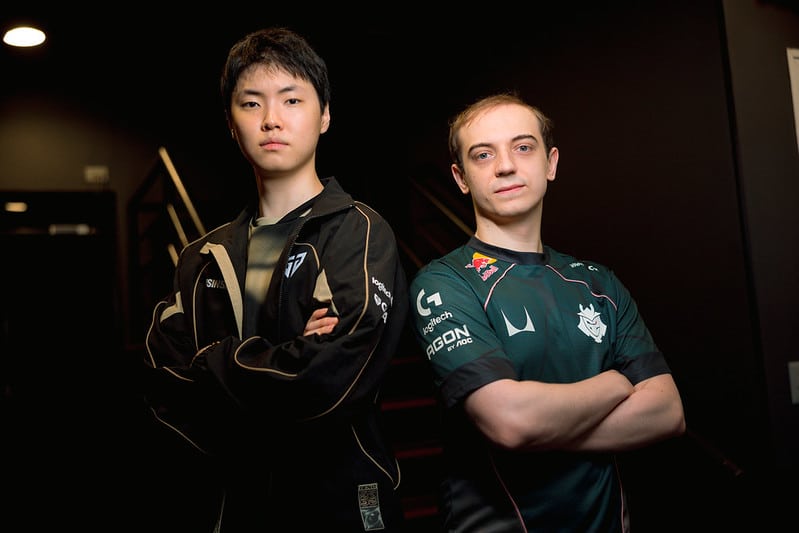
Just under two weeks prior, G2 Esports astonished fans of League of Legends. In the First Stand 2026 semifinals, the formidable European squad did more than just defeat Gen.G; they utterly dismantled the team widely considered the world’s best, securing a decisive 3-0 victory.
In a single match, G2 completely reversed prevailing expectations and rekindled a level of optimism that Western teams hadn’t experienced in many years.
This outcome was astonishing to many, largely due to Gen.G’s standing then, and even now. The Korean team had occupied the top spot in Riot Games’ Global Power Rankings before the competition, epitomizing the LCK’s consistent strength and international dominance. Conversely, G2, despite being the dominant force in the LEC, had spent years excelling regionally without converting that success into international trophies.
Therefore, this was more than just an unexpected upset; it posed a direct challenge to the long-held belief that Western teams simply couldn’t measure up to their Eastern counterparts.
For an extended period, the perceived “chasm” between Western and Eastern teams has been a frequently discussed subject within the League of Legends esports landscape. Past performances, such as Fnatic’s journey to the 2018 Worlds Final and G2’s MSI win and Worlds Final appearance in 2019, instilled genuine hope that the West could truly contend. Nevertheless, since those moments, the narrative has only intensified, with many asserting that even the premier Western teams are, at best, on par with mid-tier Eastern ones.
So, does G2’s outcome at First Stand 2026 signify a standalone surprise, or does it hint at a more profound transformation occurring within the global competitive scene?
Understanding “The Gap” in LoL Esports
The term “the gap” in League of Legends esports is frequently employed as a simplistic descriptor for the disparity in performance between Western and Eastern teams, but in truth, it encompasses multiple layers of advantages that extend beyond mere wins or losses.
Ultimately, results are paramount, and over the last decade, teams from the LCK and LPL have consistently claimed international championships. In contrast, Western teams have only achieved significant tournament runs on rare occasions, solidifying the perception that the pinnacle of play remains concentrated in the East.
However, this disparity is not only evident in final rankings but also in the sheer number of genuinely competitive teams from each region. Eastern regions routinely field multiple teams capable of realistically challenging for a title, whereas the West typically relies on one primary representative, occasionally two in stronger years.
This dynamic creates differing levels of pressure and likelihood, as Eastern teams are not only individually stronger but also possess more top-tier teams, making it more challenging for Western organizations to consistently break through across an entire tournament.
Privilege and Systemic Foundations Fuel the Skill Discrepancy
The performance gap between Western and Eastern teams doesn’t stem from a singular origin, but rather from a complex interplay of factors that accumulate over time. It is influenced by who has the opportunity to play, the methods by which they are trained, and the environments in which they develop, collectively fostering distinct competitive ecosystems.
Crucially, it is vital to recall that pursuing a career as a professional esports player remains a privilege.
Devoting thousands of hours to mastering a game at an elite level necessitates a dependable internet connection, access to a capable computer, and the necessary time and support to commit to self-improvement. For many, these prerequisites are not readily available, and societal expectations concerning education, career trajectories, gender, age, and social standing can significantly restrict who even has the chance to attempt it.
This inherently shrinks the pool of potential talent, particularly in regions where esports is not fully recognized or accepted as a viable profession.
Culture subsequently plays a pivotal role in shaping how that talent is nurtured. In nations like South Korea and China, esports is widely acknowledged as a legitimate career path, enjoying strong social acceptance and clear pathways for advancement. Players mature in environments where competition is encouraged, discipline is expected, and continuous improvement is approached with seriousness. In Western regions, while conditions are improving, esports is often still perceived as an uncertain endeavor, which can impact both dedication and long-term development.
Furthermore, infrastructure magnifies all these differences. Larger player bases — notably in China — cultivate more intense competition and elevate the overall standard of play across every rank. This leads to superior practice environments, more robust scrim partners, and increasingly refined regional leagues.
Over time, this continuous pressure yields not just a greater quantity of players, but better ones, reinforcing a cycle where strong competition inherently fosters even stronger competition.
G2’s First Stand Performance Illuminates a Path for Western Teams
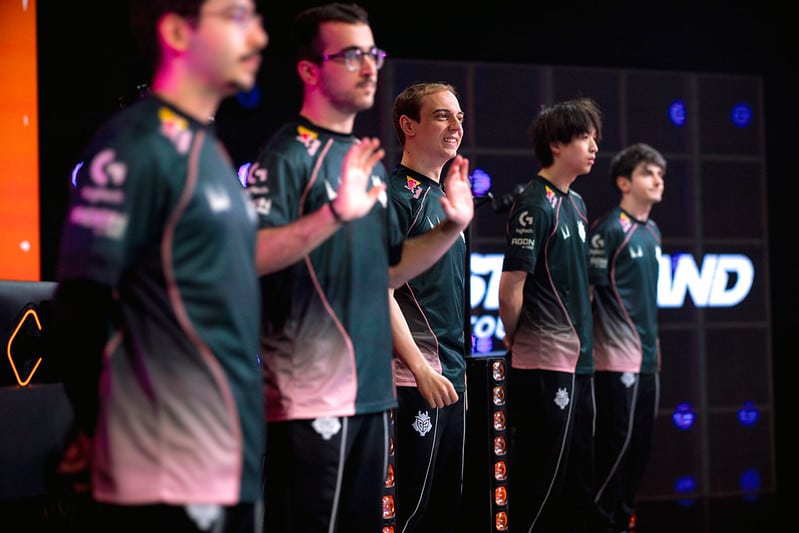
G2’s triumph over Gen.G at First Stand feels like a pivotal moment, or at the very least, a strong indicator of one. This significance stems less from the immediate result and more from what G2 embodies as an organization: a team that has consistently invested in continuity, maintaining a core roster for several years, all supported by a well-structured staff.
Many of these components, ranging from long-term player contracts to the integration of psychologists and performance coaches, and routine bootcamps in Korea and China aimed at enhancing practice quality, are strategies G2 has actively embraced.
In this regard, the victory is not merely an unexpected outcome attributable to the players’ dedication but also a reflection of gradual shifts occurring within the Western esports ecosystem, particularly in EMEA. A growing number of organizations are beginning to move away from constant roster upheavals, instead favoring stability, and placing greater emphasis on player development, expanded staff, and superior training environments. The concept of cultivating a team over multiple years, rather than reconfiguring it each split, is gaining traction, though it is not yet universally adopted.
Moreover, it appears that organizations are finally considering player chemistry and whether teammates would genuinely get along.
Nevertheless, G2 remains somewhat of an anomaly rather than the standard. While the region is evolving, not every team possesses the resources to commit to such long-term endeavors. This makes it challenging to accurately gauge the extent of overall improvement, as progress is inconsistent and frequently confined to a select few organizations.
Furthermore, broader tournament outcomes have not fully shifted. Teams from the LCK and LPL continue to secure international championships — such as Bilibili Gaming clinching the First Stand 2026 Final against G2 — relying on their profound talent pools, unwavering consistency, and well-established organizational frameworks. While Western teams may be refining their preparation and strategies, consistently translating this into sustained success across entire tournaments remains a significant hurdle.
What G2’s impressive run indicates is not that the disparity has vanished, but that the methodology for bridging it is becoming more discernible. The West is starting to integrate some of the foundational structures and philosophies that have characterized Eastern success, and while immediate, widespread results are not yet apparent, signs are beginning to emerge in moments such as this.
Whether this marks the genesis of an enduring shift or simply another peak performance from a single team will hinge on how broadly these modifications are adopted and how consistently they are maintained.
The post Does G2 Esports’ performance at First Stand 2026 signify a narrowing gap between Western and Eastern teams in LoL Esports? Perhaps.