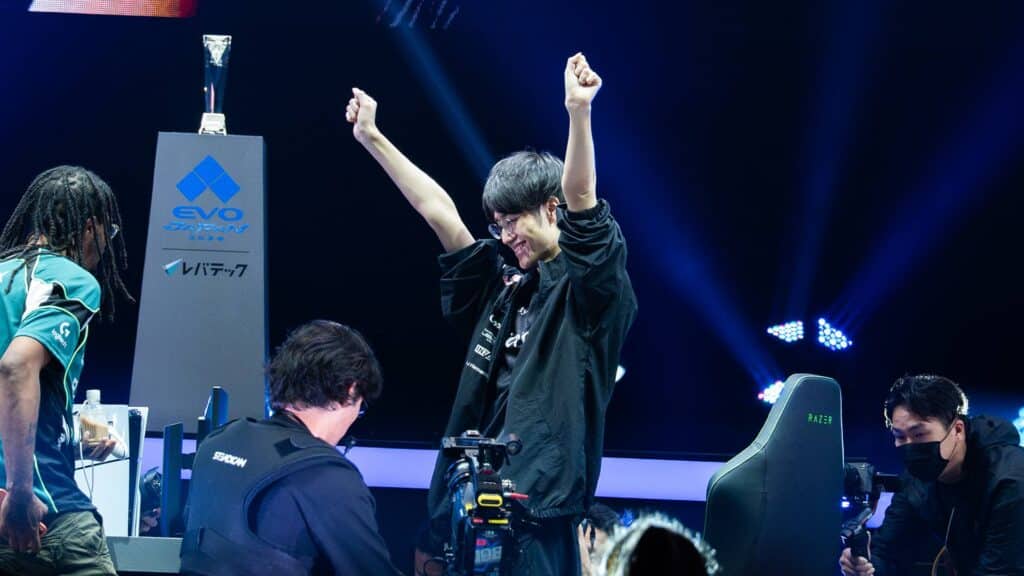
On May 1st, 2026, Victor “Punk” Woodley expressed on X that his encounters at Evo Japan have consistently been negative annually, suggesting that his recent participation might mark his last visit to the competition given his prior experiences.
Regrettably, this issue is not unique to him, as many prominent players throughout the fighting game community have echoed similar frustrations.
Individuals like Christopher “NYChrisG” Gonzalez and William “Leffen” Hjelte collectively hold the view that the event organizers made numerous errors detrimental to competitors, which subsequently impacted the quality of the broadcast for remote spectators.
For many years, Evo has stood as the pinnacle of the FGC, carrying with it the anticipation that the competition would proceed without hitches and provide an enjoyable experience for all remote observers. Nevertheless, in more recent times, the tournament has broadened its scope, a development spurred by the acquisition of the event by RTS, a company backed by the Saudi government.
What used to be an event confined solely to Las Vegas has transformed into a global circuit, thereby opening opportunities to hundreds, if not thousands, within the FGC. Despite some condemnation from elite FGC competitors, like Tekken pro Arslan “Arslan Ash” Sidiqque, the tournament’s international growth has undeniably brought recognition to regional talents who lack the financial means for travel to Las Vegas.
Despite this, every newly established tournament retains the “Evo” brand, inherently implying the same standard: a seamless competition and an unblemished viewing experience. Evo Japan, however, failed to meet any of these criteria.
The Indicator: Evo Legends Live: Daigo Versus MenaRD
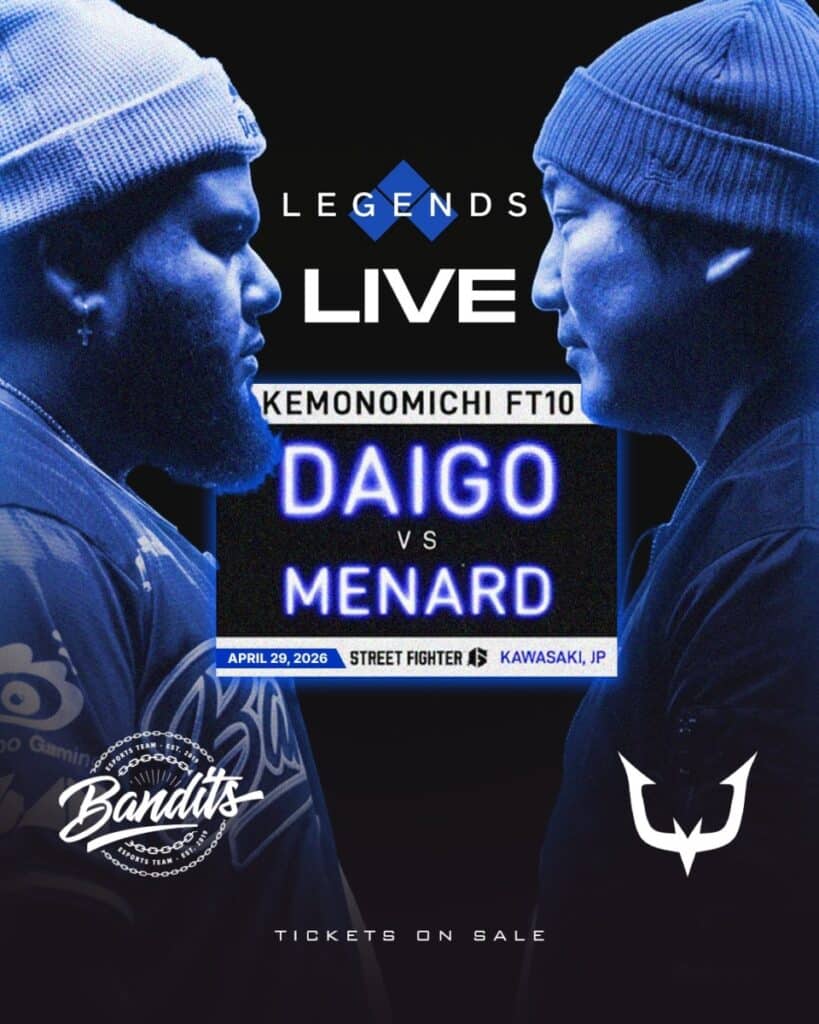
The tournament’s impending troubles should have been clear given that the preceding day’s event was plagued by technical glitches. This earlier event, Evo Legends Live, showcased the primary spectacle: Daigo versus MenaRD, a first-to-ten contest between a pair of iconic Street Fighter competitors.
Preceding the featured bout were several preliminary matches. Astoundingly, the initial one required more than sixty minutes merely to commence. The subsequent match faced an almost identical delay. Such extensive waiting periods are astonishing, especially since the actual gameplay for each match was relatively brief. Consequently, the entire broadcast duration was effectively doubled due to these hold-ups.
Given these circumstances, one might optimistically presume that the organizing team rectified their errors, leveraging their capacity to rescue a significant FGC occasion to then host the premier tournament of the current year, correct?
Regrettably, that wasn’t the reality.
Evo Japan Lacks the Merit for the “Evo” Designation
On the subsequent day, elite competitors from diverse game titles articulated their displeasure concerning the competition. Punk reported that the event’s consoles suffered from overheating, leading to his losses as his character would unexpectedly move backward and become unresponsive.
Conversely, individuals such as Benjamin “Problem X” Simon expressed grievances regarding the tournament organizer’s choice to prohibit participants from warming up prior to their contests.
Arguably, the sharpest critique originated from long-time fighting game player NYChrisG, who penned an extensive post detailing his frustrations mid-event. In summary, he initiated his tirade by stating that although he had previously heard every Evo Japan was a “terrible competition,” he felt compelled to “witness it personally.”
“Problems arose immediately,” NYChrisG recounted in his impassioned statement, emphasizing that “Disqualifications and other administrative tasks were so delayed that I managed to arrive nearly sixty minutes past my scheduled time.”
Due to these significant delays, his scheduled matches consequently coincided.
He further elaborated: “The organizational approach of the Japanese staff for the tournament appears to necessitate an extreme level of professionalism and exactitude, to the extent that even minor matters must pass through multiple layers of authorization. No one here is empowered to make autonomous choices (even for trivial issues). As a result, operations were protracted and, at times, somewhat exasperating.
“My sole desire is to compete and then depart. Nothing else holds my concern.”
He proceeded to extensively critique the 2XKO tournament, describing it as “generally underwhelming,” and confessed he had never witnessed a smoothly executed 2XKO event. This sentiment was supported by Leffen, who tweeted that his Winner’s Semifinal contest against Supernoon in the 2XKO Top 8 inexplicably experienced substantial lag spikes.
The periods of inactivity were edited out of the YouTube video uploaded by Evo, though their presence is quite discernible due to a distinct transition preceding the cut to the commentators.
Ultimately, NYChrisG concluded his lengthy complaint by stating: “In summation, I believe that if this competition had taken place anywhere other than Japan, it would likely be considered a complete failure. It’s unfortunate, as many commendable individuals were engaged. Regrettably, in practical terms, it made little difference.”
Such a statement carries significant weight, originating from an individual who has twice clinched an EVO championship.
The difficulties weren’t confined solely to international attendees. Cosa, a Japanese Street Fighter 6 participant who secured ninth place at the event, additionally noted that the PlayStation 5 configurations for Street Fighter 6 were improperly set.
Another segment of Evo Japan that encountered issues was Betty’s OG Hunt, an exhibition where Betty, a female Japanese Street Fighter 6 content creator, competes against iconic figures of the game. She has routinely bested veteran Japanese players, including the renowned commentator Ryutaro “Aru” Noda, who was himself a formidable fighting game competitor prior to his transition to broadcasting.
During last year’s Evo Vegas event, she broadened her challenge by attempting to defeat international players, starting with Justin Wong. This endeavor proved unsuccessful, as Justin defeated her, remaining the sole adversary to withstand her “hunt.” At this year’s Evo Japan, her focus was on Ryan Hart, a true icon of the fighting game community, whom she managed to overcome.
However, given it was Evo Japan, the broadcast experienced glitches, prompting the camera operator to attempt covering the match by aiming the camera at one of the stage monitors. A spectator remarked, “This is so old-school, they’re reverting to filming a television screen.”
Although the observation was amusing, such technical malfunctions are entirely inappropriate for a leading FGC competition. Her significant accomplishment was marred.
Compounding the issue, this isn’t the inaugural instance of Evo Japan facing technical hurdles. Evo Japan 2025 similarly experienced issues throughout the top eight of Guilty Gear -STRIVE-, problems that persisted until the Grand Finals, a situation utterly intolerable for an event of such consequence to the FGC.
The recurring nature of these issues over several years ought to alarm the Evo Japan personnel. Such problems should have been resolved well in advance of the tournament itself, with all systems thoroughly tested and verified to ensure an optimal experience for every participant present.
Yet, repeatedly, Evo Japan persistently falls short of expectations.
Therefore, What Solution Exists?
So, what exactly is the remedy? Frankly, I remain uncertain. In the previous year, neither Evo Vegas nor Evo France encountered any significant technical issues; any minor glitches, if present, were too negligible to warrant discussion. Conversely, when it pertains to Evo Japan, recurring problems with both the gaming hardware and organizational oversight are a constant.
From my perspective, I would draw inspiration from Intel Extreme Masters for Counter-Strike 2. Whenever I settle in to view an IEM competition, I anticipate an enjoyable experience with the expectation that everything will proceed with maximum fluidity. I am not suggesting that fighting game events should replicate every aspect of IEM’s operations; rather, I propose that the Evo Japan team could benefit from insights provided by the IEM personnel.
Following the RTS acquisition, I believe Evo should allocate additional resources to dispatch the Evo Japan staff for professional training abroad, thereby guaranteeing that such incidents do not recur.
Because from my viewpoint, Evo Japan 2026 constituted a disgrace, and it utterly fails to merit the Evo designation.
The article Death, taxation, and operational challenges: Evo Japan’s standing as an Evo event is unwarranted