Although the Miami Grand Prix commenced three hours earlier to evade severe downpours and lightning storms, in compliance with Florida’s local mandates, Pirelli, the tire provider, had actually anticipated a rain-soaked event in the sunny locale.
Given the elevated ambient and track temperatures in Miami, drivers would have experienced less difficulty bringing intermediate or full wet tires into their optimal performance range. Conversely, in Montreal, the conditions are considerably more challenging due to distinct variations in both temperature and track configuration.
When Autosport inquired about the extent of disarray a potential inaugural wet race involving the 2026 vehicles might cause in Montreal, Simone Berra of Pirelli chuckled, remarking: “It’s a recipe for disaster.”
He elaborated, “The temperatures are low, and the circuit itself generates minimal energy. Should rain fall here, it would be intricate because projections indicate ambient temperatures of 11 or 12 degrees Celsius. The track surface, if wet, would likely reflect similar readings.”
Under such circumstances, it would be exceptionally challenging for competitors to adequately heat the Pirelli tires, particularly the intermediate compound. During Saturday’s session, multiple drivers, including the pole position holder George Russell, received radio messages indicating their front tires were excessively cool, even when running slicks on track surfaces ranging from 30 to 40 degrees Celsius.
A rainy Sunday would present a substantially increased difficulty, Berra admitted, stating: “These are uncharted conditions for us, and the tires were not engineered for such extreme cold. It could prove complicated. I anticipate intermediates will be more problematic, while the full wets might face slightly fewer issues, as that compound operates within a lower temperature window, meaning they should contend a bit less.”
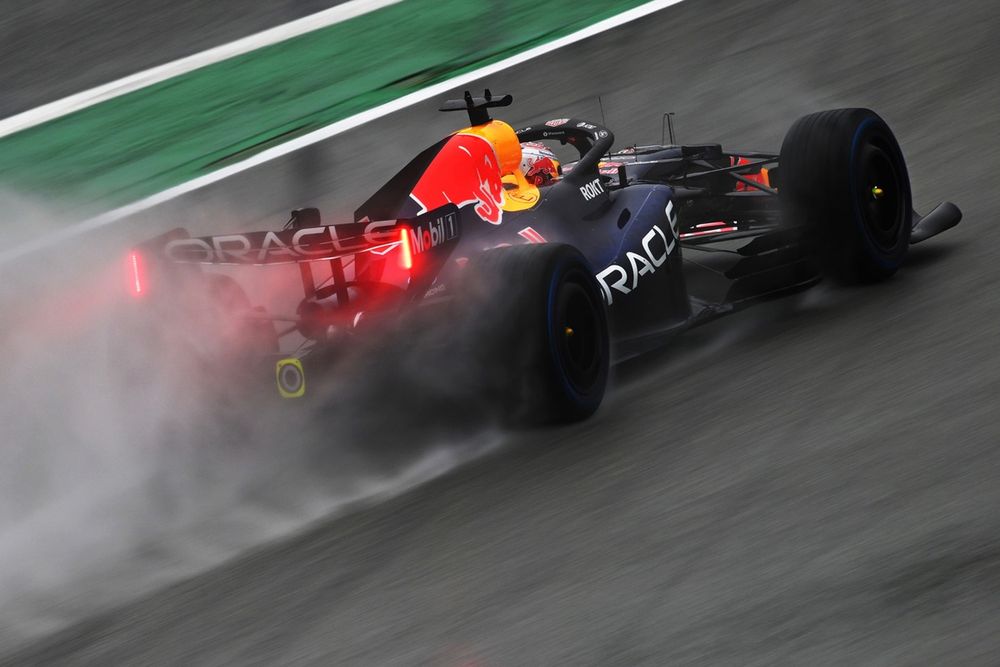
Max Verstappen, Red Bull Racing
This situation would be quite exceptional. Historically, the full wet tire has been the least preferred option for F1 drivers, who typically favored transitioning to intermediates at the earliest opportunity. Nevertheless, Pirelli anticipates a reversal of this trend in Canada.
Berra noted, “Thus, there’s a chance that, uniquely in recent seasons, the full wet tire could outperform the intermediates.”
To aid drivers in reaching optimal tire temperature, the FIA and Pirelli, mirroring their actions in Miami, have elevated the tire blanket temperature for intermediates to 70 degrees Celsius. Full wet tire blankets, in contrast, are mandated at 40 degrees.
While this adjustment should assist with initial warming, Berra emphasized that maintaining tire temperature throughout the race might present an equally formidable challenge in Montreal.
He commented, “Achieving a stable condition within five laps is sufficient. The key is simply to anticipate the opportune moment.”
However, he added, “The critical issue arises if you begin to lose heat and are unable to generate or recover it; this leads to difficulties, as grip diminishes significantly. Essentially, running intermediates at these low temperatures becomes infeasible.”
Pirelli indicates that this particular problem is not immediately resolvable. While further raising blanket temperatures might offer some benefit during the initial laps, it won’t stop drivers from experiencing a subsequent, progressive drop in tire heat.
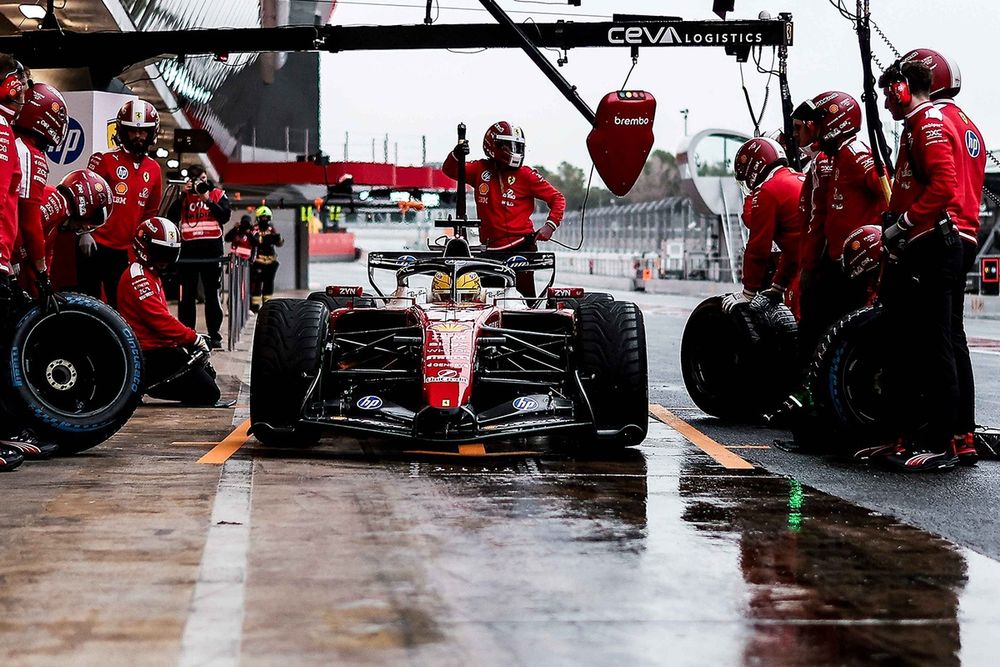
Lewis Hamilton, Ferrari
Photo by: Ferrari
He explained, “We could elevate blanket temperatures to 140 degrees, but if heat is lost thereafter, the tires would still cool to 50 degrees. While there’s an initial advantage for the first few laps, depending on the temperature increase, the outcome remains largely the same.”
This is precisely the scenario some competitors view as potentially hazardous. Max Verstappen was one of the individuals who voiced concerns on Saturday. While typically embracing rainy conditions, the Dutch driver confessed he holds no anticipation for a frigid, damp race in Montreal.
He remarked, “When the tires are excessively cold, it’s akin to operating on a frozen surface. The full wet tire performed marginally better, but that was during my Barcelona testing, where corners inherently generate more heat. I anticipate significant challenges here.”
The explanation stems from the configuration of Circuit Gilles Villeneuve, where tires lose heat on its extended straightaways and possess limited opportunities within its curves to regain warmth.
Verstappen further commented, “I merely hope the meteorological conditions aren’t too severe. Should the tires malfunction, it will engender considerable disorder, and I believe circumstances are already poised to be sufficiently arduous.”
Piastri: Experts are Unsure of Power Unit Response
Aside from tire worries, the Canadian Grand Prix might also serve as the initial substantive exposure for the 2026 vehicles in rainy environments, although it is worth mentioning that Verstappen, Charles Leclerc, and Pierre Gasly are among those who have already undertaken wet weather testing.
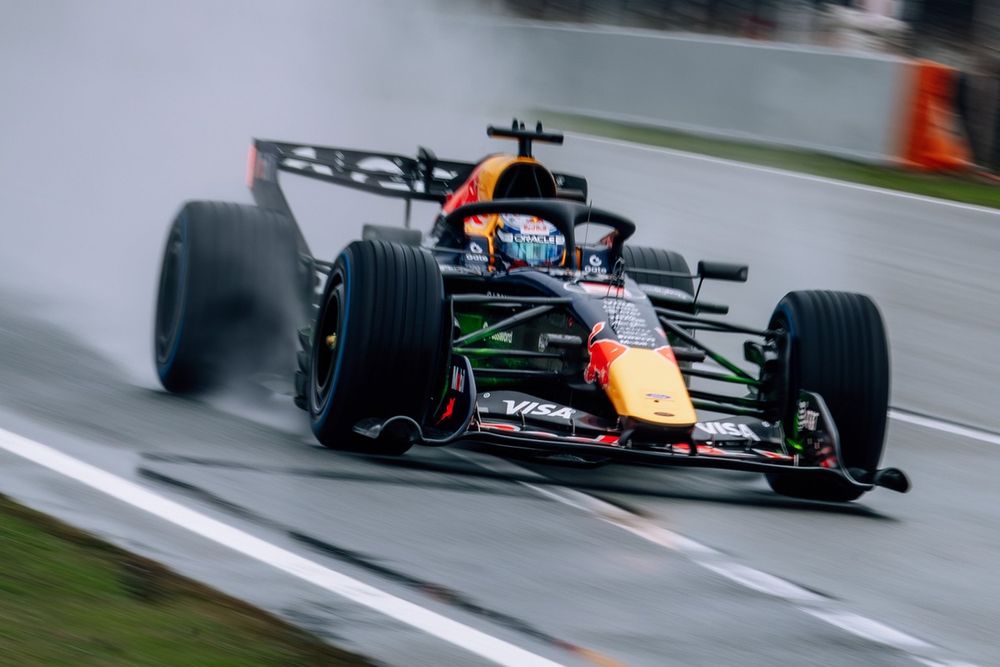
Max Verstappen, Red Bull Racing
Photo by: Formula 1
The latest iteration of vehicles, specifically their power units, has also prompted worries among drivers, with Oscar Piastri stating: “These engines perform poorly with inconsistent inputs, and maintaining consistency in wet conditions is virtually impossible. We’re likely to encounter several problems across the field due to this, but we await the actual outcome.”
For F1 outfits, this scenario would signify venturing into uncharted territory, given that preliminary efforts and computational models have failed to yield definitive solutions.
Piastri further elaborated, “We undertook extensive groundwork in Miami, aiming to grasp these dynamics. My takeaway was that we remain uncertain of what will unfold. When hundreds, if not thousands, of the planet’s top engineers are equally stumped, it creates a fascinating predicament.”
For enhanced safety, the FIA has again declared a rain hazard, mirroring its action in Miami. Consequently, teams are allowed to adjust ride heights, boost mode has been deactivated, MGU-K power delivery has been cut from 350 kilowatts to 250 kilowatts, and the active aerodynamic features in straight-line operation are now limited to the vehicle’s front section.
Despite these provisions, competitors remain skeptical that the 2026 cars will be adequately manageable under wet conditions.
Verstappen stated, “These automobiles do not behave appropriately in the rain. There’s already reduced downforce, and a hybrid powertrain presents greater challenges to control than a V8. Its responsiveness in wet conditions is diminished, particularly with the current engine regulations. Therefore, indeed, it will be considerably more arduous.”
An initial experience with the 2026 vehicles in rainy weather would inherently pose difficulties – yet these would be amplified significantly if coupled with low temperatures and the distinctive design of Circuit Gilles Villeneuve.