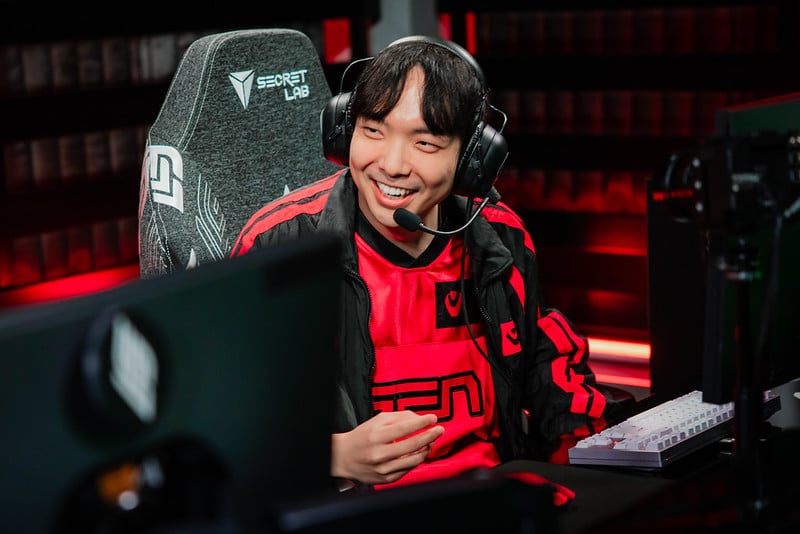
Choi “huhi” Jae-hyun did not have his sole focus on the Esports Nations Cup. It represented merely one of three possible commitments lined up on his schedule during those initial weeks.
Had he and Sentinels achieved an incredible run to reach the World Championships in Brooklyn, his competitive season with his club would have wrapped up on November 14. Immediately afterward, he was scheduled to board a flight to Riyadh to compete in the Esports Nations Cup. Following the conclusion of that tournament, huhi was set to meet his future in-laws face-to-face for the very first time before finally watching his fiancée walk down the aisle at their wedding ceremony.
Fortunately for huhi and his loved ones, he will escape the rush of returning home to a chaotic wedding preparation, since the Esports Nations Cup has been pushed back to 2027 owing to “unprecedented international scale and the uncertainty created by the wider regional situation.”
“The year was shaping up to be incredibly chaotic for me,” huhi shared with Esports Insider. “But in a sense, things have worked out. I am attempting to remain composed, assist my partner, navigate our wedding preparations, and manage all of that. Now, I feel like I can genuinely be of help to her. While I am relieved in a way, I absolutely still hope to compete in the ENC if another opportunity arises next year.”
As a naturalized citizen of the United States, huhi relinquished his Korean citizenship to represent a nation with which he shares a deep-seated bond. Although he accepted the invitation to play as the support player for Team USA, this commitment only served to further crowd his already packed November itinerary.
For huhi, balancing the inherent difficulties of organizing a wedding with the honor of playing for the United States globally—all while managing his professional obligations to secure a spot at the League of Legends World Championships—placed an immense amount of pressure on his partner as she tried to plan their special day.
While he confessed to feeling anxious himself, his level of tension did not compare to what his fiancée was experiencing.
“She is feeling the pressure,” huhi explained. “I am quite fortunate to have professional excuses like matches. I can say, ‘I’m sorry, I have to attend practice,’ though my team has been accommodating by giving me half-days off so I can join her for things like wedding menu tastings.”
Although the tournament’s delay was a disappointment, it brought a comforting sense of relief, allowing him to dedicate himself fully to creating a wonderful wedding once his professional commitments wrap up for the year.
“With the cancellation of the ENC for now, I suppose that chance has slipped away,” he noted. “However, on the bright side, it takes a lot of weight off my shoulders.”
Yet huhi was merely one of many competitors affected by this decision, and the nature of the stress varied greatly from person to person.
An Alternate Form of Pressure
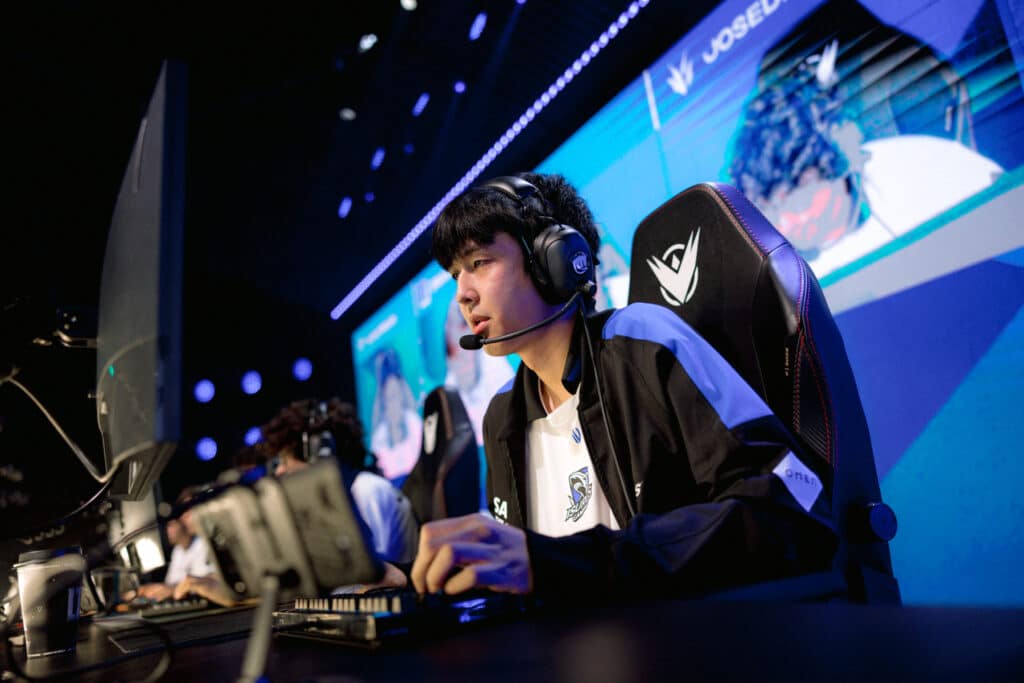
Frankie “Zamudo” Lin did not expect to be chosen as Team Canada’s starting top laner. This selection meant he would share the stage with celebrated Tier 1 professionals like Joseph Joon “Jojopyun” Pyun, Fahad “Massu” Abdulmalek, and Philippe “Vulcan” Laflamme.
“I was absolutely thrilled,” Zamudo remarked.
Zamudo acknowledged that his excitement was accompanied by a touch of anxiety, potentially linked to current global events in that area. Though he did not explicitly state this as the source of his worry, journeying to a distant part of the globe naturally carries its own set of unpredictable variables.
“I had some concerns about safety or unexpected events while traveling,” he explained. “While I’m relieved by the postponement, it is still a shame that I won’t get to compete as the year closes. I was really looking forward to participating in such a massive tournament.”
In a similar fashion, Disguised’s starting jungler, Christian “KryRa” Rahaian, expressed immense excitement about his call-up to the Canadian squad.
“It is so exciting for me,” KryRa stated. “Back when I was a kid of about seven or eight, my aspiration was to become a professional soccer player and compete in the World Cup. To be able to represent my country in a global tournament for a video game that I am passionate about feels like that childhood dream is finally coming true.
“Just being chosen is mind-blowing. I think it is going to be a fantastic tournament, to be quite honest.”
While Zamudo did not share how he intends to spend his newly freed-up schedule, KryRa adjusted his off-season itinerary to incorporate his yearly visit to Romania, alongside a one-to-two-month training stay in Korea to further hone his skills.
“My primary goal is to use this off-season period to improve as much as possible,” KryRa remarked.
The Perspective of a Coach
KryRa held dual eligibility to represent either Canada or Romania, leaving him with a decision between honoring his cultural roots with Romania or playing for his birthplace, Canada.
Ultimately, he decided on Canada, even after Romanian head coach Razvan Nistor made a strong effort to recruit him.
Nistor shared the same sense of disappointment as the competitors regarding the tournament’s delay.
However, his concerns stemmed from a different angle: the unpredictable future of his roster.
The professional lifespan of an esports competitor is notoriously brief, as rapid life changes can easily remove players from active contention.
Nistor had also hoped to recruit prominent Romanian talents such as Andrei “Odoamne” Pascu and Andrei “Xerxe” Dragomir, but both have since stepped away from professional play.
Unlike more dominant European nations like France, Spain, or Poland, Romania lacks a broad pool of elite talent. Furthermore, those powerhouse countries benefit from robust domestic club leagues, enabling them to assemble national rosters with existing synergy.
“This was a rare chance to gather our country’s finest players and align them toward a single objective,” he explained.
Given the delay, Nistor is concerned that his lineup might look entirely different by 2027, influenced by individual performance dips, shifts in the game’s meta, and, above all, the realities of personal life.
“Both my support player, Alexandru “whiteinn” Kolozsvari, and my midlaner, Ronaldo “Ronaldo” Betea, are over 25,” he noted. “It is impossible to predict how their personal paths might shift between now and then. If someone chooses to step down or experiences a decline in performance, do they remain entitled to their spot? They might have earned it through qualification, but strictly speaking from a performance perspective, it might not make sense.”
While Nistor expects he will need to reassess his lineup later on, he also intends to dedicate this intervening period to nurturing a more robust talent pipeline.
“I plan to establish a developmental pool,” he shared. “Perhaps a Discord server to gather prospective candidates who could represent Romania. For context, we had roughly 45 individuals apply for the national squad out of a pool of about 60 active players.”
For someone coaching purely out of national pride and operating on grueling schedules—often staying awake until 4 a.m. to support NRG in the NACL—this undertaking is one he welcomes, though he remains pragmatic about his limitations.
“I hope to offer them a few tools to help them grow without demanding too much of my own schedule,” Nistor said. “Practically speaking, I simply do not have the bandwidth to personally coach dozens of players.”
Unresolved Questions
The letdown of needing to delay representing their home countries on the global stage for another year was highly apparent.
While Team USA and Team Canada will presumably retain their League of Legends qualification slots for the 2027 season, Nistor remains uneasy about Romania’s status, posing the critical question: What approach will the Esports Foundation take regarding already qualified nations?
“We went through rigorous qualifiers where certain teams made the cut and others did not,” he pointed out. “Will those qualifications be honored? I believe that is the fair outcome, considering how much energy we poured into qualifying.”
Furthermore, there is no guarantee that the individuals currently chosen will retain their positions on the seven-player rosters.
“There ought to be a roster preservation policy,” Nistor proposed. “If you originally registered a seven-man roster, perhaps at least four should be required to remain, or at least a standard majority rule.”
The Esports Foundation is expected to provide further updates as organizers and participants re-evaluate their plans after the 2026 Esports World Cup concludes.
Nistor recognizes the necessity of the postponement, and despite his current letdown, he believes the anticipation will make the moment they finally wear their national jerseys even more special.
“Representing your home country is a unique honor that few other experiences can rival,” Nistor concluded. “While this postponement aligns with their broader strategy, it remains a major disappointment for the fans, the competitors, and the coaching staff alike.”