The 5.5km, high-speed configuration of Monza has traditionally been regarded as the definitive evaluation of velocity and engine power in Formula 1, featuring a classic design that has remained largely unaltered for the past half-century.
By 2026, however, things become more complex. Extended straightaways and rapid tracks have historically clashed with F1’s energy-deficient engine rules. Following challenging events at venues such as Silverstone and Spa, competitors are concerned that Monza will face similar struggles due to a scarcity of available energy.
“Along the straightaways with the DRS active, the speed remains high, but then that power drops off,” remarked Ferrari driver Lewis Hamilton. “We are reaching the corner entry points perhaps 20 to 30 km/h slower than in previous years, which will undoubtedly require some adjustment.
“It used to be incredible to come here and listen to the engine roaring all the way down the straight right up to the braking point. This weekend, that won’t be happening.”
However, suggesting that Monza will mirror tracks like Silverstone or Spa is only partially accurate. While all three circuits demand a high percentage of full-throttle driving, Monza differs from its traditional counterparts by having fewer high-speed turns vulnerable to complex battery management strategies, alongside more substantial braking zones.
Although drivers might downshift sooner near the conclusion of certain straights, the visual impact should be less severe because the track lacks corners comparable to Stowe or Pouhon, where the driving experience could be spoiled by aggressive energy recovery.
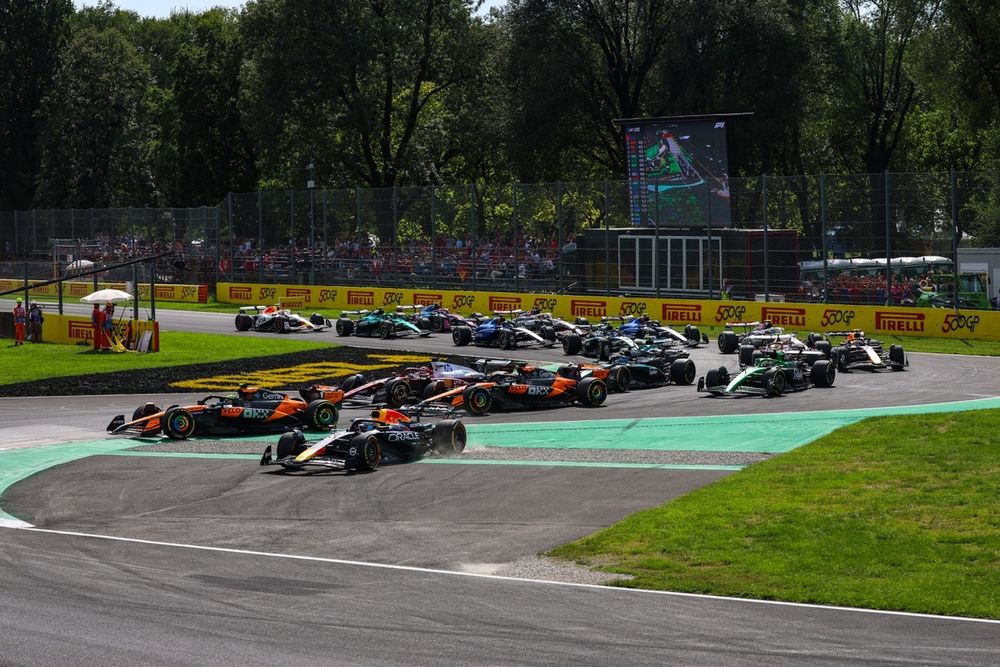
The start of the 2025 Monza race
Photo by: Kym Illman / Getty Images
This does not imply that managing energy at Monza will be effortless. The FIA has capped energy recovery at 4MJ per lap—the lowest limit seen so far this season—which is intended to alleviate some of the difficulties.
With less overall energy available for deployment, observers anticipate a reduction in ‘super clipping’—a practice where drivers recharge the battery while under full throttle, frequently resulting in hazardous speed variations.
Instead, the absolute lack of reserve energy means cars will simply run at lower top speeds along the straight sections.
“My simulator runs showed that the situation isn’t as severe as I feared,” commented championship frontrunner Kimi Antonelli. “Super clipping is less prominent because the regeneration limits have been tweaked slightly compared to other events. Speed profiles will flatten out more, but there won’t be major deceleration, which is reassuring. It promises to be a lot better than our initial expectations.”
Haas driver Esteban Ocon agreed, noting: “By lowering the recovery limit, we won’t be forced into lift-and-coast driving tactics. That is a positive development.”
Conversely, Alpine’s Franco Colapinto remained convinced that this grand prix would highlight the flaws of the current rules. “While the recovery threshold is indeed very low, meaning super clipping is minimized because you can’t recharge enough to make it viable, I still foresee a challenging grand prix,” the Argentine driver explained. “In my view, this is just another circuit that exposes the vulnerabilities of modern Formula 1.”
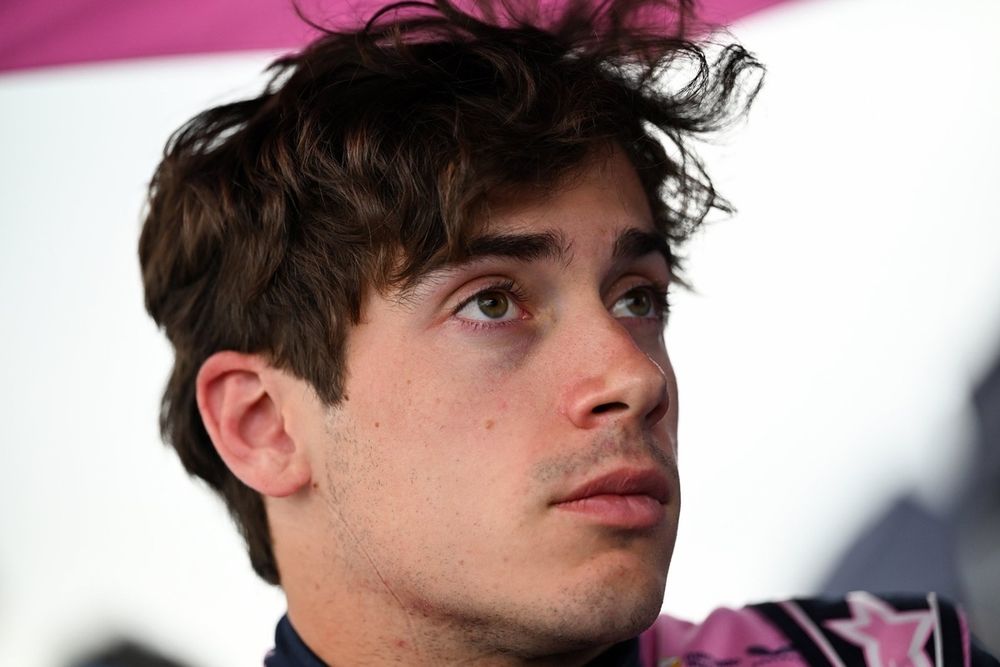
Alpine’s Franco Colapinto
Photo by: Sam Bagnall / Sutton Images via Getty Images
Yet, none expressed as much pessimism as Racing Bulls newcomer Arvid Lindblad, who feared the upcoming weekend would prove to be a disappointing affair.
“The reality in the simulator was worse than I anticipated,” he said, offering a different view from the others. “We aren’t experiencing sudden drops in speed, but rather a lack of battery assistance altogether, meaning we aren’t using any hybrid power on the straights. Consequently, the pace is quite slow.”
“It feels somewhat disappointing, and we will find out how it translates to the real circuit, but the driving style required in the simulator felt highly unnatural. We’ve managed to bypass some of these issues elsewhere, but here it is magnified, and it doesn’t feel like the true Monza. We won’t be hitting 350 km/h. Anyone hoping for record-breaking top speeds will be let down, as the pace is far from fast.”
Because of the severe energy restrictions at Monza, the tow will play an incredibly vital role during both the qualifying sessions and the race itself. This setup could trigger a highly unpredictable Saturday afternoon and a dramatic grand prix. Aston Martin’s trackside director Mike Krack anticipated an unprecedented volume of position changes, reminiscent of a chaotic MotoGP race.
“With the significant limits placed on energy usage this weekend, observing how teams adapt will be fascinating,” Krack commented. “This applies both to how they utilize the slipstream and how straightforward overtaking becomes during the Grand Prix.”
“The constant trading of positions could very well set an all-time record, or at least deliver the kind of action you see in MotoGP.”

Arvid Lindblad of Racing Bulls expressed doubt regarding the quality of racing for the upcoming Italian Grand Prix
Photo by: Eric Le Galliot
Lindblad, however, remained skeptical. Since Monza is essentially a sequence of severe braking areas linked by lengthy straights, the opportunities for creative energy deployment strategies are narrow, which means teams are likely to quickly settle on a single, identical approach.
If every car is deploying its limited battery reserve in the exact same manner, the speed differentials needed to facilitate passing maneuvers may simply fail to materialize.
“I doubt we will see significant speed differences because everyone will be lacking power,” Lindblad pointed out. “Unlike other venues where performance depends on where you choose to use your energy, here we simply have none to spare. At Spa, you had two major straights separated by several corners where you could harvest energy before discharging it all. Here, that isn’t possible.”
“Regrettably, Monza features successive long straights with very few turns to separate them. Visually, it plays out like four straight lines, leaving no chance to harvest power. Without that recovery opportunity, you cannot deploy, resulting in a slower overall pace.”
The young driver anticipates that we will see highly varied energy strategies during the early laps of Sunday’s 53-lap race before the field settles into a rhythm.
“The opening couple of laps should be fascinating,” the teen predicted. “Depending on where you decide to use your battery, you might overtake three cars only to be repassed by three others shortly after. I’m unsure if there will be genuine overtaking. If you trigger the boost to make progress on one straight, you will pay the price by running slowly for the subsequent three laps. It might look like a yo-yo effect, but a highly frustrating version of it. I’m not holding out high hopes for what lies ahead.”
With further contributions from Ronald Vording and Stuart Codling
Your feedback matters!
Share your thoughts on what you’d like to experience next.
Participate in our survey
– The Autosport.com Editorial Team