On the afternoon of Sunday in Austin, an outstanding occurrence did not unfold on the racetrack itself, but rather within the Formula 1 paddock following the US Grand Prix. During the customary media sessions that occur after the race, representatives from both Aston Martin and Red Bull were posed a question regarding a topic that had little to do with the actual competition at the Circuit of the Americas – quite the contrary, in fact.
Mike Krack, Aston Martin’s chief trackside officer, alongside Laurent Mekies, team principal of Red Bull, were inquired if they could dismiss the idea of a possible collaboration between the two teams in future. This conversation seemed rather unexpected, which is why both individuals appeared astonished when this query arose during their media engagements, making the context behind it essential.
This situation traces back to a BBC piece and a rather unfortunate interpretation linked to it. In the regular Q&A feature by F1 correspondent Andrew Benson, he was questioned whether customer teams would show interest in the Red Bull Ford power unit, considering it appears significantly competitive in its inaugural year.
The response clarified that no current F1 team is seeking a power unit and properly brought attention to a fact well-known in the paddock: Aston Martin’s shock, particularly for team owner Lawrence Stroll, when they realized early this year how far Honda lagged in the power unit capabilities at the onset of F1’s new era.
This understandably raised some initial uncertainties and reflections, although it was decided to maintain a strong commitment to Honda – a point also accurately highlighted in the BBC article. The only aspect of speculation that hinted at a possible reopening of discussions was the notion that these hesitations could arise again should Honda fail to achieve the anticipated advancements by 2027 or 2028, for instance.
As often occurs in F1 and today’s media landscape, the narrative then grew beyond its initial scope and became more of a focal point than it warranted, as per various insiders. It became a self-fulfilling cycle: if enough individuals within the F1 paddock take an interest in a topic, it inadvertently gains traction and receives coverage. It creates a snowball effect, making it vital to contextualize such narratives.
The Aston Martin viewpoint: Forsaking the works deal potential would be quite hasty
On Sunday evening, both Krack and Mekies were queried whether they could deny any ongoing negotiations between Aston Martin and Red Bull Powertrains, an implication clearly going well beyond what was indicated in the original BBC piece. Krack promptly reiterated Aston Martin’s long-term dedication to Honda.
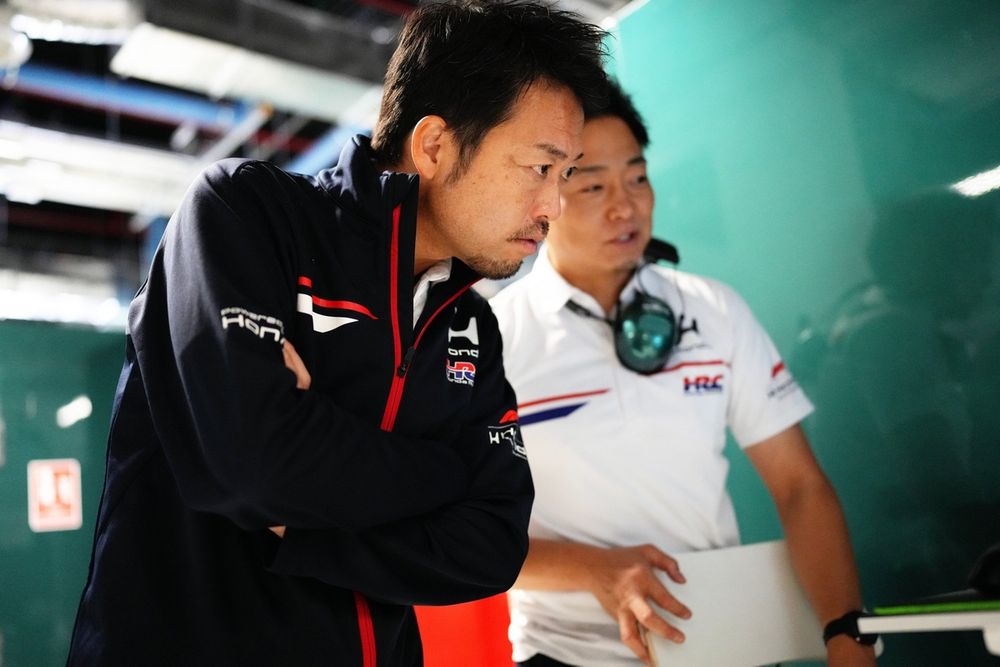
Shintaro Orihara, Honda Racing Corporation Trackside General Manager and Chief Engineer
Photo by: Alex Bierens de Haan / LAT Images via Getty Images
“I can only reiterate that our long-term partner is Honda, which, by the way, reached its 500th race this weekend. I believe we will achieve our first victory together,” the Aston Martin representative commented.
It’s essential to note that the current partnership and works arrangement theoretically provide significant potential. While it is accurate that Honda has not reached the desired performance level as of yet, the Japanese manufacturer has a history of overcoming challenging circumstances – consider its rocky start with McLaren, which ultimately culminated in multiple world championships with Red Bull.
This connects with Adrian Newey’s statements during the FIA press conference in Austin. When queried about supposed motivational challenges during the hard years at Red Bull, he implicitly pointed out a key distinction between the engine partner during that period, Renault, and the existing collaboration with Honda.
“As a chassis designer, when the PU manufacturer has a rough year, that’s part of the deal, and you accept it. However, if the PU manufacturer has a rough year and doesn’t display any intention to remedy the issues, that changes the situation drastically, and that feels rather grim at that stage.
“That was the unfortunate scenario we encountered in 2014. And it turned out that the situation didn’t really improve with that supplier until we transitioned to Honda in 2019. So, one can grasp my disappointment and frustration during that period.”
Conversely, with Honda, the scenario differs substantially. The Japanese firm is acutely conscious of the ongoing deficiencies and is exerting considerable effort to rectify the situation, a point that Newey also emphasized.
“At Honda, there’s a significant amount of energy and initiatives currently underway that might still be in their preliminary development stages, but we recognize considerable promise in those prospects.”
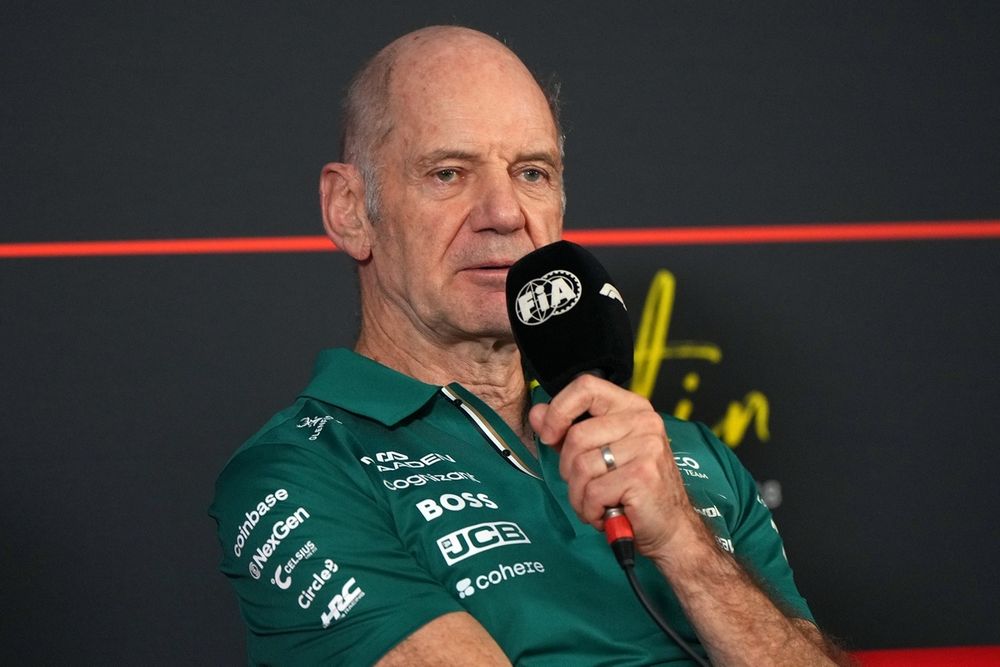
Adrian Newey, Aston Martin Racing
Photo by: Alex Bierens de Haan / LAT Images via Getty Images
This illustrates Honda’s resolve, as well as the potential that still exists for the future. Aston Martin purposefully chose a works deal, representing the next phase in the team’s development.
Not only does it present a substantially better chance to outline the partnership than would be feasible as a customer team, but it also allows for the integrated advantages of amalgamating the power unit more efficiently into the chassis and mutual assistance – a crucial priority recognized by both Newey and Honda for 2027. Both parties still acknowledge this potential fully, indicating that forsaking a works deal is quite improbable and additionally signifies an extremely shortsighted approach – one of a quick reflex response.
The Red Bull viewpoint: Not yet ready to provide for a customer outfit
These explanations elucidate why, from Aston Martin’s viewpoint, it makes complete sense to persist on the current trajectory, allowing time for eventual benefits of this works collaboration to manifest.
Moreover, there’s also Red Bull’s side of things. While its own powertrains initiative alongside Ford has garnered a significantly better start than many anticipated, according to Mekies, this doesn’t imply the organization is prepared to move towards providing power units to customer teams.
“To be honest, we’ve received quite a bit of unrequested positive media attention regarding our engine’s performance, which brought attention from several teams,” Mekies said while referencing the FIA’s ADUO ranking and lack of development tokens.
“Are we engaged in any serious discussions with anyone regarding supplying another team? No, we do not believe we are ready for that just yet. Is this a fixed stance for the next five years? Not necessarily, as the future is uncertain.
“But certainly, there’s enough work on our end to enhance the power unit, improve its integration within the car, and reach the level of the top competitors prior to considering the opportunity to supply one more team alongside Racing Bulls. Therefore, expectations should remain the same for the foreseeable future.”
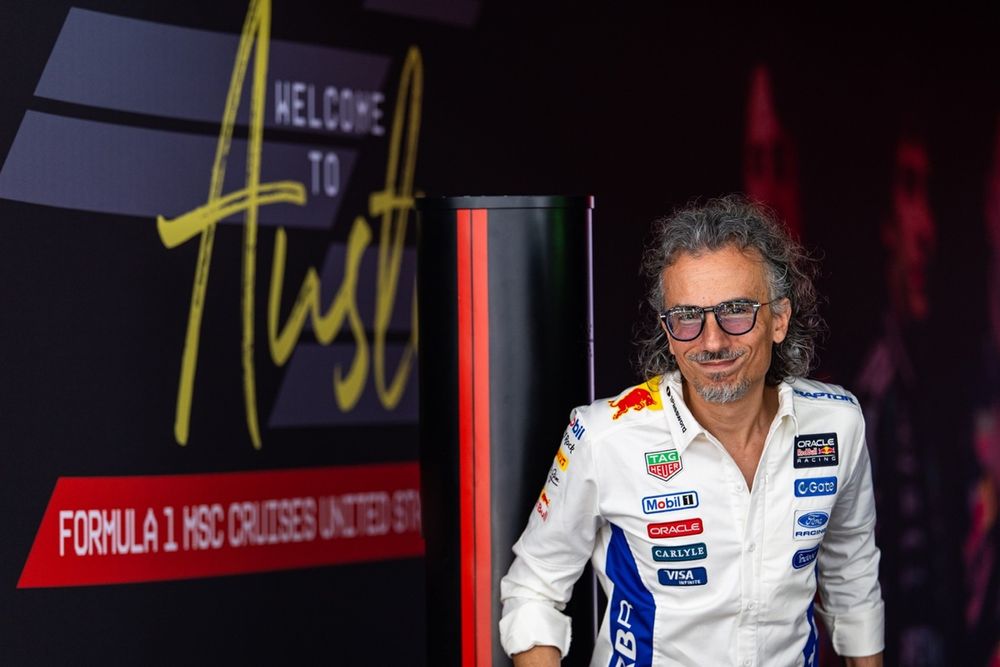
Laurent Mekies, Red Bull Racing Team Principal
Photo by: Jayce Illman / Getty Images
A primary rationale for a manufacturer to provide engines to a customer team is to accumulate additional data, which aids development. This might be a factor limiting Honda, as it currently supplies just one team and could gather very little data during winter testing and the initial races due to various reliability challenges.
For Red Bull, however, this does not present an immediate reason to take on another team, especially as it already provides for its sister team, Racing Bulls. The team based in Milton Keynes has two teams and thus four cars to gather necessary information from.
This collection of factors indicates that, from both Aston Martin’s and Red Bull’s viewpoints, a partnership isn’t a straightforward option currently. It’s essential to view the recent speculation through this lens – meaning, in the proper context. While it’s clear that much will hinge on Honda’s advancements in the forthcoming years, this instance serves as another illustration of what often characterizes the F1 paddock and the media environment today: a storm in a teacup.
Your feedback matters!
Share with us what you’d like to see from us moving forward.
Participate in our survey
– The Autosport.com Team