In the MotoGP paddock, tensions regarding the upcoming Qatar Grand Prix have escalated significantly. Although discontent has been brewing behind the scenes for a while, it was on Sunday that Yamaha emerged as the first manufacturer to voice its concerns publicly.
Yamaha, along with its satellite team Pramac, has opted to withdraw from the race, which has led to MotoGP issuing a statement warning of both contractual and sporting repercussions. Additionally, Alex Marquez will miss the Qatar race due to a planned surgery following a severe crash at the Catalan Grand Prix last May.
It accentuates that not all within the MotoGP community are keen to make the journey to the Middle East under the current climate; however, the championship is adamant that the race weekend at the Lusail International Circuit scheduled for November 6-8 will proceed as intended. Deputy CEO Carlos Ezpeleta personally traveled to Qatar on Thursday to discuss safety assurances with local authorities.
The stance taken by MotoGP holds significance when viewed alongside Formula 1, especially now that both series are overseen by Liberty Media. F1 is scheduled to arrive in Qatar three weeks later (November 27-29) and has affirmed to Autosport that its plans remain intact despite Yamaha’s announcement.
This message was also relayed to all teams during the F1 weekend in Mexico, as confirmed by Autosport.
In this communication, marked merely as an update to preempt any queries stemming from the Yamaha situation, F1 reiterates its commitment to ending the season in Qatar and Abu Dhabi. Teams were made aware in advance and the message emphasized that other manufacturers and MotoGP as a whole will still be making the trip to Qatar as arranged.
At this point, F1 sees no need to alter its plans, underscoring that neither the travel advisories nor the insurance aspects have been updated since May, which allows the championship to move forward.
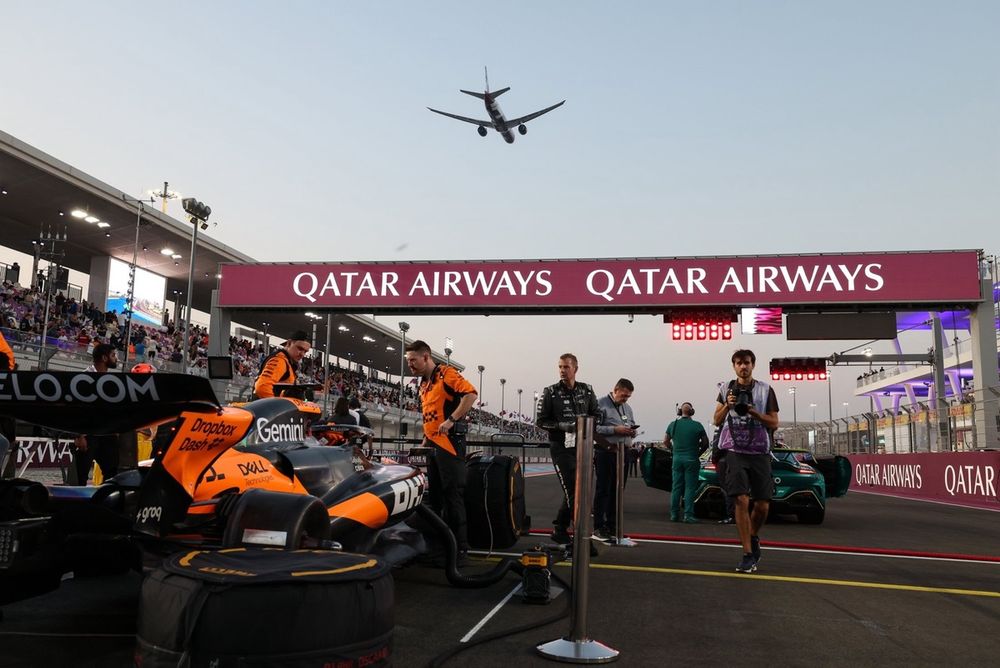
A Boeing 777-300ER of Qatar Airways flies over the grid
Photo by: Dom Gibbons / LAT Images via Getty Images
It is crucial to note that significant factors remain, with the upcoming US midterm elections being paramount. Concerns linger in the Middle East that tensions could escalate post-elections, yet F1 has a contingency plan in Imola ready to be executed.
As revealed earlier by Autosport, Imola’s organizers received the official go-ahead more than six weeks ago to commence preparations and construct temporary grandstands. This allows F1 to react swiftly should the security conditions in the Middle East worsen over the next few weeks.
In the event that the alternative plan is unnecessary, F1 has pledged to bear all expenses associated with the preparations in Imola, ensuring that the Emilia-Romagna organizers face no financial burdens in any scenario.
The Prudence of F1 Drivers and Team Leaders in Voicing Concerns
While a number of competitors and teams in MotoGP have voiced criticism regarding the decision to progress with the races in the Middle East, similar sentiments have been rare in the F1 environment.
The communication acquired by Autosport reveals teams and drivers are encouraged to refrain from overly critical comments, reflecting earlier guidance regarding technical regulations. Concerning the Middle East, teams are urged to place their trust in F1 and the FIA, maintaining the same public message they’ve consistently conveyed in previous weeks.
This guidance has been echoed in various press conferences featuring drivers and team principals recently, including the one in Mexico. When questioned during Friday’s press event, Red Bull’s team principal Laurent Mekies stated: “It is typically the FIA and F1’s responsibility to address it comprehensively, equipped with all pertinent information, and to direct us accordingly. Therefore, by not doing the same diligence as them in assessing these situations, we rely fully on them to make appropriate decisions.
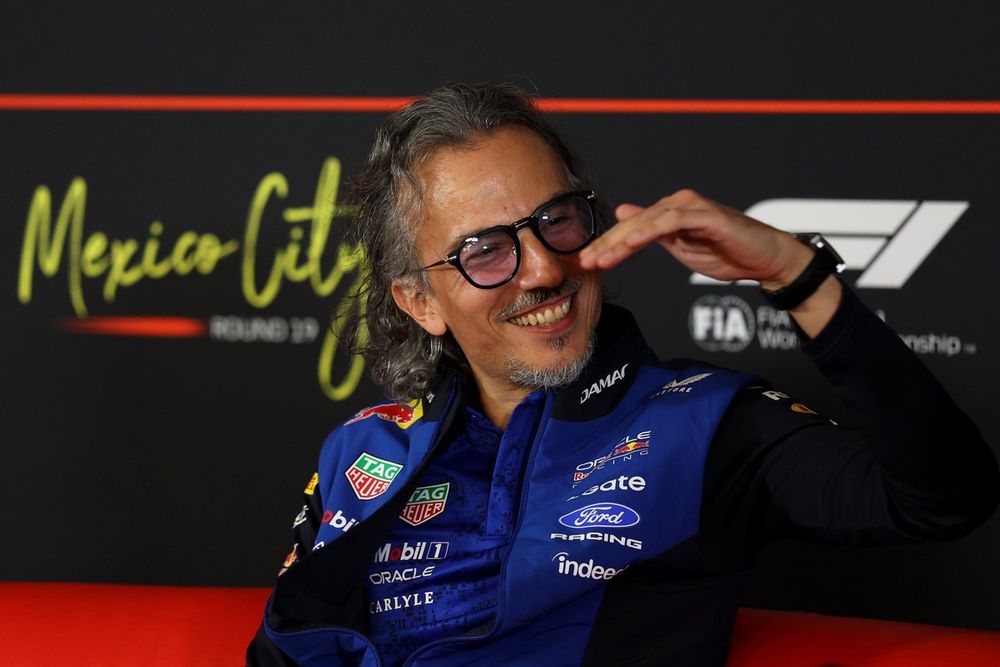
Laurent Mekies, Red Bull Racing
Photo by: Simon Galloway / LAT Images via Getty Images
“Historically, they have made most of these decisions correctly. In terms of timelines, all teams are aligned and… Logistics are predominantly managed through F1 and the FIA, so it is widely understood where that stands.”
Williams team principal James Vowles voiced similar sentiments.
In recent weeks, only a couple of drivers have shown a slightly more critical stance publicly: Max Verstappen and Carlos Sainz. Verstappen acknowledged that he usually enjoys traveling to the Middle East, but stated that under these circumstances, if it were solely his decision, he might choose to race elsewhere.
Sainz expressed his concerns during the Austin press conference, conveying that he finds it challenging to feel completely assured regarding the safety conditions, independent of what F1 and the FIA communicate.
“They seem very confident that everything will proceed. Personally, and not representing the GPDA, I find it quite hard to be totally convinced right now,” Sainz remarked. “There are still ongoing events in the Middle East, and with the upcoming US elections, the political climate could shift quickly in the following weeks. Hence, I believe it’s a bit premature to be so confident.”
These are legitimate opinions, but subsequently, Sainz communicated with his peers, clarifying that he also places complete trust in F1 and the FIA regarding this issue.
The fact that F1 is pursuing this strategy is widely acknowledged among drivers. When Sainz’s comments were mentioned during the Dutch media session in Mexico, Verstappen chuckled: “Someone probably had a word with him afterward! You aren’t really encouraged to voice those opinions.”
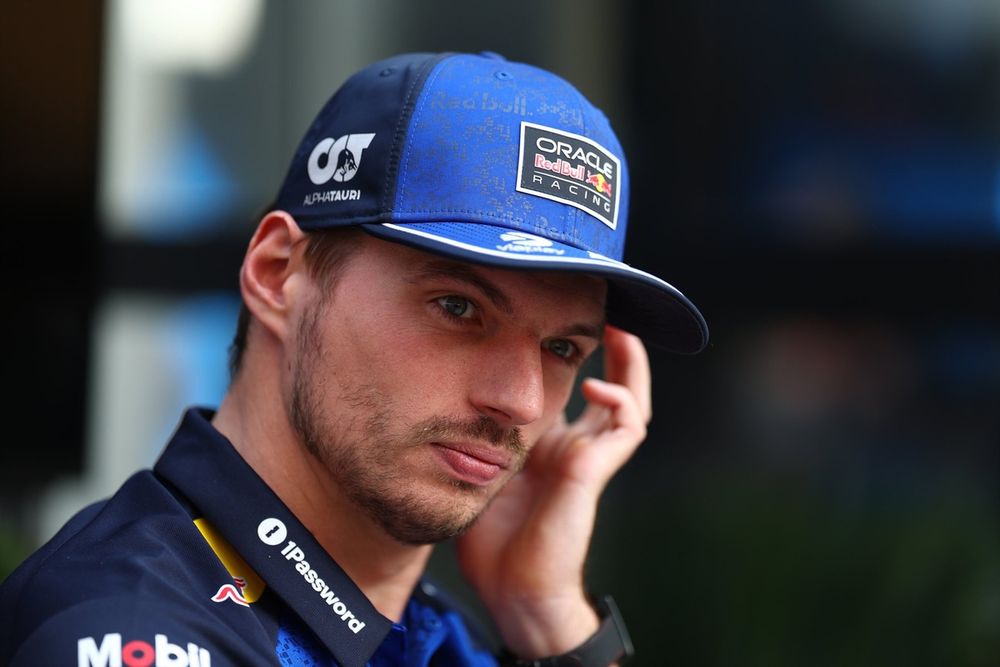
Max Verstappen, Red Bull Racing
Photo by: Simon Galloway / LAT Images via Getty Images
On a serious note, Verstappen elaborated that much relies on upcoming developments. When Autosport questioned him about his previous statements, he replied: “It also depends on what assurances they can provide regarding safety and the events of the next weeks.”
“You can assert your readiness to go, but one can never predict what occurs next week, as the region is still unstable.”
In practice, F1 is cognizant of these dynamics. With substantial financial stakes on the line, no one wishes to appear weak, and from a political perspective, it’s pivotal to avoid signalling any indications in that direction.
However, in its correspondence with the teams, F1 is explicit that safety is paramount. It is vigilantly monitoring the situation—including the midterms—and stresses it will take “the appropriate actions” should circumstances shift. In this regard, the elite category of motorsport has an advantage over its two-wheeled counterpart concerning time.
We want to hear from you!
Let us know what you would like to see from us in the future.
Take our survey
– The Autosport.com Team