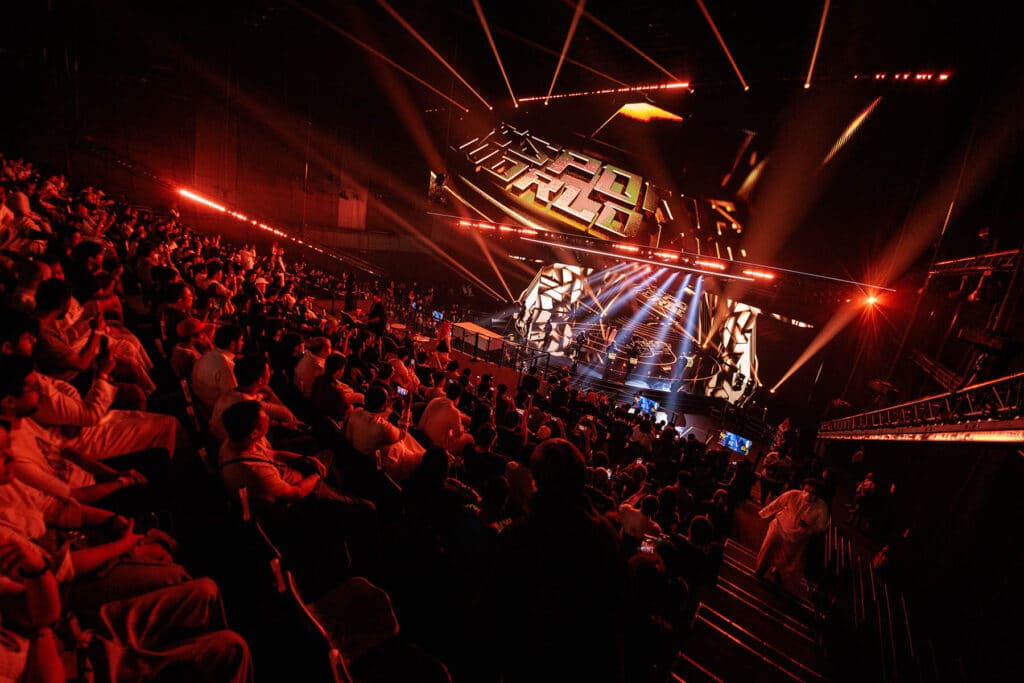
For the inaugural time, the **Esports World Cup** (EWC) will be held outside of Saudi Arabia, with Paris serving as its new location. Between July 6 and August 23, elite competitors from 24 different gaming disciplines will convene in the French metropolis, vying not merely for prestige but also for a portion of the substantial $75 million prize fund.
Paris is a familiar venue for significant esports competitions. Just last month, the city concluded its hosting of the **RLCS Major**, and in 2025, it served as the battleground for **VALORANT** teams during the VCT Champions. Furthermore, Paris successfully debuted an Evo event in 2025, with the prominent fighting game tournament scheduled to make its comeback to France in October.
Nevertheless, the Esports World Cup presents a distinct challenge. This will not be a standalone competition; it will unite more than 200 clubs and thousands of participants. Given the considerable interest from sponsors, publishers, media outlets, and supporters following the recent venue change, successfully executing this event could significantly elevate Paris’s standing as a premier esports center.
Significance of the EWC for Paris
Regarding recent esports tournaments, the EWC’s scale is unparalleled. Competitions unfold over a span of seven weeks, each segment accompanied by specialized broadcasts and comprehensive reporting.
Although the majority of publishers have mastered the blueprint for individual events, organizing the EWC introduces an entirely new set of difficulties. Saudi Arabia has devoted the last three years to enhancing its logistical execution (if Gamers8 is counted as a multi-game tournament).
Paris is now faced with the task of organizing this on short notice, during a year already packed with esports events right up to the Esports Nations Cup in November. A successful execution of this event would establish Paris as a metropolis capable of staging large-scale esports competitions for prolonged durations, effectively positioning it alongside Riyadh and bestowing upon it the renown of other major hubs such as Shanghai or Seoul.
Primary Strengths of France and Paris in the Esports Sector
In recent years, France has progressively cemented its position as a prominent esports nation in Europe. Leveraging its National Esport Strategy, the country has successfully developed essential infrastructure, encompassing tournament organizers, game publishers, specialized agencies, professional clubs, and crucially, supportive governmental bodies.
Specifically, governmental backing played a vital role in securing this year’s EWC venue. Ralf Reichert, CEO of the Esports Foundation, held a meeting with French President Emmanuel Macron. Following this, the President revealed the formation of a dedicated task force, activating all state departments, which notably includes a representative from the interministerial delegation for the Olympic and Paralympic Games.
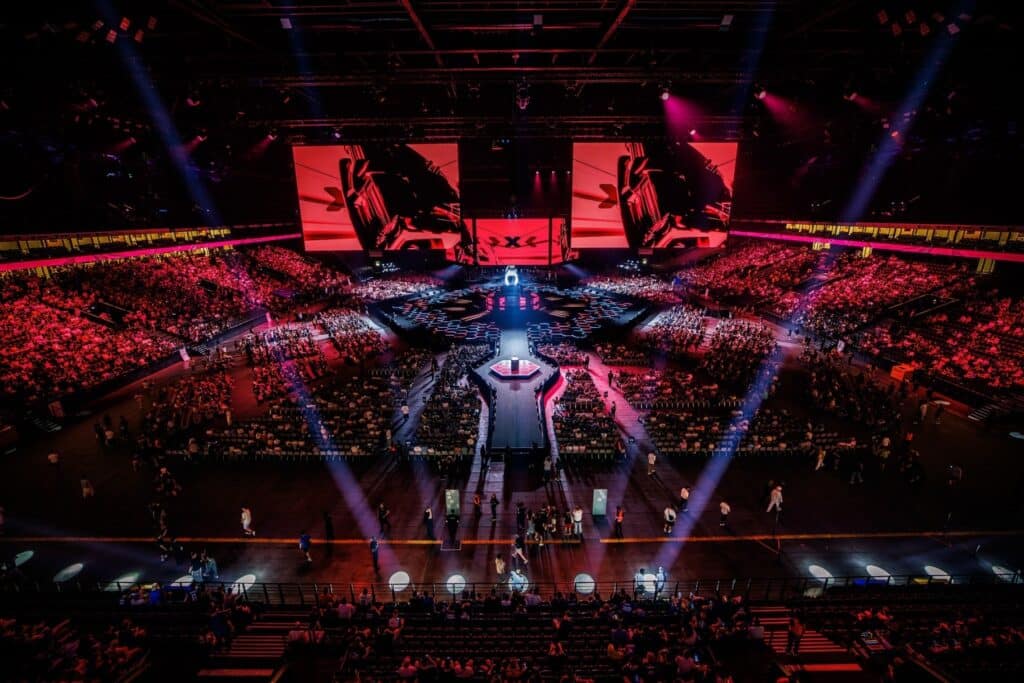
Industry support extends beyond high-level initiatives. France has instituted distinct employment structures for professional esports athletes, thereby simplifying the visa acquisition process for international players (a significant hurdle in many other nations). This particular aspect has been pivotal in the relocation decision, as ensuring player participation, despite logistical and scheduling pressures, is paramount.
Economically, esports gatherings in France are now afforded the same consideration as conventional sporting and cultural spectacles, with the VAT on event tickets being reduced to 5.5% at the beginning of 2024.
The implementation of these policies necessitated thorough examination and harmonization. Therefore, Paris’s selection as the preferred host for the EWC is a testament to the foundational efforts the nation has cultivated over almost ten years.
Additional Transformative Elements: Spectators and Time Zones
Furthermore, a factor exists that cannot be cultivated solely through governmental strategies: the spectator base. France boasts one of the globe’s most fervent esports communities. Regardless of the game—be it League of Legends, VALORANT, Rocket League, Counter-Strike, or fighting titles—French audiences consistently transform these gatherings into electrifying displays, mirroring the zeal observed in conventional athletic competitions.
As per French journalist Ethan Cohen, the primary driver behind such a robust esports fan culture stems from the innate relationship between content producers and competitive play.
He elaborated that figures such as Corentin “Gotaga” Houssein and Kamel “Kameto” Kebir, already recognized content creators, proceeded to establish their own organizations, specifically Gentlemates and Karmine Corp, which were founded upon their individual brand, character, and follower base.
“Authenticity is another crucial element,” he further informed Esports Insider. “These content producers and influential figures possess a genuine zeal for esports. Many originated within the esports scene or maintained a profound link to competitive gaming from its inception…Their motivation stems from their passion, and they recognize that if their enthusiasm is authentic, audiences will join them on that trajectory.”
For the EWC, this represents arguably the ideal viewership. A multi-game competition requires supporters eager to attend and observe their preferred teams and athletes, channeling that fervor to energize the arenas. With Karmine Corp recently incorporated into the Club Partner Program, substantial attendance figures are virtually assured.
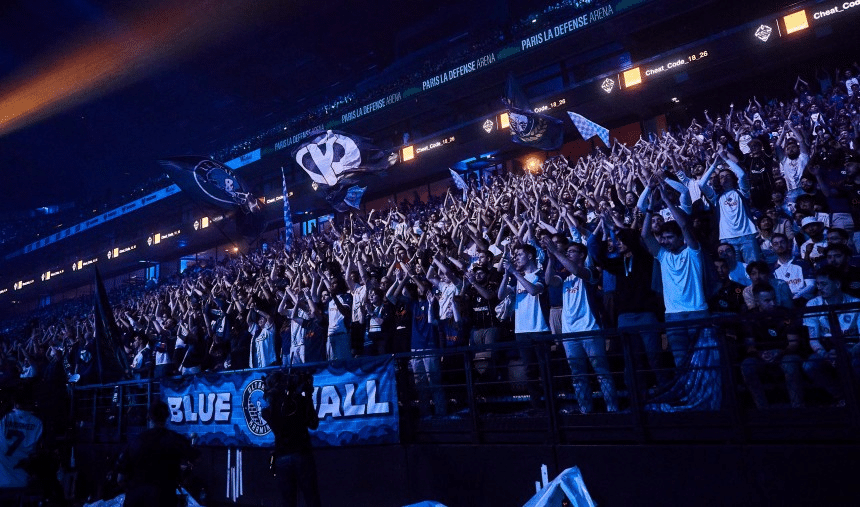
This fan dynamic also provides the EWC with an attribute that Saudi Arabia has found challenging to cultivate in recent years: natural enthusiasm. Despite Saudi Arabia demonstrating its capacity for grandeur and elaborate production, it consistently fell short of reproducing the vibrant ambiance witnessed at other premier esports spectacles on the schedule.
An additional, often-missed consideration when examining the EWC pertains to time zones. Within a digitally-centric fan community like esports, time zone alignment has consistently been crucial for boosting viewership. While the prior Saudi time zone proved moderately acceptable for many spectators, staging the event in Paris will undoubtedly benefit the bulk of Western audiences. Those on Eastern time zones will be most impacted, necessitating organizers to pinpoint the optimal broadcast times for critical matches.
Therefore, does Paris now hold the title of Esports Capital?
I would hesitate to declare it the sole holder of that distinction. The esports landscape is overly diversified for any single city to unequivocally claim that title.
Metropolises such as Shanghai and Seoul will continue to be primary venues for the bulk of Asian tournaments. Europe features its own array of host cities, including Berlin, Madrid, and Cologne. Riyadh, through its substantial financial commitments, persists in its endeavor to join this discussion.
However, Paris is elevating its standing by serving as host for the EWC. The French capital has received the uncommon chance to organize a seven-week competition, an feat previously accomplished only by Riyadh. Should it succeed in delivering under compressed deadlines and logistical demands, concurrently achieving robust spectator figures, it will affirm its trustworthiness, backing, and infrastructural prowess, establishing itself as a frontrunner in the sector. The nation has dedicated years to laying the groundwork for this occasion.
Ultimately, the outcome hinges on its implementation.