The competitive League of Legends scene previously struggled with repetitive drafts, but has the introduction of Fearless Draft truly resolved this issue?
Historically, once the opening match of a best-of-five concluded, the subsequent game would frequently feature many of the identical champion selections. Aside from side swaps or a few targeted bans on high-priority picks, spectators were essentially viewing a carbon copy of the previous draft.
Even during the World Championship, the meta could become incredibly repetitive by the knockout rounds. Opposing teams would frequently agree to mutual draft scenarios, leading to endless repetitions of uninspiring mid-lane matchups like Corki versus Azir. The Fearless Draft format was designed to disrupt this cycle.
Theoretically, this setup guarantees champion diversity. Should a best-of-five matchup go the distance to a deciding fifth game, forty distinct champions will have already been eliminated from selection before any standard bans are applied. However, this prompts a far more compelling inquiry:
Has the Fearless Draft system fostered truly innovative strategic approaches, or are rosters merely relegated to executing inferior iterations of their preferred team compositions?
Understanding Fearless Draft and Its Origins
In its modern implementation, Riot Games characterizes Fearless Draft as “a progression of the standard pick/ban format.” The mechanic operates on a straightforward premise: any champion selected by either side is immediately locked out of selection for all remaining matches in that series.
Following preliminary trials with various iterations of the system, Riot implemented this format across all primary global leagues starting in 2025. According to an official update published on March 16, the goal was to enhance match-to-match diversity and offer competitors a platform to showcase wider and more unconventional champion selections.
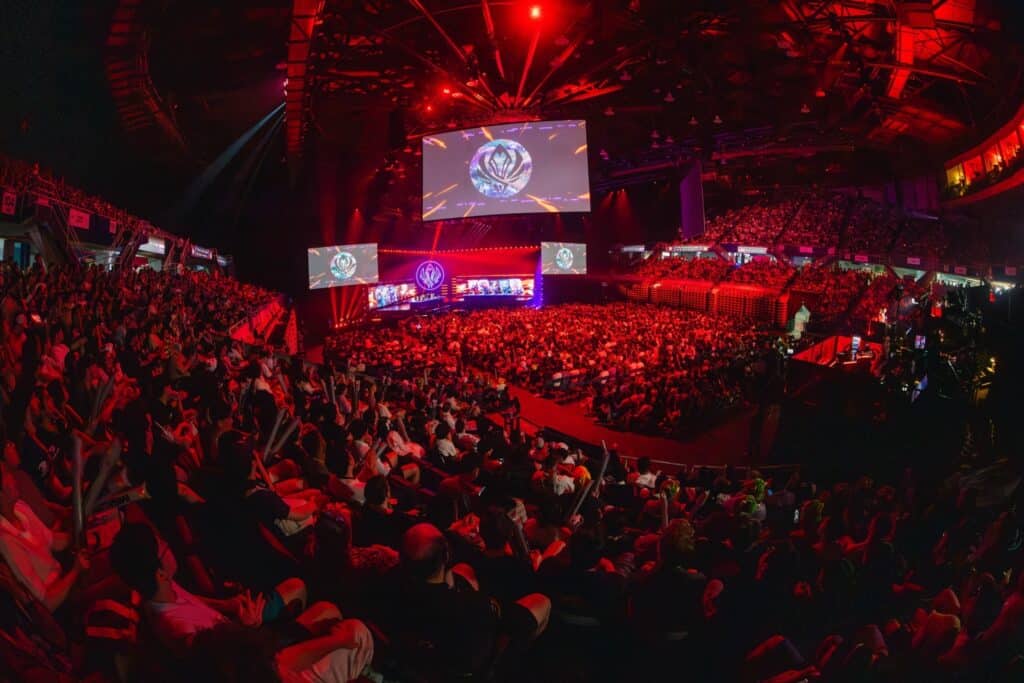
A Rise in Diverse Champion Selections Under Fearless Draft
These international events serve as excellent benchmarks because they assemble diverse playstyles and meta preferences from all major competitive regions. Additionally, their comparable scale allows for a balanced and direct analytical comparison.
Analyzing the Statistical Data From MSI
Prior to the implementation of Fearless Draft, MSI 2024 featured 78 matches with 86 distinct champions selected. MSI 2025 maintained a comparable scale with 80 matches but operated under the new system, resulting in the champion pool expanding to 107. By MSI 2026, despite the total matches dropping to 71, participants nevertheless utilized 101 unique champions.
Growing from 86 picks in 2024 to 107 in 2025 marks an addition of 21 champions—representing a surge of nearly 24%, even though the tournament length increased by a mere two games. Furthermore, MSI 2026 showcased 15 more distinct champions than the 2024 tournament despite having seven fewer matches played.
Accounting for Other Influencing Factors
Crucially, this analysis does not represent a strictly isolated study.
Elements like gameplay balance updates, roster expansions, the specific teams involved, and the evolving tournament meta heavily influence champion variety. Even so, the consistent trends observed over back-to-back global events strongly indicate that Fearless Draft is a primary driver of this change.
Still, although a rise in distinct champion selections directly signals more varied gameplay, it may not be the most revealing statistic to examine.
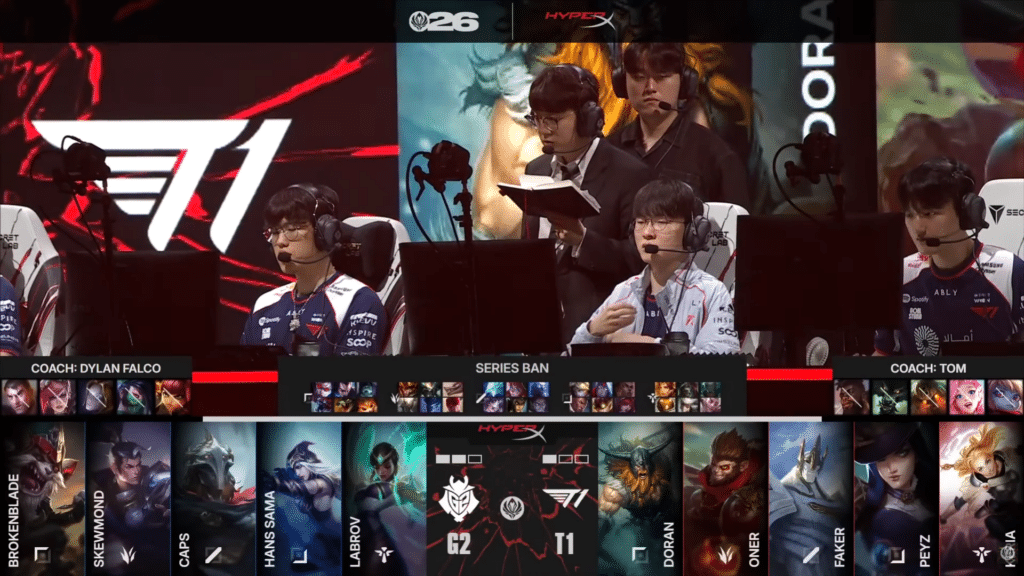
How Fearless Draft Ended Repetitive Champion Selections
During MSI 2024, K’Sante was locked in 51 times across 78 total games, translating to a presence in roughly 65% of the tournament’s matches. In addition, both Kalista and Senna maintained a pick-or-ban rate of 91%, and K’Sante remained highly contested across 80.8% of the draft phases.
Let us contrast those figures with the data from the Fearless Draft era.
For MSI 2025, the champion with the highest pick count was Rell, appearing only 18 times in 80 games—a mere 22.5% participation rate. In the following year at MSI 2026, Ryze led the tournament with 19 selections over 71 games, representing an appearance rate of approximately 26.8%.
| Event | Highest-Selected Champions | Total Selections | Percentage of Matches Played |
| MSI 2024 | K’Sante | 51 | 65.4% |
| MSI 2025 | Rell | 18 | 22.5% |
| MSI 2026 | Ryze | 19 | 26.8% |
Consequently, the peak appearance rate for any single champion during MSI plummeted from 65.4% down to 22.5% and 26.8%—highlighting the true success of the Fearless format.
While a portion of this drop is a natural byproduct of the system’s constraints—preventing even top-tier priority picks from reaching anything resembling K’Sante‘s 51 games in 2024—that is exactly what the rule change intended to achieve.
Even if rosters prioritize the exact same characters, the audience is spared from watching the identical matchups play out game after game in a series.
Why Total Unique Selections Only Reveal Part of the Picture
Thus, the real value isn’t simply inflating the metrics by forcing an obscure character pick in game five. The most significant shift is that fans are no longer subjected to the identical pool of half a dozen champions in every match, even if those picks still anchor broader draft strategies.
A prime illustration of this dynamic can be found in the LEC regional data.
During the 2024 LEC Winter Playoffs, teams picked 59 distinct champions across 40 games. In comparison, the 2025 Winter Playoffs under the Fearless Draft format featured 39 games and… once again, exactly 59 distinct champions.
Focusing solely on unique selections might lead one to believe the new format failed to make an impact. However, Azir, who topped the charts in both playoff stages, dropped from 23 appearances in 2024 to just 13 in 2025. Across identical 14-series playoff brackets, this represents a reduction of about 43%.
| LEC Bracket Event | Matches Played | Distinct Champions | Highest-Priority Selection |
| 2024 Winter Playoffs | 40 | 59 | Azir (23 selections) |
| 2025 Winter Playoffs | 39 | 59 | Azir (13 selections) |
| 2026 Versus Playoffs | 39 | 80 | Corki (13 selections) |
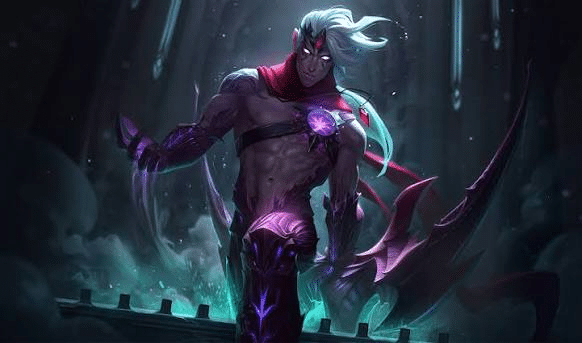
Naturally, the Fearless format does not magically balance every champion in the game. During MSI 2025, Varus remained highly prioritized with a 68.8% pick/ban rate (14 selections and 41 bans), and Twisted Fate trailed closely at 66.3%. In the most recent MSI, Vi commanded a 71.8% draft presence with 38 bans, while Jayce saw high priority at 67.6%.
The Fate of Overpowered Picks in the Draft
Suppose Varus is deemed an incredibly dominant pick. In the previous era, a team could lock him in during game one and, barring subsequent bans, continue selecting him for the rest of the match. Under Fearless Draft, once a character is selected, they are permanently out of play, forcing teams to adapt and find alternative strategies.
As a series stretches on, both rosters are inevitably forced to delve further into their active rosters.
This distinction remains vital. The statistical trends verify that Fearless successfully brings a wider array of characters to the Rift. However, it does not imply that competitive consensus on top-tier meta selections has vanished, nor that core strategic playstyles have magically homogenized in viability.
Is There Room to Expand the Fearless Concept?
Despite its popularity among the community, a valid critique of the Fearless system persists: its unique restrictions only truly alter the dynamic in the latter half of a series.
Well-known League of Legends personality, content creator, and former head coach Nick ‘LS‘ De Cesare has voiced strong opinions on the rules. While acknowledging that Fearless is a step forward, he argues that its influence is exaggerated, given that highly unconventional champion pools generally only emerge in the fourth or fifth games—which many series never actually reach.
In the era before Fearless Draft was widely implemented, LS frequently criticized traditional draft layouts for continually relying on identical setups, noting:
“We are just seeing the same strategic lineups cycled repeatedly on an endless loop.”
The Mechanics of the Ironman Draft Proposal
This perspective continues to shape his view of current drafting mechanics. Particularly in shorter best-of-three matchups, squads can still easily fall back on a narrow selection of dominant characters.
To counter this, he proposes an alternative known as the “Ironman Draft,” which amplifies the core ideas of the Fearless format to an extreme degree. In this system, not only do chosen champions get locked out, but bans are also carried forward throughout the match.
Rather than restricting 40 characters ahead of a fifth game, Ironman would lock out 80 (combining 40 choices and 40 bans). With over 170 champions available in League of Legends, this format would shrink the selection pool by nearly half before the final match’s ban phase even begins.
Under this scenario, the selection of truly competitive picks for each specific position would shrink dramatically.
Additionally, this could lead to superficial champion variety. By the deciding fifth map, teams might not be deploying creative strategies or clever counters; instead, they might simply be forced onto low-tier selections because all superior choices have been depleted.
In Conclusion: Has Fearless Solved the Repetitive Meta?
The evidence strongly points to an affirmative answer, though it largely hinges on how one defines the term “diversity.”
Data from successive MSI events demonstrates a clear expansion of the champion roster. The list of active selections climbed from 86 in 2024 to 107 and 101 in the following years. Crucially, the most prominent champion on the Rift saw their overall appearance rate drop from nearly two-thirds down to roughly 25% under the Fearless ruleset.
This shift represents the most critical achievement of the new rules.
The format has not dismantled the competitive meta, and the evidence does not show that teams are devising entirely novel strategic concepts. Frequently, players might simply swap out a blocked top-tier pick for the next direct equivalent.
Nonetheless, what the ruleset has undeniably succeeded at is eliminating the monotonous repetition that fans previously had to endure in longer matches.
While it is not entirely perfect, and a set of draft rules cannot single-handedly recreate iconic competitive surprises like the ROX Tigers selecting Miss Fortune support against SKT in 2016, the advantages of the Fearless system heavily eclipse its flaws. Even if there is potential to develop the concept even further, Fearless has effectively curbed one of competitive play’s most monotonous trends.
Editorial Note: The champion and tournament data referenced in this article was compiled from Games of Legends and reflects statistics current as of August 25, 2026.