An unanticipated glitch in the signaling systems led to a sudden flurry of Formula 1 competitors disregarding blue flags during the Hungarian Grand Prix.
Technology has significantly transformed flag signaling in F1 over the years. What once relied solely on marshals waving physical flags trackside progressed to include high-visibility light panels, and eventually, integrated alerts displaying blue flag warnings directly on the driver’s steering wheel.
Yet during Sunday’s Grand Prix at the Hungaroring, warning screens reportedly flashed blue flags erratically and without identifying the specific driver’s car number, leading to several near-misses and on-track altercations.
“Our in-car dashboard displays provided absolutely no feedback,” Esteban Ocon remarked. “Consequently, we had to rely strictly on the trackside light panels, which lacked our car numbers.
“To give an example, I was fighting with Isack [Hadjar] as we exited the pitlane without realizing I was a lap down on him. I likely held him up through three turns. By the time my race engineers informed me that we weren’t actually fighting for position, the damage was done because those blue lights were constantly flashing throughout the lap. It made the situation incredibly confusing.”
It is understood that the FIA recognized the developing technical glitch during the race, prompting a reliance on traditional physical flags and roadside light boards.
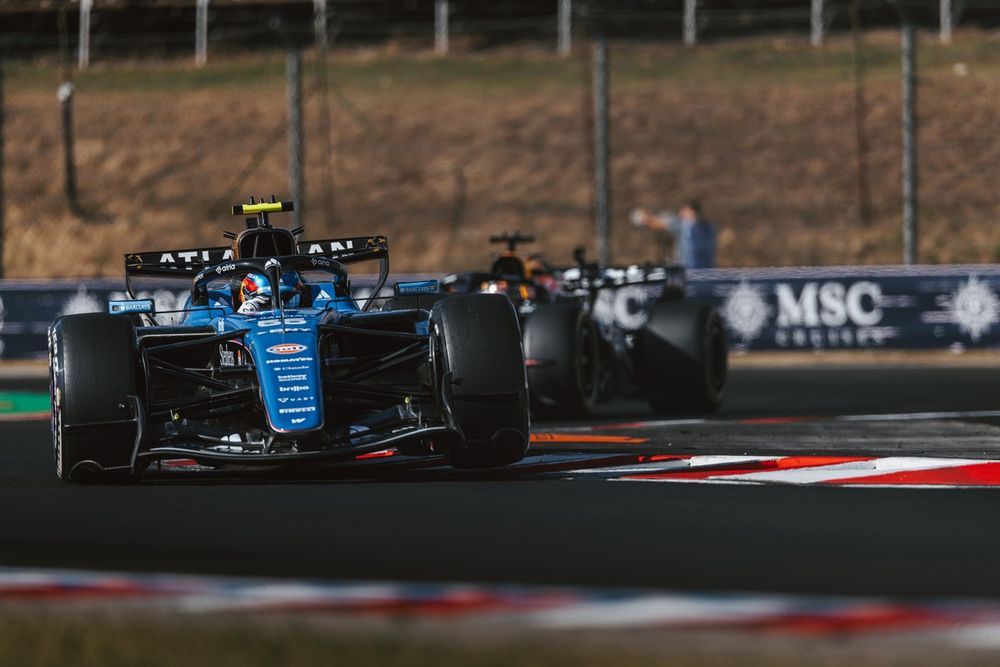
Carlos Sainz of Williams
Photography by: Liam Fabre
This workaround failed to stop trackside chaos, most notably illustrated when Carlos Sainz collided with Oscar Piastri exiting Turn 2. The contact ultimately cost the McLaren racer the lead of the Grand Prix to his teammate and subsequent victor Lando Norris, right as Piastri was trying to lap the Williams.
“In that moment, I was completely unaware that I was being lapped, particularly since I was locked in an intense battle with Fernando [Alonso] and attempting to dive down his inside at the turn,” Sainz recalled.
“I never anticipated Oscar being alongside me. Even if I had, he was positioned directly in my blind spot, making it genuinely impossible for me to prevent the contact.
“Clearer updates from the team might have prevented it, but then again, it’s just one of those typical racing incidents that happen from time to time.”
Sainz was nevertheless hit with a five-second time penalty. Race stewards accepted that the McLaren sat in the Spanish driver’s blind spot as a mitigating circumstance—ignoring the faulty blue flag system—which spared him from a more severe 10-second sanction.
Oliver Bearman received an identical penalty after the Haas racer was judged to have ignored blue flag indicators when being overtaken by Isack Hadjar. The apologetic British rookie expressed that managing the situation any better under such challenging conditions was highly difficult.
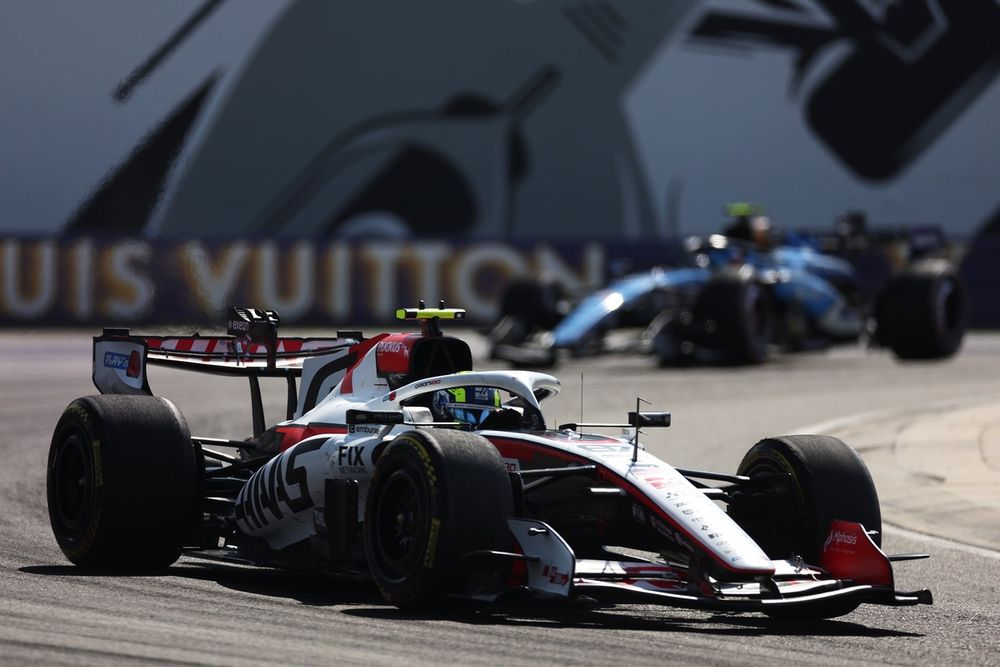
Haas F1 Team driver Oliver Bearman
Image credits: Alastair Staley / LAT Images via Getty Images
“I am genuinely sorry about receiving the blue-flag penalty involving Hadjar, but it was honestly an absolute nightmare on track,” he expressed with regret.
“When navigating the tight infield section, there is barely any opportunity to glance at your mirrors, and I was seeing blue-flag warnings on almost every single lap. The system wasn’t functioning correctly during this race, making it incredibly hard to decipher if the warning was intended for me, the driver behind, the driver in front, or someone else entirely.
“Naturally, there was no bad intent on my part; I was a lap down and certainly didn’t want to cause trouble, but I still feel terrible for potentially disrupting another competitor’s race.”
He added further: “Early in the Grand Prix, blue flags began showing for me after a mere six laps, and I thought to myself, ‘That makes no sense. Surely we aren’t slow enough to get lapped this quickly’.
“Thus, from lap six all the way to lap 70, blue light indicators flashed during every lap. It became extremely challenging to distinguish accurate warnings from false ones, or to know who they targeted, because usually your specific number is shown alongside the flag, but this time only the blue color lit up. As I mentioned, there was no ill intent, and I had to place complete trust in my crew to guide me through the blue flags.”
With supplementary reporting from Ronald Vording and Stuart Codling
Your feedback matters to us!
Share your thoughts on what we should focus on next.
Participate in our survey
– The Team at Autosport.com