
The matches from VCT Americas last weekend triggered intense debates across the international VALORANT competitive scene. Due to LOUD’s unexpected and impressive performance in the Stage 2 Lower Bracket Playoffs leading to a runner-up spot, Masters London champions Leviatán found themselves excluded from qualifying for VALORANT Champions.
This marks the first time an Argentinian esports franchise has claimed a Masters title yet nevertheless failed to make the Champions tournament in that very season. Consequently, numerous VCT followers and esports experts are calling for a restructuring of the qualification guidelines, particularly concerning how VCT points are allocated.
Conversely, some contend that Leviatán has only themselves to blame for their anticlimactic conclusion to the year. Where does the reality lie? Is there an inherent flaw in the qualification system for VCT Champions?
What led to Leviatán’s absence from Champions 2026?
Having secured the Masters London championship, Leviatán was widely expected by the community to easily secure a spot at Champions prior to the start of VCT Americas Stage 2.
By finishing as runners-up in Stage 1 (earning 7 points) and capturing the Masters crown (worth 8 points), the squad had accumulated a total of 15 VCT Points. This put them ahead of both NRG (with 11 points) and G2 Esports (with 14 points) at that juncture, even though those two clubs enjoyed far more successful campaigns in the early stages of the VCT 2026 season.
In order for Leviatán to be shut out of Champions Shanghai this September, lower-ranked underdogs needed to secure a top-two position while the traditionally dominant teams put together deep playoff runs in Stage 2.
And that is precisely the scenario that unfolded.
Both NRG and G2 Esports advanced deep into the Stage 2 bracket, picking up an extra 10 and 7 points to reach a total of 21 points each. Meanwhile, the underdogs 100 Thieves cruised through the Upper Playoffs Bracket to claim their top-two placement ahead of schedule.
At the same time, Leviatán suffered a defeat against G2 Esports in their third playoff match, which meant they gathered a mere four additional points from Stage 2 (bringing their total to 19) and fell short of earning automatic entry via a top-two finish.
The ultimate blow to Leviatán’s hopes came from the vibrant, determined lineup of LOUD. Backed by their passionate home fans in São Paulo, the Brazilian roster overcame powerhouse opponents G2 Esports and NRG to lock down a minimum of second place in the Stage 2 tournament.
This result guaranteed spots for both 100 Thieves and LOUD. NRG and G2 Esports claimed the remaining third and fourth slots representing the region in Shanghai, leaving Leviatán on the outside looking in, falling short by a mere two VCT Points.
The Team or the Points Format: Who is to Blame?
The core issue making Leviatán’s failure to reach Champions 2026 so jarring is that they remain an elite squad capable of a deep bracket run in Shanghai. However, their home territory of VCT Americas proved to be exceptionally fierce during the closing stages of the year. While Leviatán ranks among the best teams worldwide, within the Americas league they are merely one heavyweight among several.
“The primary takeaway here is simply how incredibly deep the competition is in the Americas. To see a scenario like this play out, the region must be exceptionally strong. They honestly have to be the top region in the world for something like this to occur,” noted former Team Liquid coach Connor “Sliggy” Blomfield during an episode of the VALORANT talk show Plat Chat.
To an extent, misfortune played a part for Leviatán. Had they been placed in an alternative region, their fortunes in Stage 2 might have been much better. A similar narrative of bad luck applies to the start of their year. Because of age-eligibility guidelines, Leviatán had to play the VCT Americas Kickoff without their exceptional rookie and eventual Masters London MVP, Bruno “Neon” Rodríguez. Consequently, they suffered a premature exit and failed to secure any VCT Points early on.
Conversely, the alternative perspective is that Leviatán chose to ban their most successful maps, Haven and Split, while moving away from their reliable Neon-Phoenix duelist setup during the early stage of the Stage 2 Playoffs. Generally, rosters that have already confirmed their tournament spots engage in such experimentation to test alternative strategies and map pools in official matches where the pressure is off.
However, Leviatán had not yet secured their qualification, and they suffered the ultimate consequences for that choice.
“They were preparing as if they were already at Champions, but they hadn’t actually made it there yet. They only have themselves to blame,” Sliggy pointed out on Plat Chat. “The fault lies with them. […] When your spot isn’t locked down, you cannot afford to approach matches with that mindset. These outcomes are a reality of competition. You must keep your fate in your own hands. Deciding to ban Split—a map where you boast an undefeated 11-0 record and are undisputed as the global best—when facing 100 Thieves is simply incomprehensible.”
In some ways, I can see the merit in the argument that Leviatán’s situation is an anomaly rather than proof of a broken structural design in the VCT. On the flip side, the competitive ecosystem of the VCT has undergone major transformations over the last few years.
As an example, adjustments to the game’s meta and alterations to the map rotation are occurring far more regularly in the 2025 and 2026 VCT seasons than they did in the early era of competitive VALORANT.

This accelerated pace causes the yearly tournament schedule to feel incredibly condensed, particularly for rosters traveling to international stages. These squads spend a massive portion of their year playing matches, which severely limits their available time to adapt and re-strategize after game patches.
Consequently, past milestone victories, like Fnatic capturing consecutive international trophies in 2023, are perceived with a very different appreciation in today’s landscape.
“The fact that LEV can win Masters just two months prior and still fail to make Champions underscores a structural issue in the tour format,” commented VALORANT coach Hoc Wah “Fayde” Chong on social media. “Given the rapid pace at which the meta shifts in Valorant, the system penalizes squads that peak early in the year because of demanding travel routines and minimal downtime to prepare for subsequent splits.”
Maintaining peak form throughout an entire year has undeniably become a monumental task for VCT organizations. This difficulty is poised to grow even more pronounced under the streamlined and open format coming next season. Despite this reality, the VCT Points structure continues to place the heaviest emphasis on late-season performance surges and sustained consistency.
“At the end of the day, this suggests that Riot places a higher value on claiming a regional title than on winning a global event,” remarked an observer on X (formerly known as Twitter).
As highlighted by Dragon Ranger Gaming’s Splash, the current point distribution allows teams to amass a larger points tally from regional achievements than from winning a global championship. For example, G2 Esports secured nine points during Stage 1—collecting six points for their title victory, plus an extra point for each group stage win.
On the other hand, Leviatán was awarded a flat total of eight points for lifting the Masters London trophy, receiving no extra rewards for their undefeated run through the Swiss Stage.
From my perspective, this distribution feels inherently unbalanced, considering that conquering an international VCT tournament is a far more demanding feat than succeeding at the regional level.
In what ways could VCT qualification pathways be reformed?
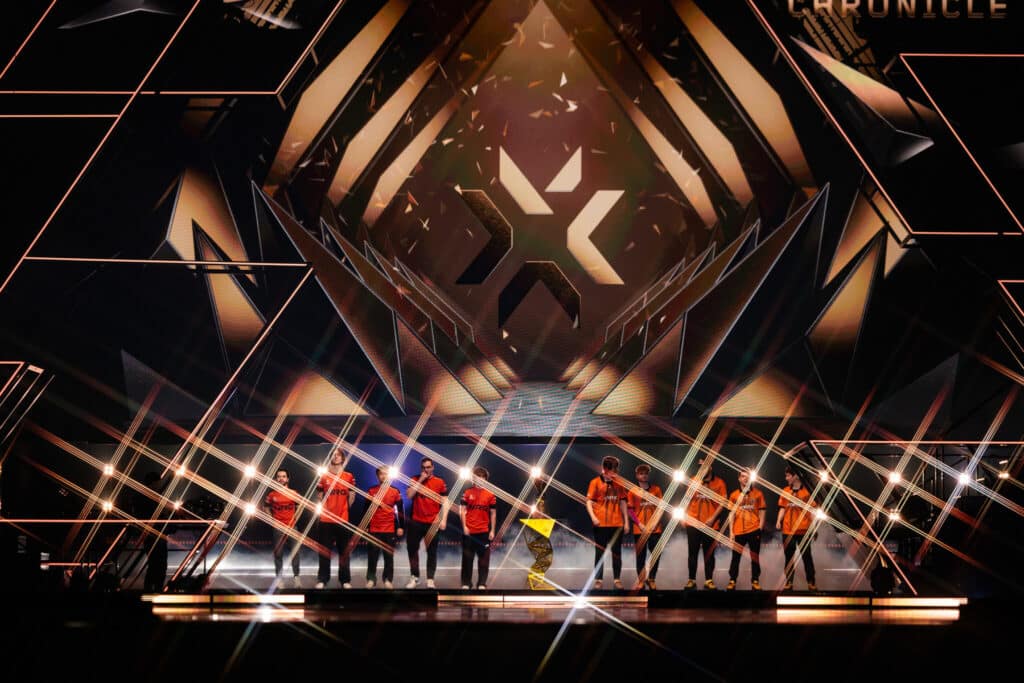
In the end, I believe both perspectives hold merit. Under the established qualification framework, Leviatán made a poor strategic choice by banning their most dominant maps in critical playoff matchups. That was an internal coaching and team decision, making them responsible for the outcome.
Nevertheless, this doesn’t mean the qualification format is without its faults. To draw a comparison, if the selection criteria of the 2026 League of Legends World Championship were implemented here, Leviatán’s status as the Masters London winner would have guaranteed them a ticket to Champions Shanghai as long as they simply made it into the Stage 2 Playoffs.
“What kind of system is this? We should absolutely guarantee a place at the next major tournament for any team that wins an international event,” argued Martin “Magnum” Peňkov, a pro player competing for Enterprise Esports.
To my mind, adopting a model similar to the League of Legends approach offers a balanced compromise rather than handing out direct, unconditional Champions spots to Masters winners. Under such a system, securing a place at Champions would require meeting two benchmarks: winning a global tournament and maintaining a respectable level of performance in the subsequent regional stage.
Alternative ideas from within the competitive scene, such as the one proposed by DRG Splash, advocate for boosting the points payout for a Masters championship to a minimum of 10 points. This adjustment would ensure that triumphing on the global stage carries significantly more weight than regional dominance.
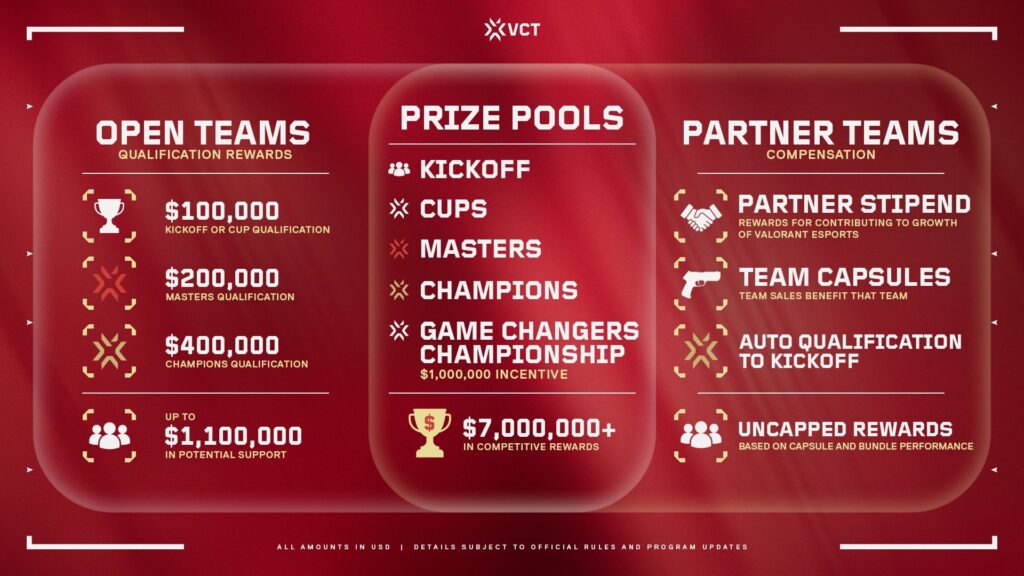
Whichever path is chosen, I believe modifications to the current qualifying system are highly necessary. Strategic updates are rolled out more rapidly than ever, and the upcoming seasonal structure will only introduce more unpredictability into the competitive landscape. Looking ahead to VCT 2027, substantial financial support payouts will be at stake for non-partnered organizations based on their qualification for premier events like Champions.
The tournament formats and selection systems must evolve to keep pace with these high stakes.