When examining the highest echelons of esports, team-based competitions appear to hold an absolute monopoly. The sector’s most prominent giants generate massive viewership figures, and virtually all of them require a cohesive roster to achieve success.
Consider the broadcast statistics. Throughout 2025, League of Legends accumulated more than 735 million hours of watch time, whereas Counter-Strike 2 exceeded 584 million hours. Cologne reached an unprecedented peak of 2,752,353 simultaneous viewers earlier in the year, establishing itself as the most-watched Counter-Strike event ever. Meanwhile, Mobile Legends: Bang Bang easily achieved an incredible peak of 5.6 million concurrent spectators during its championship series, while games such as VALORANT, Dota 2, and Rocket League continuously maintain massive media presence.
The dominance of team-centric games on the leaderboard is easy to explain. They replicate the dynamics of conventional athletic sports. Fans can pledge allegiance to an organization, invest in fierce inter-team rivalries, purchase official apparel, and witness complex five-player tactics unfold live.
However, by focusing solely on collaborative coordination, we are overlooking the most unfiltered and high-stakes arena of gaming: individual esports.
The unfiltered stress of competing entirely on your own
Walking up to a tournament stage for a 1v1 match or an individual speedrun leaves you without a safety net. You won’t find a squad captain to request a pause, a teammate to pick up an exchange kill, or a substitute to replace you if your performance drops.
You are entirely on your own, facing your rival and the monitor.
This extreme isolation generates a level of pressure that team-oriented titles are incapable of mirroring. Consider fighting franchises such as Street Fighter, Tekken, and Super Smash Bros, or the anxiety-ridden realm of tournament speedrunning.
Each input requires absolute precision. If a competitor blunders in an individual tournament, they bear the full responsibility for the failure. A solitary dropped combo or a single overlooked frame-skip lingers in their mind, and the heavy emotional burden is clearly legible on their face via the player camera. This intense vulnerability ensures that wins feel spectacularly sweet, while losses feel utterly crushing.
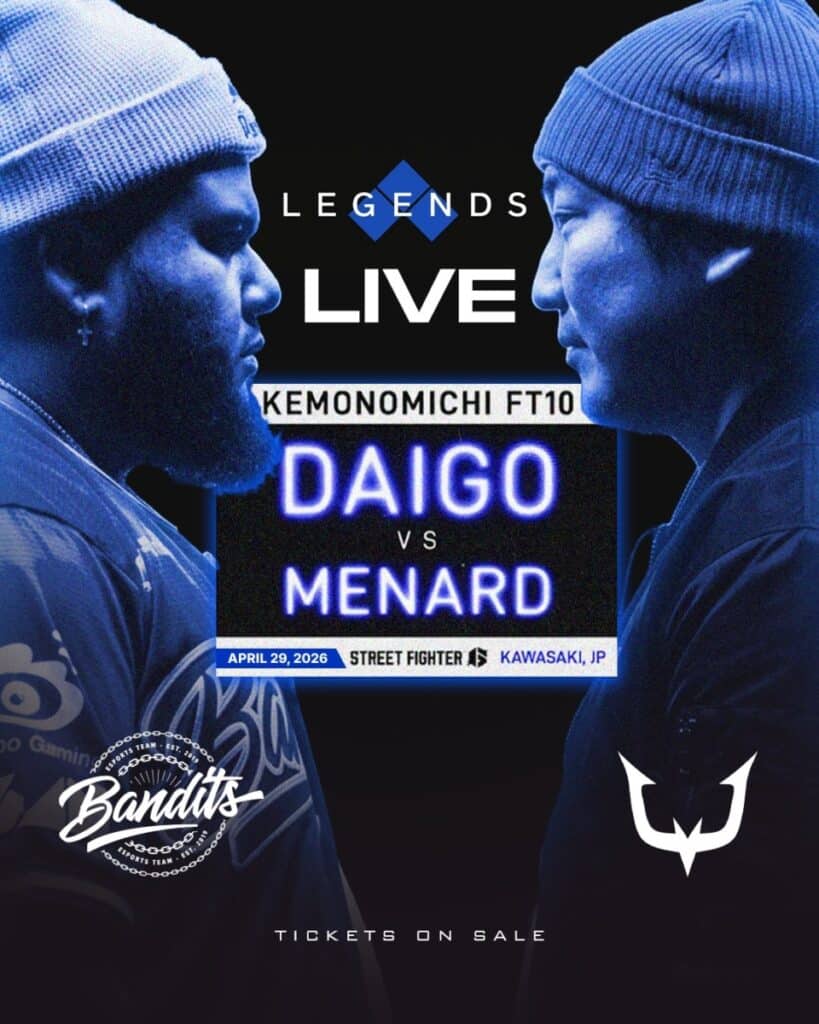
Though major tournaments such as Evo and Combo Breaker demonstrate the dedication and drive of individual professionals, matches like the Kemonomichi Legends LIVE duel between Saul Leonardo “MenaRD” Mena II and Daigo Umehara stand out. Fighting game enthusiasts in Japan approached this showdown with absolute gravity, likening it to a lethal duel with blades where only a single combatant emerges victorious.
This highlights the intense passion within the fighting game community. Both competitors spent months in intense preparation, fully aware of the stakes in this first-to-ten match. In a conversation, MenaRD reflected: “It stands as one of the toughest trials of my career. Ultimately, it held immense significance for me because I strove to reach a standard that would truly test him and justify his effort. He was training hard as well, and it brought me great joy that the effort paid off.”
This environment contrasts sharply with the spectacles of League of Legends or Call of Duty, where smoke machines flare as full rosters walk out in unison, accompanied by analysts shouting with the energy of a major soccer match. While that is chaotic and entertaining, it lacks the feeling of a survival duel. This is arguably why FGC participants approach their craft with such intensity; even if the financial rewards are smaller, players invest their entire being into the competition, breaking down in tears upon defeat or throwing equipment in celebration of a triumph.
Conflicts carry far more weight when they are deeply personal
While team clashes are entertaining, individual feuds offer the ultimate storytelling potential. In squad-based games, lineups shift endlessly. Competitors are traded, contracts conclude, and by the following year, what once felt like a bitter grudge between organizations begins to look like a corporate marketing strategy.
Conversely, individual rivalries remain intensely personal for years. Players look across the stage directly at the competitor who eliminated them from the tournament months prior. The objective is strictly to determine who is superior. There is no way to blame a poorly performing teammate or faulty team comms. This environment fosters an incredible degree of effort, intensity, and constant self-betterment, yielding some of the most compelling narratives in esports.
The persistent tension between Juan “Hungrybox” DeBiedma and Joseph “Mang0” Marquez delivered unparalleled drama. Watching their facial expressions during matches was mesmerizing, but their interactions extended beyond the stage as they traded genuine barbs online rather than lighthearted jokes. Entire online forums were consumed with debates comparing the two and criticizing each player. This level of raw hostility is virtually absent in team environments like Rocket League or VALORANT.
A retrospective discussion on Reddit noted: “The conflict between Mang0 and Hbox remains the most legendary active feud. It is incredible to see how long they have sustained it. Currently, their career head-to-head record is likely the most significant statistic in Melee history. Once both competitors step away from the game, analysts debating the greatest of all time will dissect their match statistics exhaustively.”
Yet, numerous other examples exist. With Super Smash Bros. Melee exceeding two decades in age, veteran competitors have had extensive opportunities to build deep histories. Mang0 and Jason “Mew2King” Zimmerman were perpetually locked in a game of one-upmanship, showcasing a classic battle between Mew2King’s strategic calculations and Mang0’s high-energy flair. Both pioneers forged unique playstyles, and their veteran aura cemented these matches as legendary.
Furthermore, the next generation of players also boasts captivating narratives, supported by the deep legacy of the community and the personal nature of face-to-face tournament clashes.
“The matchup between Zain and Cody is my personal favorite,” wrote an online user. “While I don’t particularly favor either individual, every single set they play represents Melee at its absolute best. I admire how they continuously challenge one another, frequently exchanging tournament wins and matches so that their bracket meetings remain thrilling. Many other rivalries seem to miss the profound weight that this pairing consistently delivers.”
These enduring, multi-year narratives and character arcs are simply absent from team-based disciplines. I cannot recall any genuinely fierce, personal stage rivalries in those environments. During my time covering esports, I recall asking Overwatch and League of Legends pros about their personal adversaries, only to receive indifferent responses. This is likely because today’s rival could easily become tomorrow’s teammate. Uninspiring, to say the least.
The concentration demanded is unparalleled
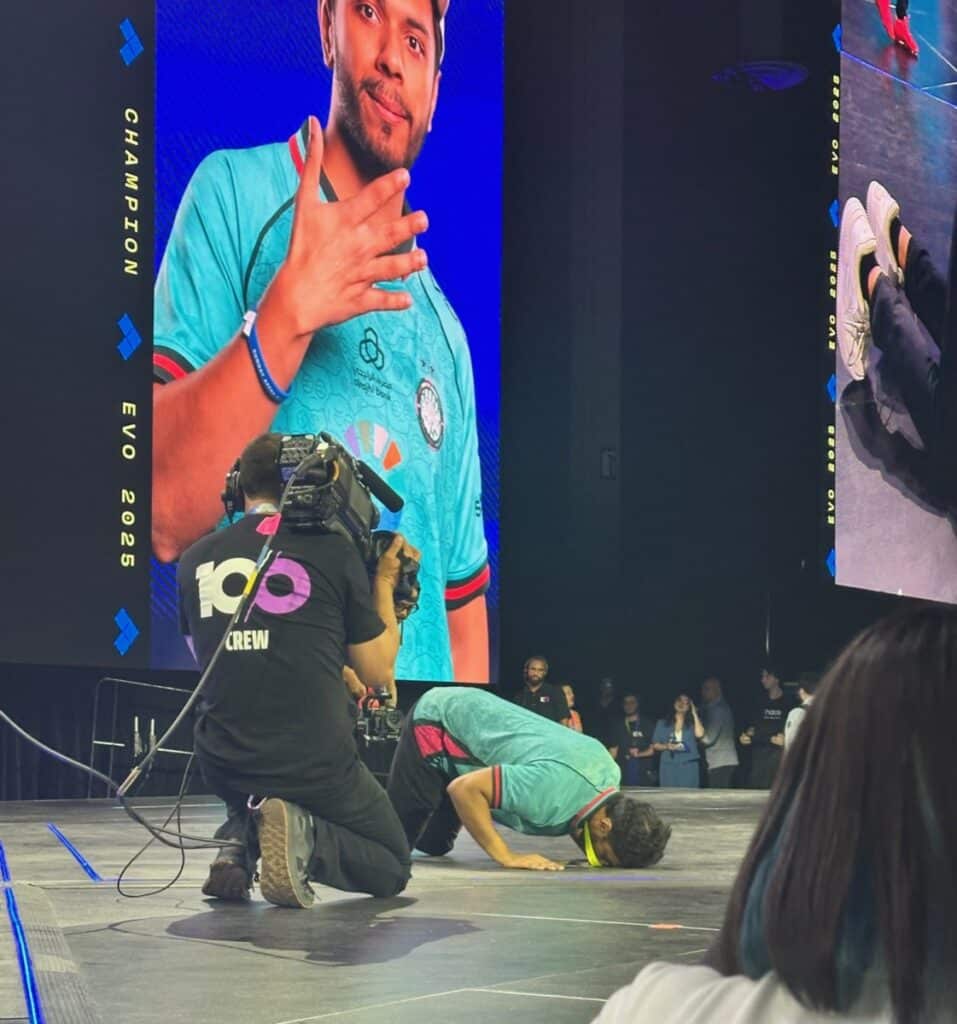
Competing for a championship title independently requires an entirely different degree of psychological strength. You must manage every aspect of strategy, mechanical execution, clutch performance, and emotional control completely by yourself.
Sustaining this performance over time is an even greater challenge. Consider icons like Tekken 8 champion Arslan Ash, the legendary Gods of Melee, and veteran fighting game competitors in their thirties who must preserve their mechanical speed and mental composure for years, or even decades.
A speedrunner chasing a world record at a live event must battle their own physical anxiety while maintaining pixel-perfect inputs for hours. A fighting game expert must read tiny visual cues within milliseconds to bait and punish an opponent’s miss, fully aware that one incorrect anticipation can end the match. It represents human capability and coordination pushed to its absolute threshold.
“Reaching the highest level brings a sense of isolation,” Arslan Ash shared following his eighth Evo victory. “My companions are not present here. It is your family that consistently offers backing. True encouragement. When you are at the peak, you stand alone. It is only you and those closest to you.”
Cooperative esports will undoubtedly maintain their dominant position in broadcast media, and that is perfectly natural. However, for competitive gaming to truly maximize its potential as a viewer sport, we must allocate greater respect, enhanced production investments, and premier main-stage placement to the individual players fighting these battles entirely on their own.