Regrettably, the Super Smash Bros. community once again finds itself facing allegations against one of its members.
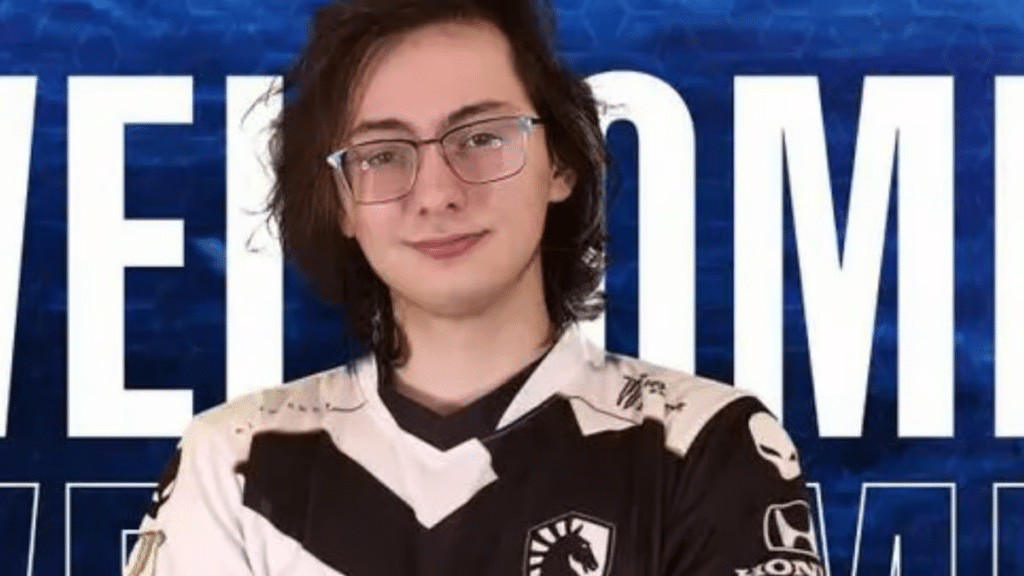
Ryan “L4st” Krichbaum, known for his roles as a Team Liquid coach, commentator, and tournament organizer, has been barred from Super Smash Bros. gatherings in Georgia following numerous sexual assault allegations. This raises concerns about the future of the Smash community.
Grave Allegations Surface Regarding L4st
The Georgia Smash organization reported on May 10th via X that a moderator had received complaints from three unnamed people. The charges leveled against L4st encompassed rape, psychological manipulation, duress, and “numerous instances of sexual battery.”
Several years prior, one of these individuals had privately requested L4st’s exclusion from certain Georgia tournaments in 2024 to ensure “their personal safety.” This individual also expressed a desire for L4st to privately acknowledge and address his conduct.
“Considering this event and additional occurrences reported in other areas, the leadership of Georgia Smash advises an indefinite prohibition from all events within Georgia,” the announcement stated, “encompassing regional competitions, major tournaments, and more.”
Team Liquid has consequently delisted L4st from its “staff” roster in the FGC section. Juan “Hungrybox” DeBiedma is now the sole remaining fighting game player associated with the organization, which has been consistently releasing others.
Beyond this action, Team Liquid has not issued any official public comments.
L4st held a significant position within the Smash community, serving as coach for Leonardo “MkLeo” Perez and having connections to Hungrybox. His extensive involvement across different facets of the Smash landscape led some FGC participants to question why he seemingly enjoyed “protection” for an extended period.
It’s important to mention that Georgia Smash stated the complainant wished to keep the issue confidential. However, many Smash players disapproved of the notion that an alleged perpetrator might have been present in the Smash scene for years without public awareness of their alleged actions. Some speculate that the circumstances were “concealed,” possibly to shield other individuals.
Nevertheless, the most dominant sentiment expressed was profound disillusionment.
The Smash Community Recalls Past Incidents With New Allegations
Numerous Smash participants perceived the accusations against L4st as echoing the “Me Too” movement from years prior, a period when many well-known Smash personalities and players faced allegations of harassment, sexual assault, predatory behavior, and abuse. News regarding L4st reignited anxieties within the Smash community that the environment still harbors harmful individuals.
One Reddit comment read: “Appalling. Extremely troubling, particularly given his significant stature, often appearing at major tournaments and invitational events. The competitive Ultimate scene continues to bear a somber blemish on its history.”
Another expressed sorrow: “Frankly, it’s profoundly disheartening and infuriating. I believe this impact is far greater than accusations against nearly any other player; he was among those whose efforts were essential to the scene’s operational continuity.”
The circumstances surrounding L4st revived a perennial debate within the Smash community: Would it have been better if Nintendo had assumed control entirely?
Although a significant portion of the FGC resents Nintendo’s ongoing interference in Smash esports without offering financial backing, some have pondered if Nintendo should have nevertheless managed the competitive landscape. Smash’s grassroots foundation fosters numerous authentic experiences—displaying resilience, zeal, resolve, and unpredictability. However, this structure can also permit undesirable conduct to persist without oversight.
In the absence of a structured league overseen by the publisher, Smash relies on tournaments financed by independent organizers. This leaves the community somewhat fragmented, implying that an individual might commit an offense in Texas that goes unnoticed by the Rhode Island scene, thereby enabling them to participate there. While some tournament organizers prohibit players implicated in harassment and assault, others choose to ignore such allegations. There are even organizers who establish events specifically for individuals on blacklists, thus providing a platform for those accused of racism, sexism, or violence.
A disheartened admirer remarked: “I appreciate Smash deeply, but I find myself unable to champion its community. It’s simply not possible. The issue is deeply ingrained, and the existing frameworks to prevent such occurrences, or their absence, create a sense that this pervasive problem will never be eradicated.”
Another person commented: “The Smash community is incapable of self-regulation. This environment continues to replay its past mistakes, and its standing since 2020 is entirely warranted. This scene simply holds no value any longer.”
Does this issue truly originate within the Smash community specifically?
Is the Smash Community Itself the Root Cause?
Here is my perspective: No. I believe this issue is predominantly related to men.
Although some unconventional women are certainly present in the Smash community (and elsewhere), statistical data indicates that males are responsible for as much as 90% of violent offenses, including 99% of sexual assaults. Super Smash Bros. is an esports title predominantly comprised of men. The majority of participants are male. Most of the spectators are male. I have attended events where I was one of only a handful of women.
A greater male presence correlates with an elevated probability of such conduct.
Nevertheless, I concur that Smash lacks sufficient authoritative figures to ensure accountability. It operates without an organization akin to the Esports Integrity Commission or Riot Games to enforce responsibility. Instead, it largely depends on individual discretion from one tournament to the next.
For instance, Georgia Smash aimed to act appropriately by maintaining confidentiality as per the victim’s wish. Yet, this approach would not be permissible if Nintendo managed Smash. L4st would have undergone an investigation and subsequent prohibition. Consider the case of Jay “sinatraa” Won in VALORANT; it represents a fundamentally distinct environment.
I do not believe Smash uniquely draws individuals with predatory tendencies more than other male-centric pastimes. However, I contend that it is deficient in regulatory bodies capable of prompt action in such situations and removing implicated individuals. L4st’s “cancellation” would primarily mean tournament organizers declining his participation and professional players avoiding interaction. Yet, he would not face a comprehensive ban across the entire esport, as no overarching authority exists to implement such a measure.
I do not believe Smash is fated to be populated by predators and individuals with problematic behaviors. Nevertheless, tournament organizers across all regions ought to collaborate more extensively to guarantee standardized penalties and decisions for these types of occurrences.
This report, titled “The Smash community struggles with self-governance”: Ultimate tournament organizer and coach L4st faces sexual assault allegations, initially surfaced on Esports Insider.