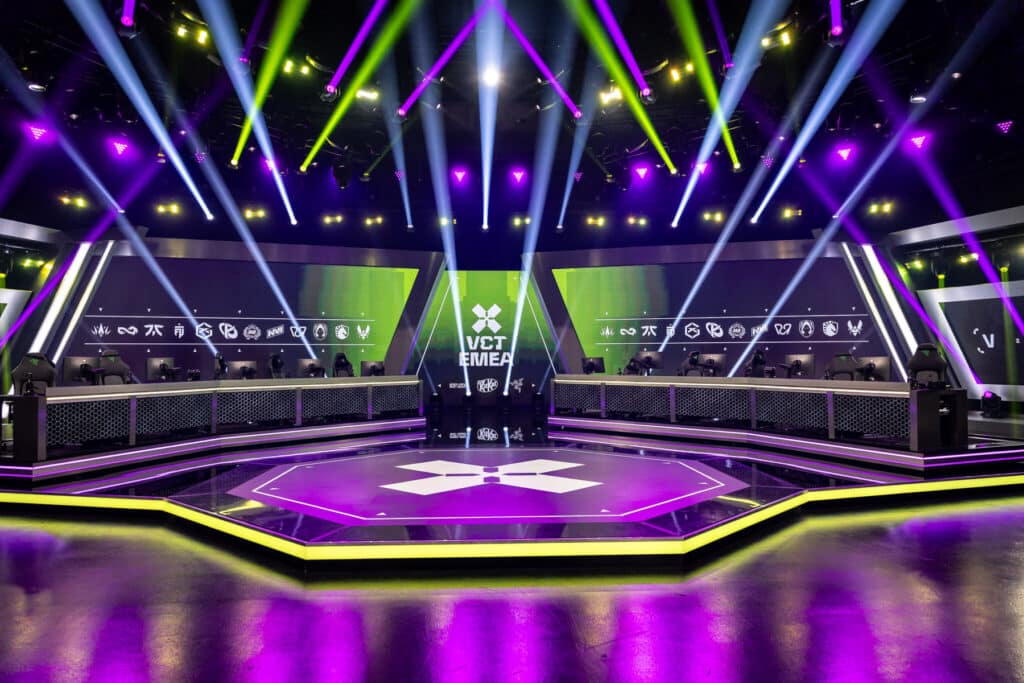
The first stage of VCT EMEA recently commenced this week. This competition features twelve teams vying in the region’s semi-partnered top-tier VALORANT circuit for one of three spots at the next global VCT event, Masters London, scheduled for June.
However, EMEA’s recent performance on the international stage did little to bolster confidence in its competitive prowess. With Team Liquid failing to progress beyond the Swiss Stage, and both Gentle Mates and BBL Esports experiencing swift eliminations from the Playoffs, EMEA registered as the second-least formidable region at Masters Santiago, only marginally stronger than VCT China.
Moreover, it has been three years since a VCT EMEA team claimed an international championship, with Fnatic’s consecutive victories at LOCK//IN São Paulo and Masters Tokyo in 2023 being the last. This drought is particularly disheartening for EMEA supporters, given the region’s history of producing dominant teams from VALORANT esports’ inception. In 2021, European teams secured two of the three premier global events, highlighted by Acend clinching the inaugural Champions trophy.
One individual remarked on social media: “Do we need to have a conversation about EMEA? Feels like it’s such a weak region if FNATIC aren’t at the event. […] how do you fix EMEA?”
As the 2026 VCT calendar enters its second phase, the global VALORANT esports community is closely observing one particular region. Has VCT EMEA managed to learn from its shortcomings at Masters Santiago, or is the region continuing to fall behind its counterparts?
“We’re Not Good at That Stuff”: VCT EMEA’s Disappointing Showing at Masters Santiago
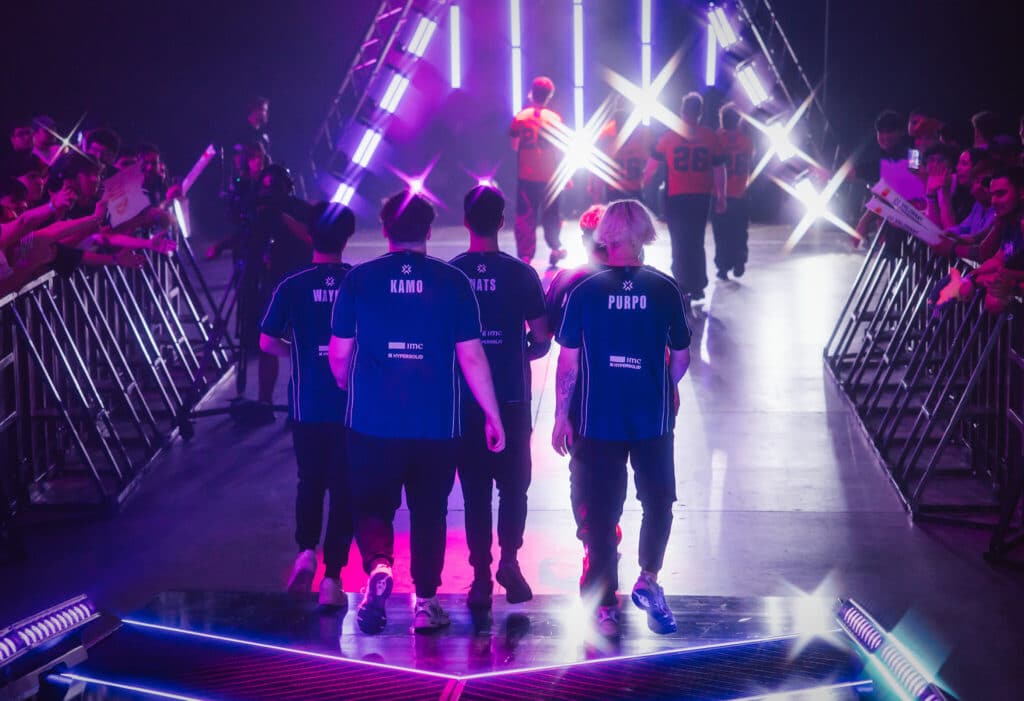
The unsatisfactory outcomes for VCT EMEA at Masters Santiago can be attributed to a pair of primary elements. Firstly, all three teams representing the region featured relatively inexperienced lineups. BBL Esports’ roster debuted in the tier-one circuit at VCT Kickoff 2026, having triumphed in last year’s EMEA Ascension tournament. Meanwhile, both Gentle Mates and Team Liquid, the second and third seeds, undertook significant team overhauls prior to the 2026 VCT season.
Teams lacking substantial competitive exposure at Tier 1 and international tournaments typically struggle with the intense pressure and unforeseen dynamics of the global stage. Loud audiences can obscure crucial in-game audio cues, and adversaries from different regions might introduce unexpected strategies. Novice rosters are also more prone to faltering under the accumulating pressure.
Conversely, established organizations fielding relatively stable rosters have historically demonstrated greater consistency in their participation and performance at global events. This trend is not unique to EMEA; for example, North America’s G2 Esports and the Pacific region’s Paper Rex both deploy seasoned teams that consistently achieve deep runs in international competitions.
So, what exactly happened to VCT EMEA’s seasoned teams before Masters Santiago? This leads to the second critical factor. With numerous agent adjustments introduced in VALORANT’s Patch 11.08, the prevailing strategy at VCT 2026 Kickoff diverged significantly from the previous year’s VCT season. Reduced utility effectiveness and nerfs to Sentinels ushered in a rapid, double-duelist meta.
Analyst Thinking Man’s Valorant explained in one of his videos: “The current meta we’re in is a lot of double-duelist, aggressive playstyle, you know, taking fights, all that kind of thing. And if you were to associate that with a region, you would probably put the Pacific first, and then you would put the Americas second in terms of that kind of playstyle. But you would put EMEA distantly in the bottom dungeon.”
Indeed, EMEA has long been recognized within VCT as the region with the slowest offensive approaches, frequently excelling through meticulously planned attack defaults rather than swift, chaotic skirmishes.
On a recent installment of the VALORANT talk show Plat Chat, former Fnatic coach, Jacob ‘mini’ Harris, emphasized: “I don’t think we’re particularly good at teamfighting. I think Sideshow has mentioned it a few times, where I kind of trivialize the matter as an aim meta, and you kind of expanded on it. ‘Well, there are interesting things you can do. It’s just like more focused on how you fight together and peek off each other and stuff.’”
“And I don’t think EMEA has ever been that great at that stuff.”
Therefore, despite EMEA’s historical record of fielding formidable teams at VCT international competitions, these lineups struggled to adapt to the evolving meta. Instead of established teams like Fnatic, Team Heretics, and the Team Vitality powerhouse, newer talent rose to prominence in VCT Kickoff to secure their berths at Masters Santiago.
Insufficient Investment in Talent Development
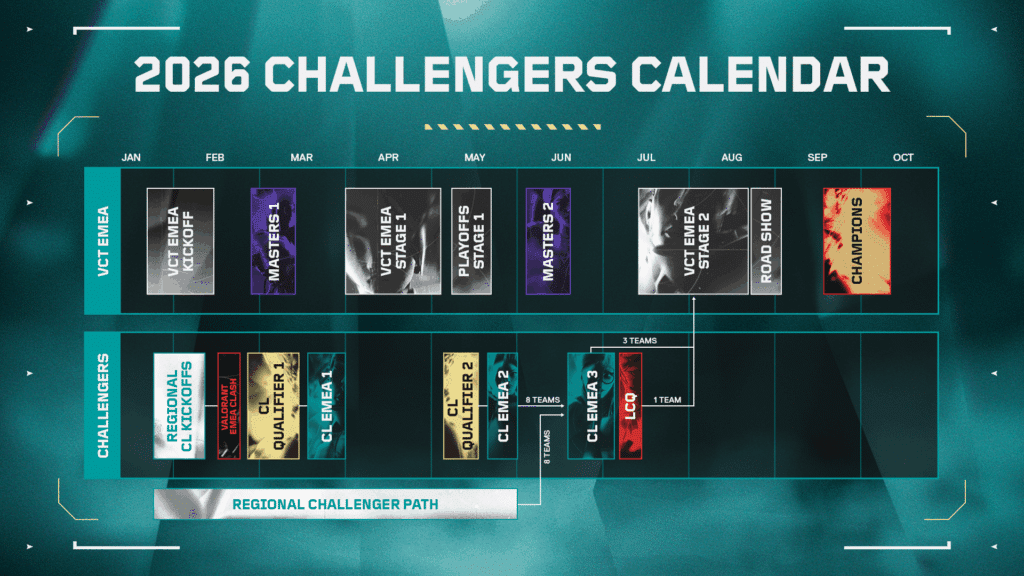
While an understanding of the meta can improve as the 2026 season advances, some voices within the VALORANT esports community contend that broader structural issues are hindering innovation and the nurturing of new talent in EMEA.
In a recent Plat Chat episode, VALORANT on-air personality, Brennon ‘Bren’ Hook, and former Team Liquid coach, Connor ‘Sliggy’ Blomfield, explored how the region’s talent development pathway is negatively impacted by the sub-region segregation within the tier-two Challengers circuit.
Challengers EMEA encompasses distinct leagues for DACH, France, Spain, NORTH//EAST, Türkiye, and MENA, culminating in various Challengers EMEA tournaments throughout the year. Consequently, numerous teams seldom, if ever, get the chance to compete against rosters from different sub-regions.
Bren confessed during the episode: “I’ve always seen it as the region that hasn’t got as much investment as the other regions. The Tier 2 has been disjointed and fragmented across the board. It hasn’t had the same support.”
“You don’t get the cross-pollination. It’s like everyone is in their own little lane,” he further elaborated.
Bren and Sliggy additionally concurred that Counter-Strike’s immense popularity among EMEA’s FPS esports enthusiasts might also influence regional talent and financial commitment to VALORANT.
Deficiency in Innovation
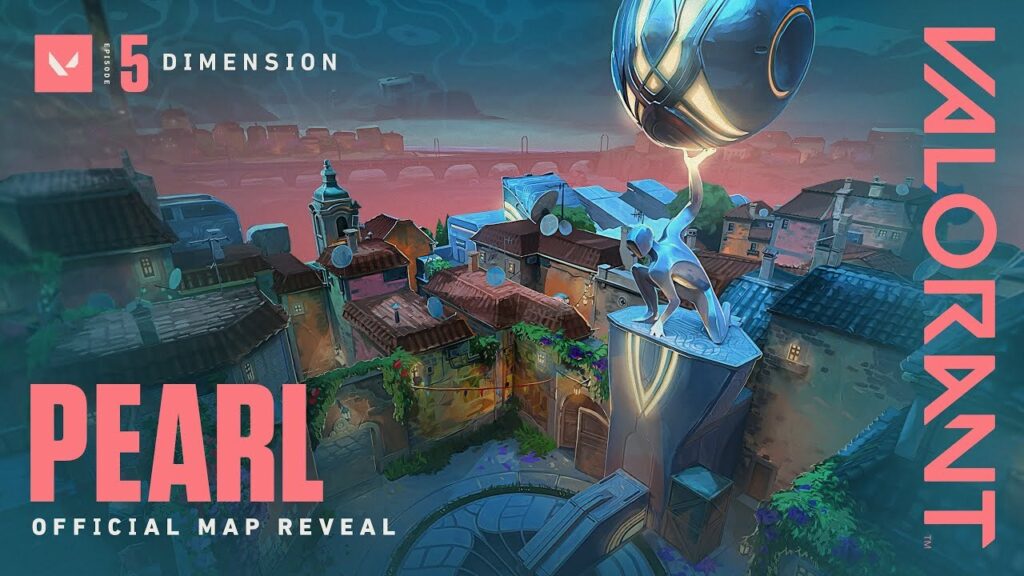
Beyond the areas of emerging talent and regional interest in VALORANT esports, EMEA has exhibited other indicators of fragility. This particular vulnerability appears to be rooted in the region’s map selection capabilities.
Outside of EMEA, it is uncommon for a significant number, if not all, teams within a VCT region to struggle with the same few maps. However, with the introduction of Pearl back in 2022, EMEA collectively acquired its least preferred map.
At that time, most VCT EMEA organizations found it difficult to grasp an effective strategy for playing Pearl, resulting in a dismal win rate on the map compared to other regions. Even now, EMEA teams are easily misled into believing they possess a strong Pearl strategy, as their practice comparisons are exclusively against other EMEA rosters.
What then of the recently introduced maps? Many EMEA representatives, including some of those traditionally considered strongest, appear uneasy playing on maps such as Sunset, Abyss, and Corrode.
Sliggy commented on Plat Chat: “I feel like every time they add in new maps, we just get worse and worse in terms of EMEA. Like all the other regions have most of our good coaches. And I’m not saying we don’t have any good coaches. I’m just saying that the ones who used to innovate and do a lot of stuff may not be there anymore.”
“And I think that’s kind of a backlash.”
While Not Ideal, a Call to Action Might Be Precisely What VCT EMEA Requires
Some analysts, notably Thinking Man’s Valorant, currently consider EMEA to be one of the less formidable regions within the VCT ecosystem.
The content creator concluded in his video: “I do think that it’s fair to say that EMEA is the definite third-place region and that maybe there is a bigger gap from third to second and there is second to first, whichever region you wanna put first. And I do think that EMEA is a little bit behind, and they genuinely don’t seem to be able to send multiple good teams to these internationals.”
Furthermore, mini suggests that EMEA must do more than simply adopt the double-duelist playstyle to truly compete with its rival VCT regions.
The VALORANT coach asserted: “Foundationally, we need to play fast first and actually understand that we can’t spread the whole map and play three-layered defaults. But then, that can’t be it. Cause APAC’s already had three months of practice doing those things. So we need to find value somewhere else if we wanna be good at [Masters] London.”
A potential strategy for EMEA could involve focusing on team compositions designed to counteract swift aggressive pushes. Theoretically, agents such as Vyse and Sage should prove effective in curbing the aggression from two opposing duelists.
This suggests that the outlook for the region isn’t entirely bleak. EMEA may have experienced a decline in international trophy wins, but apart from Masters Santiago, it has consistently achieved deep advancements at global events throughout the ongoing VCT partnership era. Last year, Fnatic secured second-place finishes in two out of three annual international competitions, a feat matched by Team Heretics during VCT 2024.
The VCT 2026 Kickoff and Masters Santiago events may well have served as the necessary impetus for EMEA to adopt more rapid gameplay strategies and dedicate greater resources to innovative tactical development.