After nearly three decades, the New York Knicks are finally poised for a genuine opportunity to secure an NBA championship, a prospect nearly 30 years in the making.
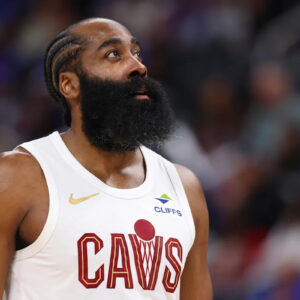
On Monday evening, the Knicks decisively defeated the Cleveland Cavaliers in Game 4 of the Eastern Conference finals, clinching a series sweep and securing their place in the NBA Finals. This achievement marks their first appearance in the Finals since the 1998-99 season, a span of 27 years.
While their Western Conference opponent remains undecided, with the Oklahoma City Thunder and San Antonio Spurs currently level at 2-2 in their finals series, the world has significantly transformed since the Knicks’ last Finals appearance. Numerous conveniences and technologies we now consider commonplace were nonexistent back then.
Prepare for a nostalgic journey.
In 1999, the concept of social media as we know it was largely absent. Communication was primarily via instant messaging platforms, such as the memorable AOL Instant Messenger. Myspace debuted in August 2003, followed by Facebook in February 2004. Twitter emerged in 2006, and Instagram arrived in 2010. The short-form video platform Vine was introduced and subsequently discontinued within that timeframe, while TikTok’s global release didn’t occur until 2017.
During the 1999 Finals, Yahoo Sports had been in existence for less than two years. The digital landscape of the internet was profoundly dissimilar to its current state.
“Survivor,” “American Idol,” and the broader scope of reality television
The proliferation of prominent reality competition series, which largely defined television entertainment in the 2000s and early 2010s, had not yet begun. “Survivor,” having recently concluded its 50th season this spring, was still nearly a year away from its inaugural broadcast. “American Idol” launched in June 2002, and “America’s Got Talent” premiered in 2006.
Although MTV’s “Total Request Live” had already premiered, it was less than a year old during the Knicks’ last Finals appearance. “The Sopranos” had just completed its initial season, “Who Wants to Be a Millionaire?” hosted by Regis Philbin, had just commenced, and “Law & Order: Special Victims Unit,” a series now anticipating its 28th season, was still several months from its inaugural episode.
The advent of the iPhone and BlackBerry devices
The inaugural iPhone was not released until January 2007, many years after the Knicks’ last Finals journey. Contemporary applications, mobile games, and social media platforms were nonexistent. Integrated phone cameras were also absent. Individuals possessing mobile phones primarily utilized them for voice calls and rudimentary text messaging.
Early BlackBerry models launched mere months before the Knicks’ previous Finals showing; however, these were not yet full-fledged phones. They functioned more akin to two-way pagers equipped with email capabilities. The first BlackBerry device capable of operating as a true mobile phone was introduced in 2002.
Fifty percent of the Knicks’ present-day lineup
Returning our focus to basketball, it’s notable that fifty percent of the Knicks’ existing squad had not yet been born when the team last competed in the Finals.
Among the 18 players currently comprising the Knicks, nine were born following the conclusion of the 1998-99 season. The team’s youngest member, Pacôme Dadiet, came into the world in 2005, highlighting the youthfulness of this cohort.
Even the most senior player on the current Knicks roster likely has no recollection of the 1999 team. Jordan Clarkson, for instance, was merely seven years old when the Knicks last advanced to the Finals.

Allen Iverson was the first ever NBA2K cover athlete back in 1999. (Manny Millan/Sports Illustrated via Getty Images)
(Manny Millan via Getty Images)
The genesis of NBA 2K
The inaugural NBA 2K video game was still several months from its release during this period. Video gaming, broadly speaking, was predominantly confined to personal computers, the PlayStation, or the Nintendo 64. The initial Xbox console launched in 2001, approximately six years after the original PlayStation.
Allen Iverson served as the debut cover athlete for the foundational 2K title, which was exclusively developed for the Sega Dreamcast. The Philadelphia 76ers icon, a future Hall of Famer, was then embarking on his fourth professional season and had yet to earn an All-Star selection.
Although that early iteration of the game bears little resemblance to today’s NBA 2K26, it undeniably established the benchmark for basketball video games. One can only imagine the enjoyment it provided to players in 1999.