Securing a victory at Zandvoort, which followed their recent triumph in Budapest, demonstrated a crucial reality: the technical enhancements rolled out before and after the summer shutdown achieved far more than merely recovering lost aerodynamic downforce. They actually allowed the squad to make a significant leap in performance.
For example, during the Barcelona Grand Prix, the inherent advantages of the McLaren package were starting to surface, a trend that continued at Spa, where the single-seater looked exceptionally strong. As cornering speeds increase and turns become more sustained—since pure straight-line velocity is not the only metric—the vehicle’s performance rises. The newest development package provided the additional aerodynamic grip necessary to establish the car as the class leader in such sequences.
The success of these modifications caught even the Woking-based team off guard, with their speed through rapid corners going beyond what simulation models had predicted.
Furthermore, an additional element contributing to their Dutch Grand Prix success was largely overlooked: the introduction of redesigned front wheel rims, an upgrade that Neil Houldey, McLaren’s technical director of engineering, had subtly alluded to prior to track action.
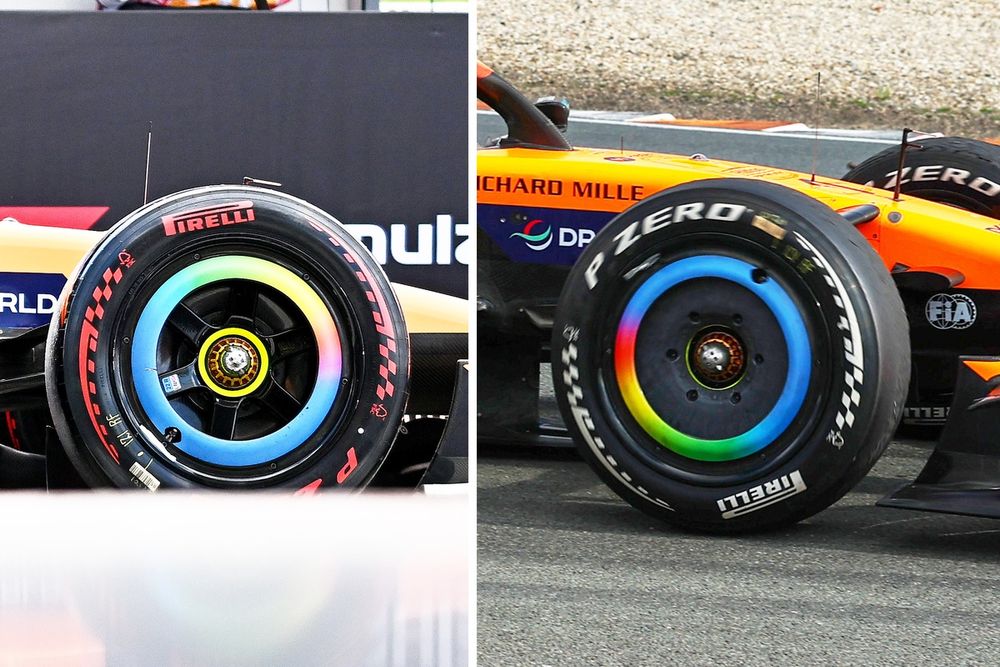
Comparison of the McLaren wheel covers
Image: Clive Mason / Getty Images
“Our modifications included a subtle revision to the rear floor area to produce slightly more downforce, alongside minor adjustments on the rear brake ducts. Additionally, we brought redesigned front wheel rims aimed at assisting with tire warming. While these refinements do not offer massive gains in outright lap times, they marginally boost our overall competitiveness,” explained Houldey.
What makes this specific component so significant? Following the Grand Prix, team boss Andrea Stella pointed out that both Hungary and Zandvoort represent maximum-downforce venues that inherently favor their chassis. Conversely, in Monaco, where the squad anticipated challenging for the lead and replicating prior achievements, they encountered difficulties and missed out on a top-three finish.
The underlying causes of those difficulties extended further than track layouts or turn velocities. Although the streets of Monaco allow engineers more latitude in setup with minimal trade-offs, the chassis lacked sufficient aerodynamic load and had trouble getting the front rubber up to optimal operating temperatures, diminishing overall traction. This specific vulnerability was visible during the early stages of the campaign, particularly in Melbourne and Shanghai, where the car suffered from severe tyre graining. In contrast, Suzuka’s high-grip track surface mitigated graining issues, allowing the MCL40 to secure its maiden podium finish of the year.
An initial worry before the Dutch GP was potential graining on the front axle, which ultimately did not materialize as a major issue for the field. Instead, the main hurdle lay in optimizing tyre temperatures, even for a single qualifying lap. This scenario was evident during Saturday’s final Q3 shootout, where Lando Norris claimed pole, whereas rival teams had difficulty warming their tyres quickly enough and had to run extra preparation laps.
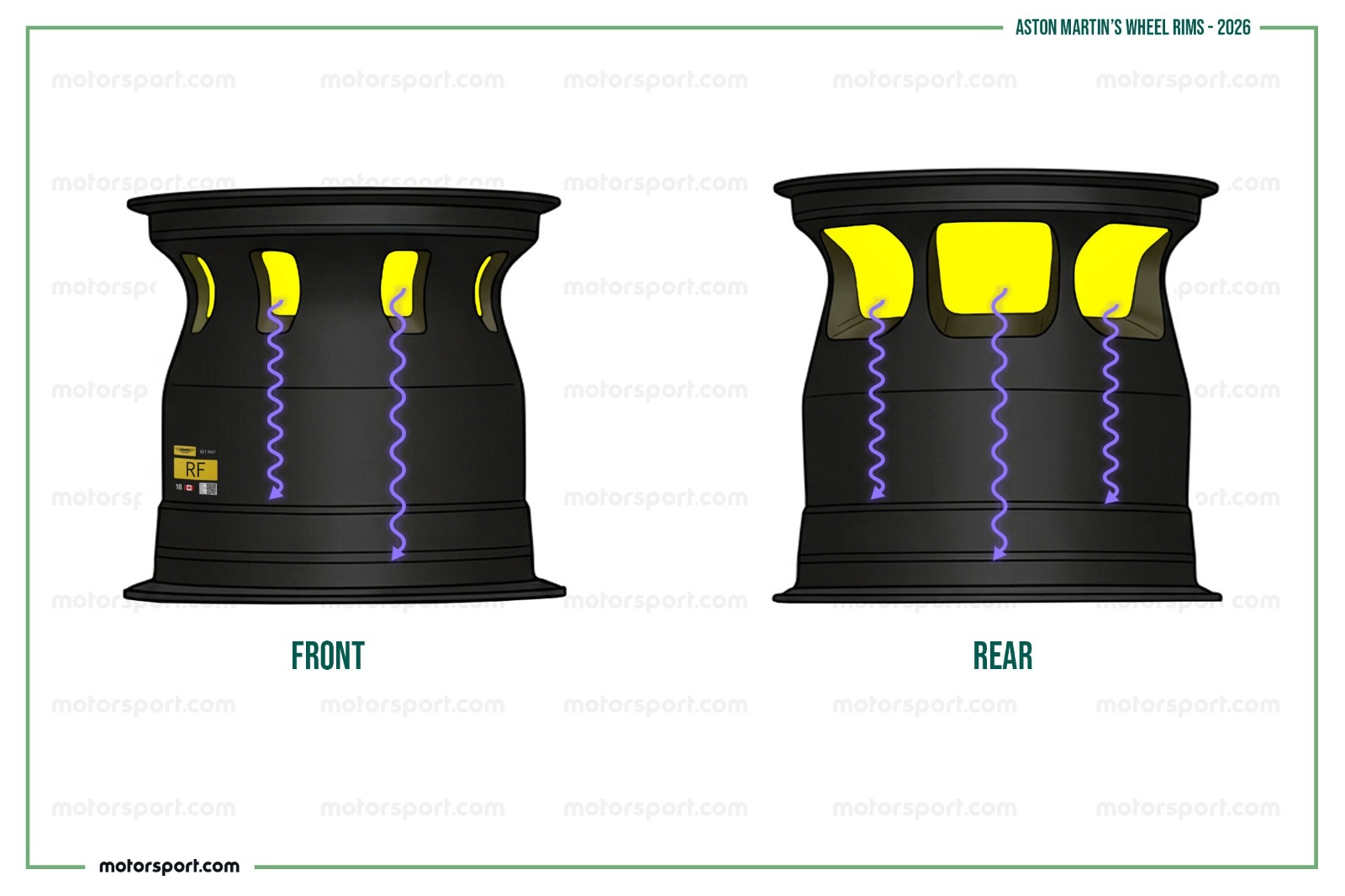
A comparison of Aston Martin’s wheel designs showing the variation between front and rear setups for thermal regulation
Image credits: Gianluca D’Alessandro
This scenario directly ties into the technical updates debuted in Zandvoort. Since regulations now permit development of the wheel rims once more, teams possess an effective means of regulating tyre heat and pressure levels. By utilizing internal hollows within bespoke rim layouts—often referred to as “pockets”—engineers can passively influence airflow and heat transfer directly to the rubber.
For the Dutch race, McLaren concentrated on this specific domain to trap more heat inside the wheel assembly, subsequently transferring that warmth to the rubber. Consequently, they only modified the front wheels, produced by their long-time supplier Enkei, pairing them with a more sealed wheel fairing to prevent cold ambient air from over-cooling the system and to minimize aerodynamic drag.
No changes were made to the rear rims, as managing rear-tyre wear was a major concern over the weekend during both short and long runs. At the rear, the main goal was cooling rather than heating, especially during heavy acceleration and high-speed cornering. Challenging wind conditions caused cars to slide in fast corners, where aerodynamic stability is vital, and in acceleration zones exiting slow turns.