
For a long time, the VALORANT Champions Tour Pacific has presented itself as an arena aimed at bringing together competitors from South Korea, Japan, Southeast Asia, Oceania, and other areas under a single tournament banner. Headquartered mostly in South Korea and comprising a combination of franchise partners and Tier 2 teams, the tournament has developed world-class competitors while cultivating highly dedicated fan communities throughout the territory.
However, with the expansion of the league, various elements have prompted organizations, supporters, and eventually Riot Games itself—particularly in 2026—to question if VCT Pacific genuinely reflects its diverse region, or if it is instead transforming into a branch of the South Korean VALORANT scene.
Founded on Diversity, Battling for Equilibrium
Since the inception of the International Leagues, managing VCT Pacific has proved to be a highly complex endeavor.
In contrast to the Americas or EMEA, the Pacific does not function as a uniform competitive landscape. It merges several distinct sub-regions, each possessing unique esports frameworks, talent pools, linguistic backgrounds, and funding levels.
Although this rich variety is precisely what makes VCT Pacific so compelling, it has introduced numerous obstacles for the circuit. Chief among these difficulties is ensuring the league remains genuinely welcoming and accessible to all participating territories.
The issue has even been openly recognized by the Head of VCT Pacific, Jake Sin, who conceded that “we’ve admittedly created an unintentional imbalance over the last few years.”
He clarified that focusing on operational consistency played a part in this disparity, adding that his future objective is to resolve this discrepancy in the next round of team partnerships.
“Going through the thoughts shared by competitors about their past four years in the Pacific as their 2026 journeys conclude is incredibly moving. I trust they view this moment as the start of a fresh chapter rather than just a conclusion. My goal is to build an even more incredible competitive environment to participate in over the next few years. There is much to anticipate,” Sin shared on social media.
“And to reassure anyone concerned, please know that I am dedicated to making our league far more representative than it has been. We did, in truth, foster an unplanned disparity over the previous years (to ensure smooth operations), which I am now fully focused on fixing.”
Is VCT Pacific Turning Overly South Korean-Focused?
By 2026, five out of the twelve franchises in VCT Pacific hail from South Korea, representing roughly 42% of the competition. To be clear, there is nothing intrinsically incorrect about this figure. If South Korean clubs earn their spots through fair athletic merit, they absolutely merit their inclusion.
Nonetheless, outside influences, like the fact that VCT Pacific is mostly based in South Korea, offer domestic squads a substantial advantage in terms of physical facilities, production settings, and the general tournament environment.
Naturally, this does not imply that Riot is purposely giving preferential treatment to South Korean lineups. Establishing flawless equality for every single VCT Pacific participant is an immense challenge, especially during the inaugural partnership phase with so many distinct sub-regions in play.
Still, issues surrounding competitive fairness have fueled the belief that the playing field is uneven.
Several participants within VCT Pacific, such as Maksim “Jemkin” Batorov and Hector “FrosT” Rosario, have historically voiced apprehensions about suspected violations of fair play.
Based on their assertions—which Riot subsequently verified—South Korean rosters enjoyed certain privileges during the 2026 Kickoff tournament. This included an event where T1 squad members were permitted to smoke in the restrooms, and another instance where Gen.G’s player Lakia wore his audio gear improperly, alongside other reports.
These accusations prompted Riot Games to launch an internal inquiry, ending in formal written cautions for several competitors and organizations, though no severe penalties were handed down.
Why Broad Representation is Crucial for VCT Pacific’s Path Forward
Regardless of intent, this imbalance is undeniably detrimental to the broader geographical area. Squads from other parts of the continent face tougher logistical hurdles and struggle more to recruit top players. Meanwhile, local fans feel disconnected, especially when cheering for their teams in person demands a costly journey to South Korea.
On top of that, prior controversies have strained the relationship and trust between competing organizations and tournament administrators.
What, then, are the potential solutions to these issues?
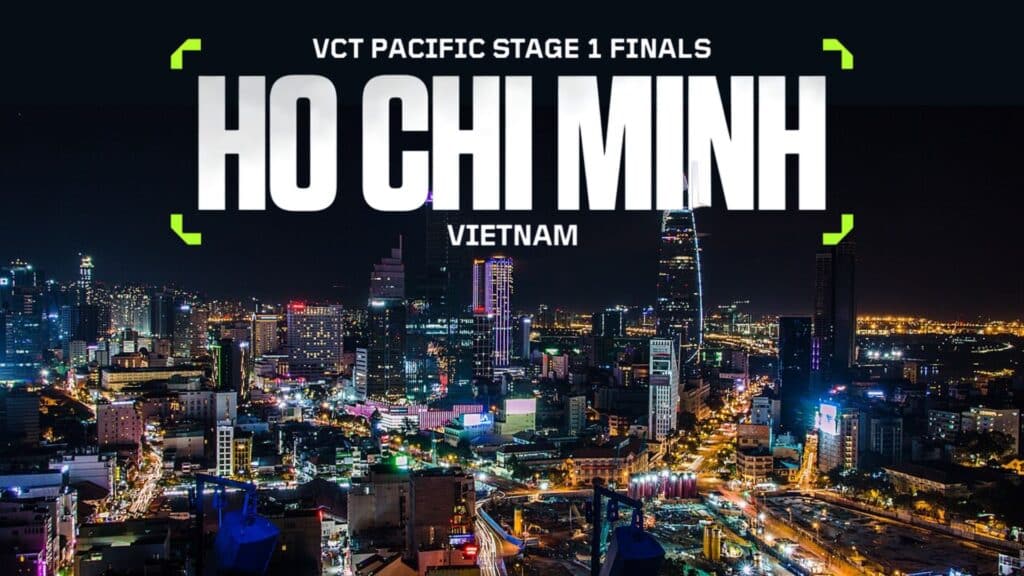
To begin with, acknowledging the existence of the issue is a crucial first step. Moving forward, it would be beneficial for Riot Games to host VCT Pacific events in various other nations more frequently. The incredible passion shown by audiences in countries like Vietnam and Japan has already proven what they can bring to a live arena.
Apart from staging tournaments in diverse locations, Riot might also focus on employing a more balanced combination of Korean and international personnel fluent in several languages. Doing so could streamline communications and provide greater transparency in administrative decisions when rule disputes occur.
Additionally, the community is awaiting the announcement of the next roster of affiliate clubs for the 2027 VCT campaign. Nevertheless, Jake Sin has indicated to Esports Insider that the strength of an organization’s fan following will play a pivotal role in the selection process.
Riot is also working to increase the accessibility of the competitive circuit for the next season by implementing Open Qualifiers and extending direct Kickoff invites to all partnered teams, with the exception of the Chinese league.
Even so, true integration shouldn’t simply mean enforcing rigid quotas for every territory in the top tier. Rather, the objective must be to foster a highly competitive regional ecosystem where South Korean dominance is routinely contested by powerful rosters from Southeast Asia, Japan, South Asia, Oceania, and other locales.
Currently, the planned adjustments and trial measures indicate that Riot is aware of the shortcomings. The ultimate test, however, lies in converting these inclusive concepts into tangible results and showing that this new path is more than just rhetorical reassurance.