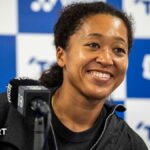
Following the Spurs’ victory in Game 3, my thoughts keep returning to a post-game comment Dylan Harper made regarding Stephon Castle, who sank two crucial free throws to secure the 115-111 win on Monday.
Harper was probed by ESPN’s Scott Van Pelt about what brings a smile to his teammate’s face. His response was succinct: “Nothing.”
Stay with me. Let’s consider the importance of Castle’s contributions to the Spurs throughout this entire season. His forceful drives are self-evident, his playmaking skills have steadily developed, and his defensive impact has been pronounced at every turn. Reflect on how, within a single postseason run, he has harnessed this skill set to approach historical benchmarks. Review the players with the most playoff games featuring 15+ points, 5+ rebounds, and 5+ assists in NBA history before reaching 22 years of age: Magic Johnson leads the list with 11, LeBron James ranks third with 9, and Castle stands in second place with 10.
Returning to the subject of expressions. When the Spurs found themselves down 2-0, Castle himself uttered a series of remarks between games that garnered significant attention. He reiterated his confidence in the Spurs and his belief that they ought to have won both prior contests. Being at a 2-0 disadvantage in the Finals was “nothing the Spurs couldn’t overcome.”
He not only substantiated this with a 23-point, 5-rebound, 5-assist effort in Game 3, but he did so in front of a New York crowd that has yearned for the Knicks to achieve Finals glory for 27 years. He established the prevailing atmosphere, then ultimately wrested control of the game from their grasp.
Castle might not often display a wide grin, but his fierce competitive drive to succeed ensured that the Knicks and their supporters would depart Game 3 feeling utterly dejected, perhaps murmuring, “There’s nothing to feel joyful about in my life.”
While much of the focus and influence surrounding the Spurs centers on Victor Wembanyama’s play, it’s crucial to remember: Wembanyama and Castle became the first pair of teammates, aged 22 or under, to each record 20+ points in an NBA Finals game. Many will highlight Wembanyama’s aggressive approach and mentality, his improved efficiency in pick-and-roll situations, and his enhanced ability to penetrate the paint more frequently and find rolling opportunities. But I pose the inquiry:
How did he achieve that level?
The Spurs’ backcourt players were finally capable of engaging the Knicks’ big men in pick-and-roll scenarios. And in my view, it was Castle who set that particular tempo early and consistently in Game 3. Let’s examine this closely.
Castle’s Contributions on Offense
The Spurs have had to strive for offensive consistency in the half-court and in pick-and-roll actions, and seek methods to apply pressure on both Jalen Brunson and Karl-Anthony Towns. The Knicks had grown comfortable with their weakside defenders proactively tagging Wemby and negating his rolls. Their perimeter players were effective in maneuvering to cut off drives, allowing their bigs to disengage even more quickly to cover Wemby’s rolls.
In Game 3, Castle initiated the effort promptly. Driving in one direction to create space for a screen-release. Assessing the court and understanding if KAT was impeding his turn around the corner, which implied Wemby was positioned somewhere in the painted area. Working to maintain his defender behind him, drawing in the opposing big, forcing the weakside defense to remain fixed, and then executing the correct pass from that situation.
The Spurs have utilized a V-formation offense (or a High Horns) involving Wembanyama and a wing player moving up to screen for Castle. The intention is to provide Castle with room to attack high-floor areas and advance towards the basket. However, the Knicks had been highly effective at containing the drive, tagging the roller, and removing offensive choices. Castle and Wembanyama reversed this dynamic in Game 3.
By setting more robust screens, defenders were compelled to go over, and Castle then directly confronted and engaged KAT in his defensive drop. This compelled the weakside defense to remain fixed, thereby creating opportunities for the Spurs: dishing to De’Aaron Fox, who could exploit a closeout; locating Wembanyama inside the key if KAT was positioned higher up; or employing a measured approach with sudden bursts of speed, rather than constant maximum effort, to finish near the basket.
A crucial aspect to observe moving forward in this series is Castle’s interpretation of the court and the Knicks’ defensive schemes. As he gains greater proficiency in varying his pace, identifying defensive help locations, and distributing to the perimeter, the Spurs could achieve enhanced equilibrium in their half-court offense.
Regardless of whether the Knicks dispatch help on drives or apply early tags from the weakside, it’s advantageous for the Spurs that he is seeking to execute these plays within the half-court offensive scheme.
Castle’s Effect on Defense
Establishing the dominant rhythm on both offense and defense is challenging, yet this is precisely what Castle offers to San Antonio.
Castle applies relentless full-court pressure to Brunson. While the Knicks attempt to shift Wembanyama across the court to exploit defensive mismatches, Castle’s efforts are consuming valuable shot clock time. Should they aim for a Brunson/KAT pick-and-roll, it could occur with only 16 seconds remaining on the clock. Furthermore, a screen might be negated entirely if Castle successfully battles through it.
These identical exertions established the dominant defensive posture for the Spurs in the third quarter, effectively quelling the intensity the Knicks had exhibited in the second period. Precise defensive plays led to deflections, compelling other Knicks players to take on offensive initiation duties.
Castle’s adeptness at navigating screens is also profoundly important for a Spurs squad that requires diverse defensive strategies against the Knicks’ offense.
The capacity to contest over a screen, remain attached to the ball-handler, transfer defensive responsibility on a drive, and then recover to Towns when he pops out offers a nuanced method for disrupting predictable offensive plays. This allows the Spurs’ other defenders to maintain their positions and avoid excessive help, as Castle strives to recover and challenge incoming shots.
The standout aspect of Castle’s Game 3 performance comprised his pivotal plays. His crucial 3-point shot will probably join the Spurs’ (apparently limitless) collection of decisive long-range baskets. His block on Brunson’s fourth-quarter drive held greater significance than many might recognize. Furthermore, he converted the free throws that extended the lead back to four points in the closing moments. Castle made bold statements, he validated them with his play, and now… he must repeat this performance.
I anticipate many will be drawn to Castle’s assertion that he foresees the Spurs winning three consecutive games. What might often be overlooked, however, is his remark that they would need to approach it contest by contest to gradually overcome the Knicks.
For the Spurs to level this series and ultimately claim the championship, Castle must leave his decisive mark on every upcoming game. He will need to evolve from merely initiating momentum to becoming a constant, impactful force. Defensive barriers are not perpetual; the most effective strategy is persistent effort.