Strolling through the Formula 1 paddock at Monza, you are constantly greeted by signs celebrating its reputation as the legendary “Temple of Speed.” However, that title might become less fitting come 2026.
Leading up to the Italian Grand Prix weekend, discussions have centered on how the Grand Prix will unfold – and the extent of the speed reduction for this season’s machinery. McLaren driver Oscar Piastri shared that, according to his team’s virtual tests, their single-seater achieved lower maximum velocities than it did at the Hungaroring, a circuit renowned for its low-speed, winding nature.
This comes despite the Woking-based squad deploying their specially designed low-drag ‘H-wing’ configuration for this event.
The bottleneck stems from the proportion of straight-line sections relative to turns at Monza, combined with the characteristics of those turns. On a circuit where competitors drive flat-out for roughly 80% of the lap, onboard battery power drains rapidly – with very few chances to harvest and regenerate energy.
This represents an inherent constraint of the existing technical regulations, under which the hybrid power unit relies on electrical systems for close to half of its total output. To prevent excessive lifting-and-coasting or intense power clipping—techniques heavily criticized by competitors and spectators—the FIA has capped the maximum energy recovery at five megajoules per lap. Consequently, this restriction ends up lowering terminal velocities due to the smaller pool of usable energy.
“On a track of this nature, you face a dilemma regardless of the approach you choose,” Piastri pointed out. “Had the limit on energy harvesting been set higher, we would experience extreme power clipping all over the lap, likely dropping 30 to 40 km/h before the end of the straights. Yet even with a lower recovery limit, which keeps the clipping at a somewhat standard or acceptable level, the phenomenon remains present.

McLaren driver Oscar Piastri
Captured by: Clive Mason / Getty Images
“Naturally, this leaves less deployment for the straightaways, resulting in lower overall top speeds. We will have to observe what kind of maximum velocities we actually record.
“Based on our simulator data, our speeds on the main straight in Hungary actually exceeded our simulated speeds here, which sounds counterintuitive, but it simply comes down to having less deployable electrical power. Then again, even if more energy were permitted, we lack the heavy braking zones to harvest it, so a trade-off exists either way.
“In my opinion, opting for a moderate and manageable level of power clipping is the right path forward.”
The challenge of balancing energy deployment over consecutive laps has sparked debate all year long. While backing off the throttle before corners to conserve fuel and recover electrical power has been part of F1 since the introduction of hybrid power units in 2014, the practice has become far more prevalent today.
Extreme power clipping—where competitors keep their foot down but the electric motor generates resistance to feed energy back into the battery—is widely unpopular due to the sudden deceleration it causes far ahead of normal braking zones. This phenomenon has stripped some of Formula 1’s most iconic corners of their difficulty.
Varying strategies for battery usage and recovery have boosted overtake numbers this year, though many passes feel artificial, stemming from differences in state-of-charge rather than pure driver performance. Given the layout of Monza, this ‘elastic band’ style of racing is highly likely to be on full display.
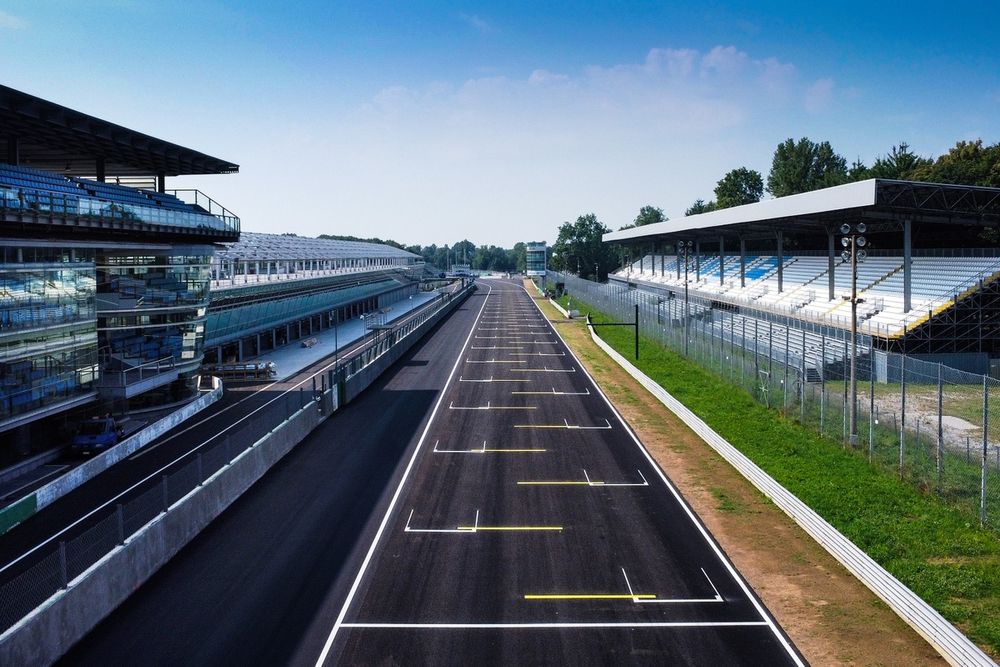
The legendary Monza circuit
Photo credit: Archivio Autodromo Nazionale Monza
While this trend may frustrate many purists, the sport’s commercial rights holders argue that the general audience is unbothered. “A pass is a pass,” Formula 1 chief Stefano Domenicali remarked earlier this year, later jokingly pointing out in another interview that “most people associate clipping with hair accessories.”
“I anticipate a chaotic race, particularly during the opening laps,” Piastri predicted.
“It is clearly a circuit that places massive demands on energy, featuring numerous long straights where you can deploy power. Because of that, I believe the grand prix could yield highly unusual racing.
“We still have plenty of practice sessions ahead, so we’ll get a clearer picture of everyone’s battery strategies and how the order shapes up. Regardless, I am bracing for a highly unpredictable and thrilling spectacle—whichever term you prefer, it promises to be action-packed.”
We value your feedback!
Please share your thoughts on what we should cover in the future.
Participate in our survey
– The Autosport.com Editorial Team