Autosport: Let’s discuss your present position with Williams. Could you describe the kind of influence you have on the vehicle?
Victor Martins: “I am able to influence the car, but would I call it direct? Probably not, because the squad is very large, with numerous areas and aspects to refine and evaluate—so I wouldn’t term it ‘direct.’
“Still, I do play a part in its evolution—chiefly through simulator work, evaluating power deployment for the next circuit ahead of each race weekend, and laying the groundwork for Alex and Carlos so they are free to address other, potentially higher-priority matters.
“I won’t be making direct decisions like redesigning a suspension system, particularly since I have not driven the actual car on track yet, but I can accelerate the refinement process by utilizing my background and observations to supply them with the most precise and high-quality data.
“Additionally, I maintain a tight working relationship with Carlos [Sainz] and Alex [Albon] so we can pinpoint the specific aspects of the vehicle that require attention—what is performing well, what is lacking, and where our priorities should lie.
“Being present here [at the track in Belgium] is crucial for me because it allows me to return to the headquarters and provide valuable input, concentrating on the correct areas for the current FW48. At the same time, continuing my education within an F1 environment and remaining in the mix as a backup driver at select events is excellent for my professional growth, so I view it in a very positive light.”
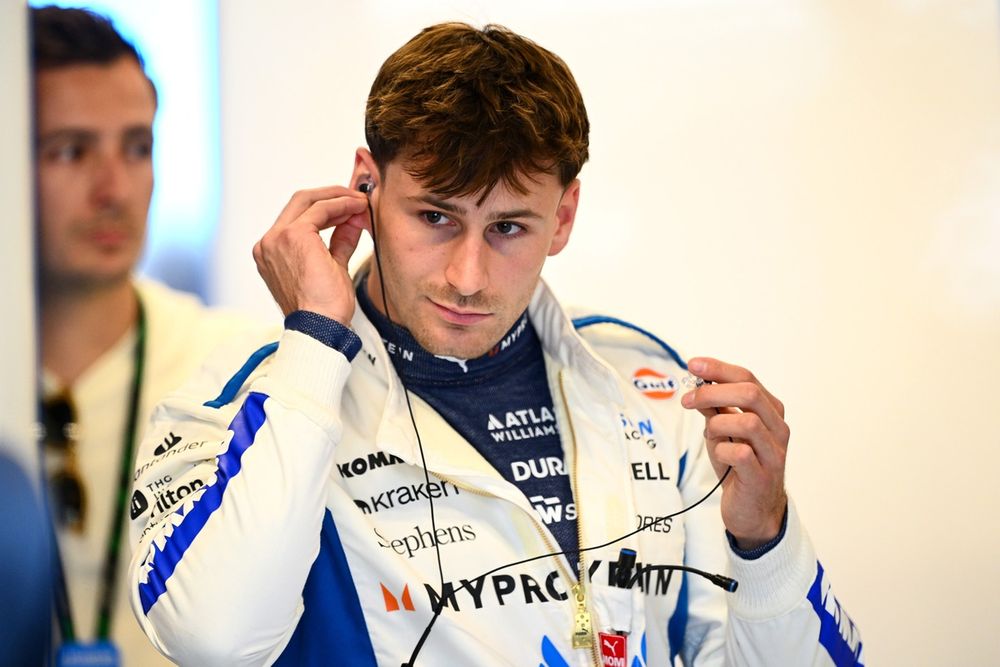
Martins photographed at the 2025 Belgian Grand Prix serving as the backup driver for Williams
Photo by: Clive Rose / Getty Images
AS: Does working in the simulator become more challenging when you haven’t experienced the actual vehicle on track?
VM: “It certainly does. However, we are all aware of how hard it is to secure real track time—first practice sessions are rare, time is extremely limited, and these chances do not come easily for a driver. So yes, I would love to, and I actively strive and hope for those chances constantly. Nevertheless, I possess sufficient knowledge and background to analyze and absorb what the vehicle does during actual running, replicate those sensations in the simulator, comprehend them, and determine our next steps.
“Naturally, getting a chance to drive it in the near future would be incredibly beneficial for the simulator’s progression, the car’s evolution, and data correlation—honestly, it would aid every single department in the team.”
AS: Have you received any indications from the team about potentially driving the car later this season?
VM: “At the moment, no FP1 sessions are scheduled. I have some TPC [Testing of Previous Cars] track time, including a session at Silverstone earlier this year, though that wasn’t in the current model. Currently, nothing is on the books for me, but as we know, situations shift rapidly in F1; you cannot afford to be impatient or anxious, you simply have to perform when called upon, remain professional, offer accurate insights, foster strong connections, and perhaps they will hand over the keys at some point this year.”
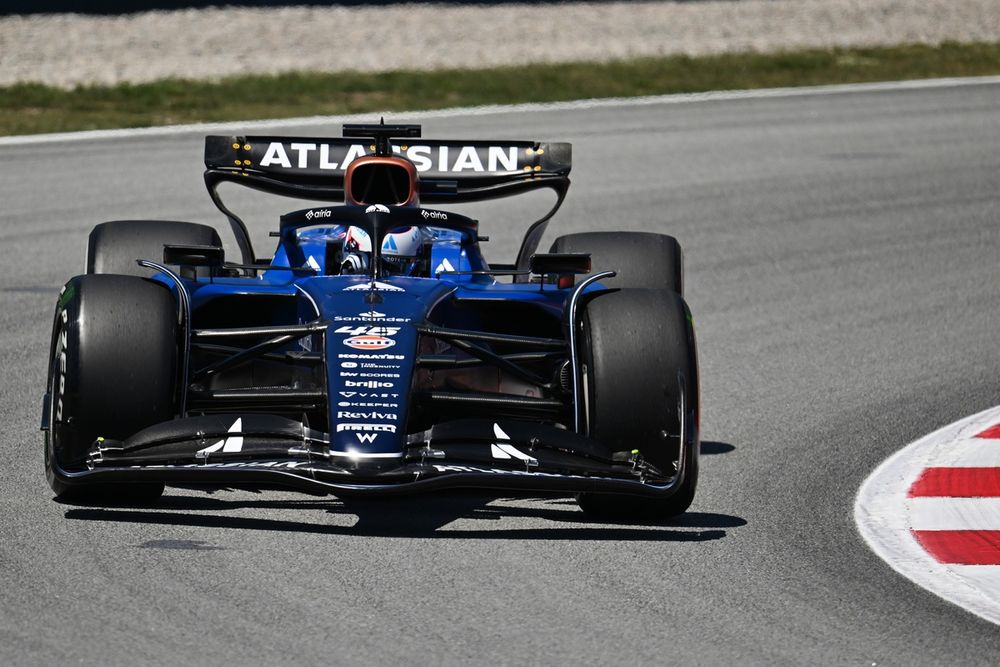
During last year’s Spanish Grand Prix, Martins completed his maiden (and currently sole) FP1 outing
Photo by: Clive Rose / Getty Images
AS: You are also involved in creating a simulator tailored for the junior academy. How does its creation differ from a standard simulator?
VM: “They are quite comparable, actually. For the FW48 simulator work I perform, our aim is to mimic the vehicle’s dynamics, its shortcomings, its strong points, and its overall handling characteristics to aid its refinement.
“With the junior driver training setup, we strive for maximum realism regarding track behavior, making the two projects inherently similar. However, we will focus on programming configurations from support series like F2 and F3 to capture the exact characteristics they encounter in feeder categories. Still, the fundamental concepts remain very much alike.
“My task is simply to apply my own F2 and F3 background concerning the Pirelli rubber, the chassis, the power units, and how they handled on track, translating those elements into the virtual model.”
AS: Ultimately, is the primary objective to operate two separate simulators at the same time?
VM: “Yes, exactly. Not necessarily during a race weekend, but on a typical weekday at the factory, we can have one rig dedicated to refining the FW48 throughout the year, while just a short distance away, another setup is running to assist the junior racers.
“That is the ultimate objective, though the target audience, the software configurations, and the overall goals are entirely distinct. One focuses on top-flight F1 progress, while the other serves the development of our academy prospects. They represent two unique paths, but they can indeed operate in parallel.”
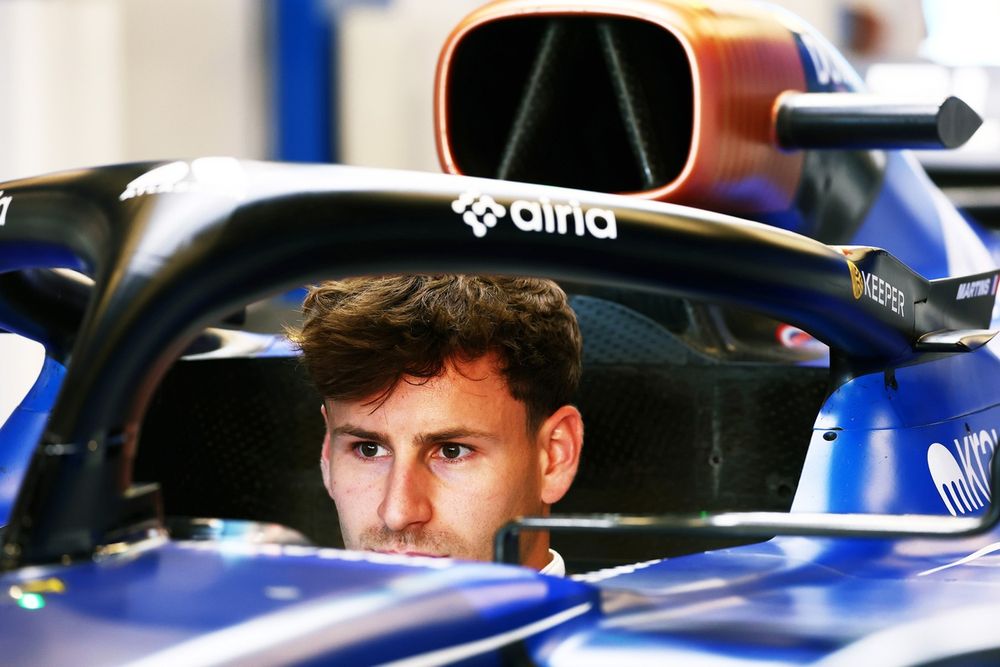
Martins has split his duties across two simulator setups based in Grove
Photo by: Clive Rose / Getty Images
AS: Alex Albon mentioned that significant effort is already directed toward next year’s FW49. Have you contributed to that project yet?
VM: “Yes, though since we have a large roster of drivers, our responsibilities and objectives vary. At present, my main focus lies on the active progression of the FW48 through trackside support. For example, just yesterday [the Thursday prior to the Belgian GP], I was in the simulator dialing in our setup and finalizing energy strategies for this event, which is where my immediate attention goes. However, on several occasions this season, I have run trials for future vehicle concepts to observe how they compare to our current machine and evaluate potential design paths.
“Naturally, a substantial engineering contingent is focused on those future projects, but within an F1 environment, you interact with a massive variety of staff on highly diverse tasks. It is fascinating how you can encounter colleagues you have never run into because your areas of focus never crossed, or meet a fresh face who literally started yesterday. The sheer scale of an F1 operation means there are endless variables to study and constant progression; we are uncovering novel concepts daily, even within my capacity as a simulation pilot and development tester.”
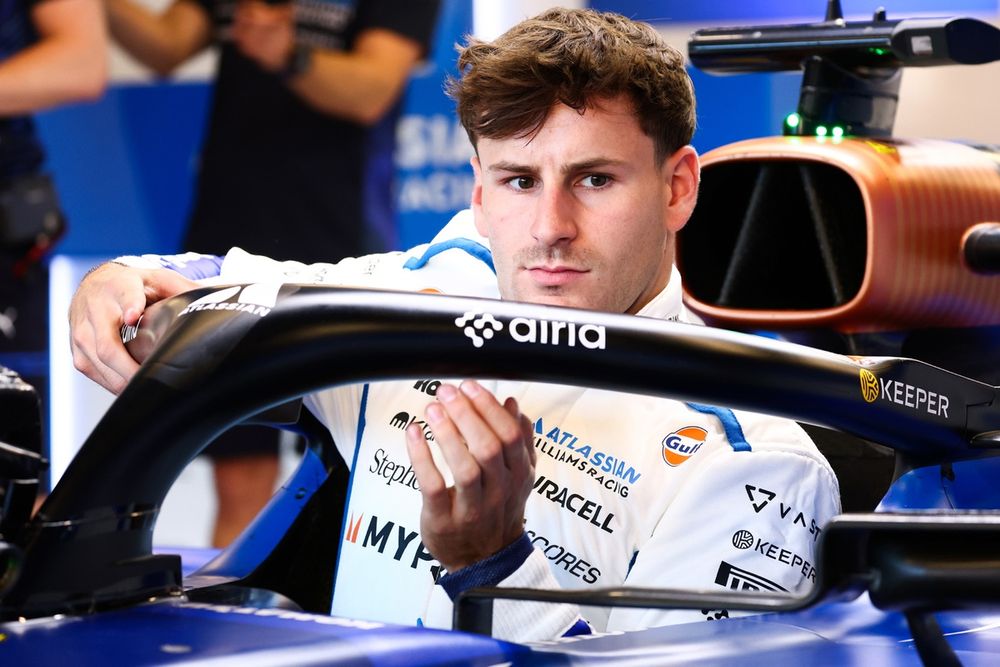
The French driver constantly acquires new knowledge through his position at Williams
Photo by: Clive Rose / Getty Images
AS: You noted earlier that being in this environment benefits your career. Does this imply F1 remains your primary objective, and how do you envision your path going forward?
VM: “I won’t deny that Formula 1 is constantly on my mind, but I view it on par with major arenas like WEC or Formula E. In my view, these represent the three premier and most competitive series in all of racing, attracting the elite. Consequently, keeping active connections in WEC, FE, and F1 is of equal significance to me.
“Thus, it remains a major target, and stepping up to F1 is still the ultimate dream—which is why I value my involvement with Williams so highly. This position offers tremendous personal growth, teaching me how to tackle complex engineering problems and better understand the machinery.
“As an example, mastering the complex hybrid and electrical systems of an F1 power unit could yield major advantages should I pivot to Formula E in the future, as these categories share many technical parallels. Similarly, Hypercar technology aligns closely with F1 platforms, allowing me to transfer the knowledge gained at Williams directly to my Hypercar commitments with Alpine. Ultimately, this versatility is highly advantageous for my career trajectory, and it might—who knows—lead to an F1 race seat down the road.”
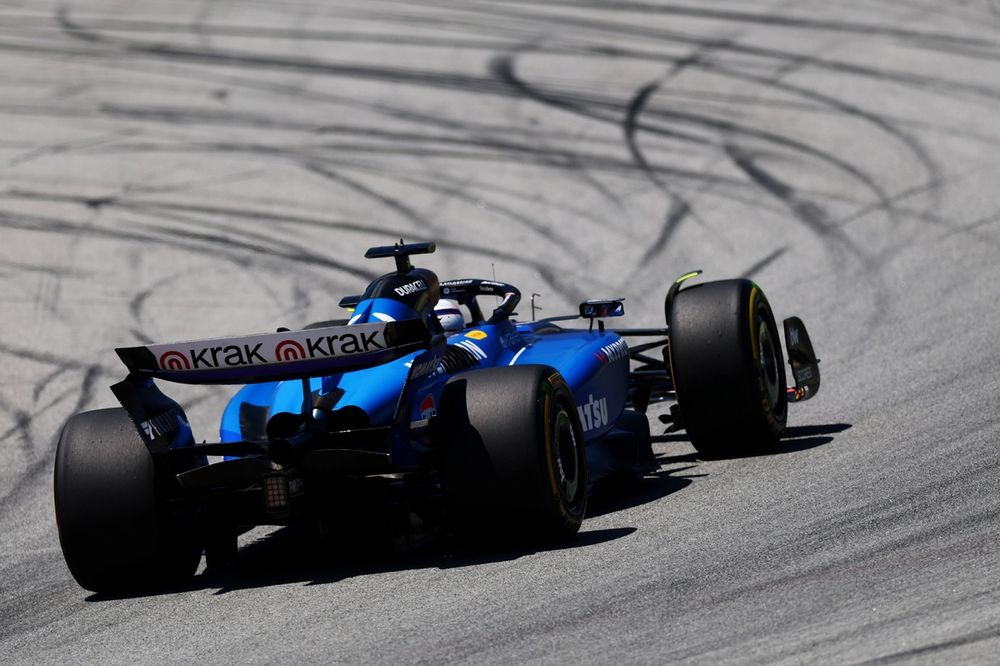
Could Martins eventually secure an opportunity in Formula 1?
Photo by: Clive Rose / Getty Images