Derek Chisora has no desire to see Moses Itauma ease his way back into action. Instead, he favors pairing him with Richard Riakporhe, a rival boasting dangerous punching ability for a comeback fight after his defeat to Filip Hrgovic.
Pressed on who Itauma ought to face in January, Chisora briefly mentioned Frazer Clarke before fully throwing his weight behind Riakporhe. Neither candidate appears prone to shrinking under adversity.
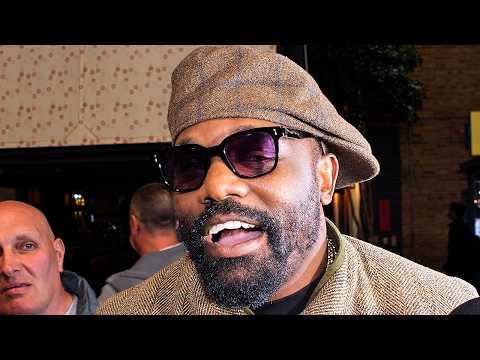
“He ought to square off against Richard Riakporhe,” Chisora stated to members of the press.
Choosing such a challenging path is tough for a prospect attempting to bounce back from his initial loss. Itauma has candidly discussed his disappointment regarding the Hrgovic fight, revealing that viewing the footage remains painful. Facing an established heavy hitter immediately compels him to confront those lingering uncertainties amidst genuine physical danger.
Nevertheless, the reasoning makes sense. Cruising past an inferior rival adds a victory to his tally, yet it resolves none of the questions raised by the Hrgovic encounter. Itauma must demonstrate an ability to keep his composure when a contest turns chaotic.
Riakporhe possesses sufficient force to punish even a momentary lapse in focus. Matching Itauma against him would demonstrate that his team believes in his capability to handle a competitive clash rather than inflating his resume with easy wins.
However, Chisora set a clear boundary. The second Agit Kabayel was brought into the discussion, his response was immediate.
“Kabayel will completely run through him.”
This remark clarifies his mindset. Chisora recognizes the merit of assessing Itauma at the domestic level, but views a match with Kabayel as overly ambitious at this stage.
He continues to view Itauma as an eventual leading figure once the old guard of heavyweights moves on. Nevertheless, his matchmaking guidance dictates that the recovery process must commence against a genuine contender. A clash with Riakporhe guarantees genuine danger right from the start.
Being carried off on a stretcher following the Hrgovic bout fundamentally alters how Frank Warren must manage Itauma going forward. Chisora speaks as though Itauma merely lost a tight decision on scorecards or lost stamina, entirely ignoring the savage nature of the stoppage. Hrgovic didn’t simply outpoint him; he battered him to the canvas with devastating, thudding right hands that left Itauma completely unconscious.
Sustaining punishment of that magnitude can inflict lasting psychological and physical damage on an inexperienced heavyweight. When an athlete exits the venue strapped to a backboard, one cannot take for granted that their chin remains durable until tested by another heavy strike.
Throwing him immediately in with Riakporhe—a naturally explosive knockout artist who attacks with lethal intent—risks shattering whatever self-belief Itauma has successfully rebuilt. Should Riakporhe connect squarely with small gloves early in the fight, Itauma could unravel entirely, ruining Queensberry’s prized heavyweight asset prior to his twenty-second birthday.
Warren finds himself in a tricky promotional dilemma. If he books Itauma against weak journeymen who collapse within two rounds, the youngster gains no insight into pacing, enduring difficult stretches, or absorbing power punches. Conversely, thrusting him into an intense battle with a puncher like Riakporhe creates the hazard of consecutive knockout defeats, potentially ruining his career trajectory.
A compromise represents the only sensible direction forward. Queensberry cannot risk taking Chisora’s suggestion by gambling on a dangerous domestic power-puncher merely to satisfy spectators. Itauma requires tough opponents capable of taking him eight or ten full rounds without having the terrifying power necessary to knock him out.