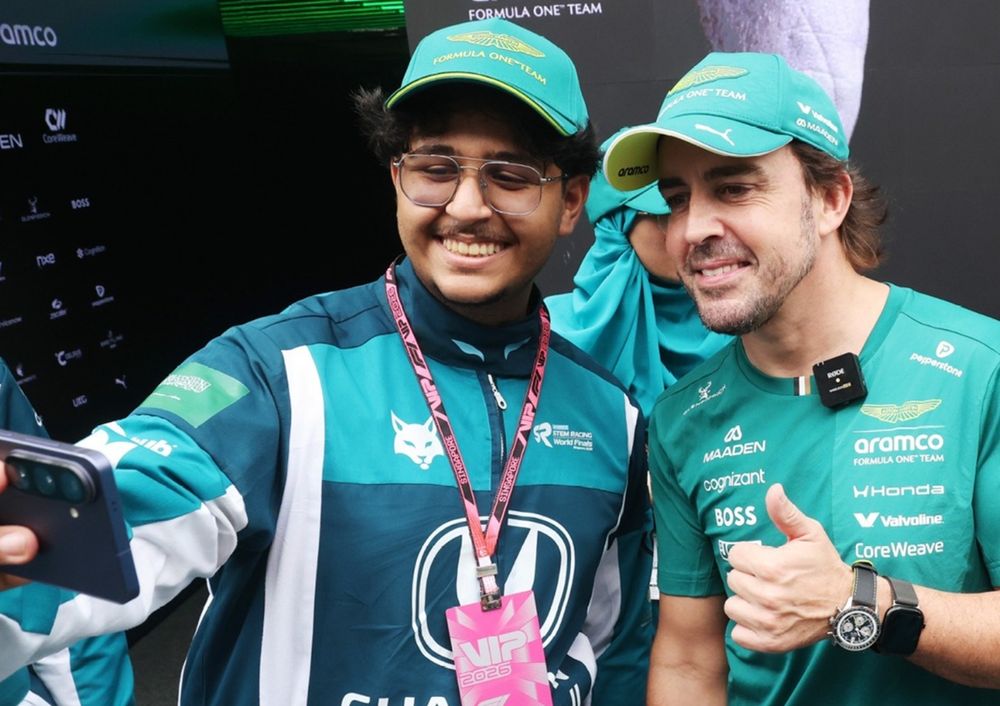
A group of six high school students from Saudi Arabia, comprising four boys and two girls, are eagerly walking through the Singapore Formula 1 paddock.
These students make up Team Lynx Racing, which has recently earned the title of champions at the STEM Racing World Finals held in Singapore during the days leading up to the grand prix. After excelling in a competitive, four-day international engineering event, Lynx Racing was awarded the 2026 trophy on the grand prix podium, where they mingled with two-time world champion Fernando Alonso and were granted a tour of the Aston Martin garage.
Some members of the team are hopeful this won’t be their final opportunity to witness an F1 garage firsthand – they aspire to be part of a team in the future.
Since its establishment in 2000 under the name F1 in Schools, STEM Racing has been dedicated to providing gifted youth with the chance to explore their engineering interest and cultivate their abilities through a rigorous series of competitions.
Teams, consisting of three to six students, are assigned the task of designing and constructing a small F1 car powered by CO2 cartridges. Their objective is to launch the car over a 20-meter track as swiftly as possible, with some attaining speeds of nearly 70 km/h. The victors of regional and national contests are granted entry to the annual world finals, battling against the finest teams globally.
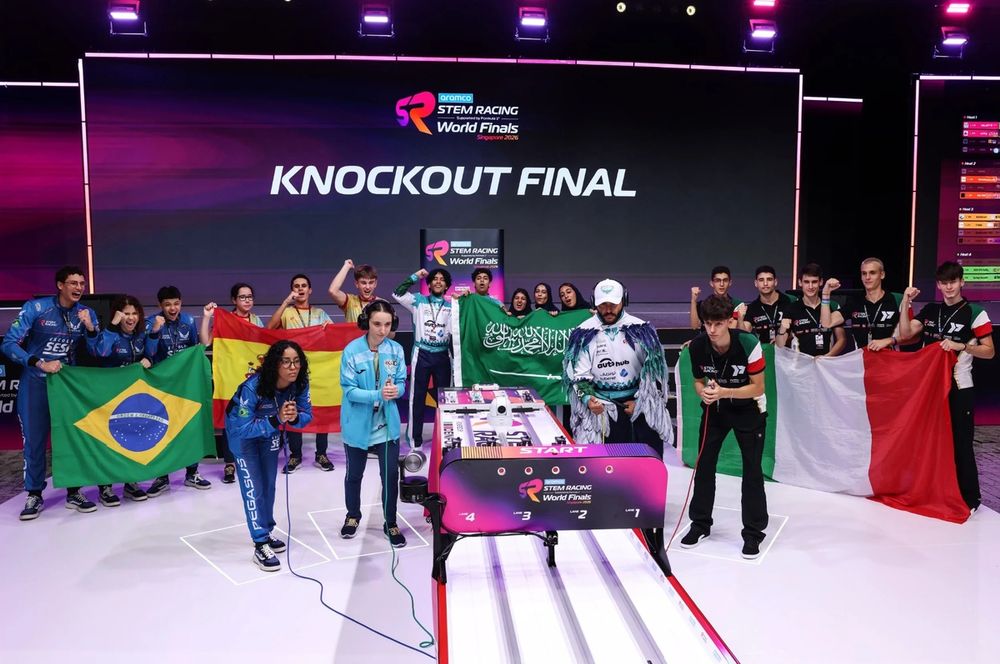
The 2026 competition in Singapore marked the largest edition to date, featuring 91 student teams from 36 different nations, all vying for a variety of awards that evaluated their expertise.
STEM Racing World Final 2026 Singapore
Photo by: STEM Racing
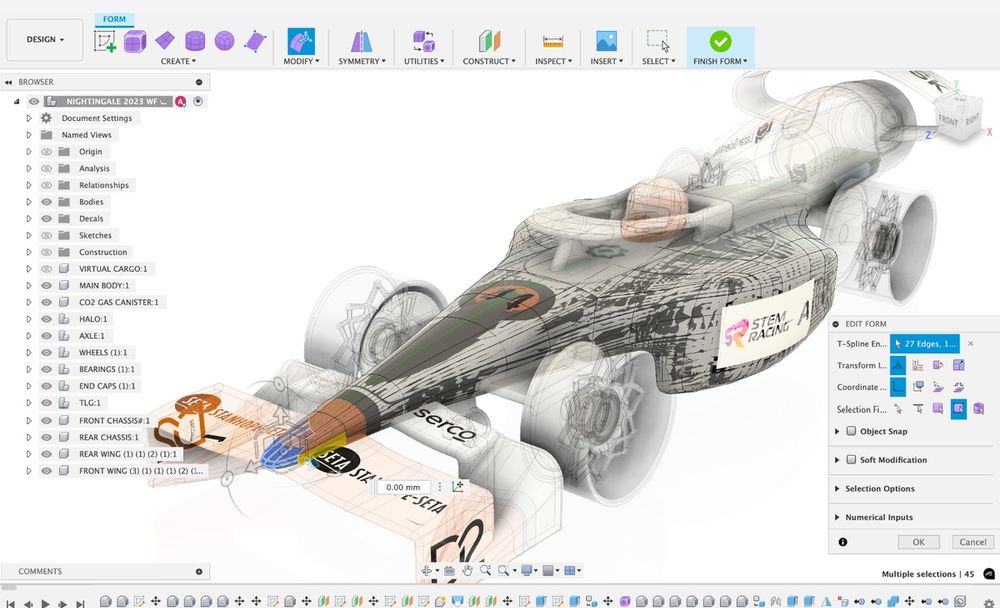
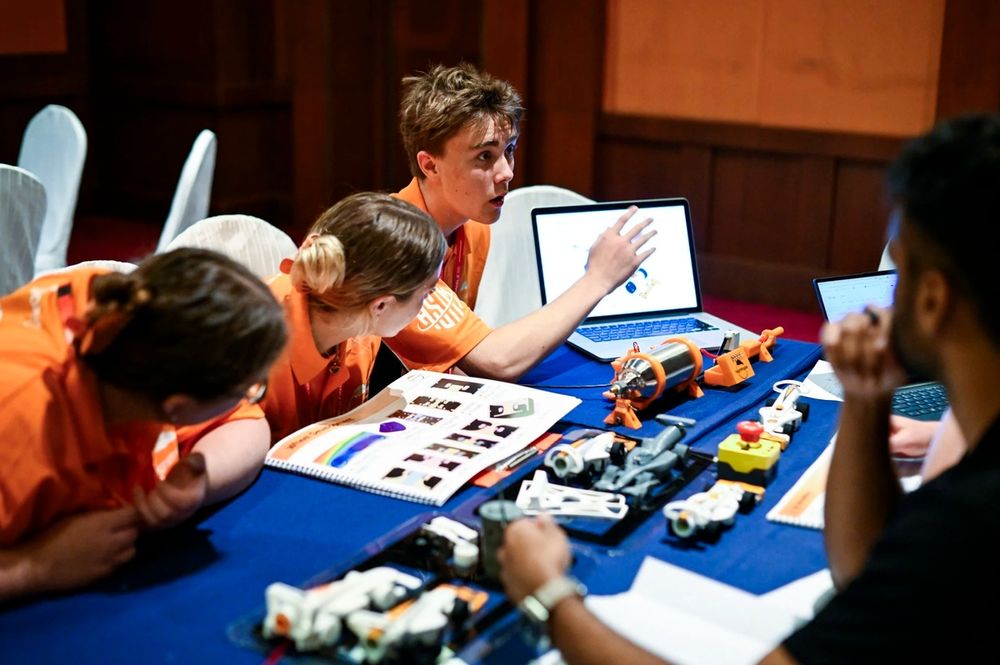
Despite the diminutive size of the cars, the competition remarkably resembles actual F1 racing. Teams have the freedom to design and construct the vehicles themselves employing advanced CAD software, testing their understanding of aerodynamics as they minimize drag on their cars.
The final product is fabricated using a CNC router, with the front and rear wings produced via 3D printing before being assembled, painted, and ultimately raced. Following a strict rulebook, all cars must face scrutiny similar to that of genuine race cars.
Additionally, teams are evaluated based on their off-track capabilities. They must create a marketing portfolio and sponsorship strategy, establish a brand, deliver presentations to judges, and design a pit booth display that encapsulates all these components into a cohesive product. With a limit of six students per team, each member’s contribution is crucial.
The focus on marketing and funding becomes critically important for those teams progressing to the World Final, given the costs associated with traveling to Singapore, which can be quite substantial for a contingent of up to six participants alongside their teacher or adult mentor.
STEM Racing World Final 2026 Singapore
Photo by: STEM Racing
Walking through the expansive ballroom at Resort World Sentosa, the venue for the 2026 finals, one cannot help but be impressed by the creativity, competition, and enthusiasm on display.
“I believe gaining experience is crucial, but I also enjoy the competitive aspect,” states Noah from the German team Spectrum, which ultimately secured the third spot on the podium. “It teaches you how to operate under pressure as a cohesive unit.”
Meanwhile, Aarav, design engineer and leader of the Singapore-based team Nebula, expressed his enjoyment of engaging with and learning from international peers. Like a skilled F1 designer, he was discreetly observing the competition. “The skill level here is exceptionally high,” he noted. “It is fascinating to observe how different teams tackle the same challenges.”
Although a direct route to F1 is not available given the participants’ ages, the initiative is backed by F1 and numerous teams. Many alumni of STEM Racing have leveraged the competition as a launching pad for relevant university education and subsequently found positions within F1 teams.
Kyriakos Theofanidis from Greece emerged victorious in 2016 and now works as a mechanical engineer at Red Bull Ford Powertrains. James Mitchell from Australia participated in the World Finals in 2023 before being recruited by Aston Martin. Additionally, Laurence Vines from Britain, a former STEM Racing participant, is now employed at Williams as a structural design engineer and continues to contribute to the event as a judge, mentor, and commentator.
“At 15, I wrote to all the teams seeking work experience since I had no connections in the sport,” Vines told Autosport. “I was unaware of the pathway until I came across the competition by chance. In collaboration with what was previously known as F1 in Schools, Williams offered an engineering academy that would support you through your education, and I realized that was my route in.”
Vines credits the competition for introducing him to tools and techniques like CAD, CFD, and FEA simulations at an early stage. “Before participating, I had no knowledge of those concepts. I wouldn’t have engaged with them until university.” he shared. “At 15, I was learning CAD while creating this miniature car under rules designed to prepare you for a career in F1. The guidelines span over 70 pages and are extremely detailed.”
“Since then, I have studied Mechanical Engineering at University College London, which sponsored the competition and granted me a full scholarship. I also completed a placement at Williams.”
STEM Racing World Final 2026 Singapore
Photo by: STEM Racing
Amy Martin utilized the competition as a stepping stone towards an engineering degree before shifting her focus to finance. Eventually, her interests converged, leading her to join Mercedes High Performance Powertrains as a financial controller.
“Initially, I wasn’t particularly interested in F1,” she shared. “I gathered my friends in school and we became one of the few all-girl teams to reach the World Finals that year. After winning the Marketing Award, I was selected for the Williams Engineering Academy in 2016. They brought us into the paddock where I had the opportunity to meet Nico Rosberg. That moment ignited my determination to break into F1.”
“As a 16-year-old girl, being there and envisioning my potential future was genuinely exhilarating.”
When asked about the takeaways from the competition, she stated: “The main thing is building confidence. It’s quite a challenge for someone aged 15 or 16 to present in front of accomplished F1 engineers and judges. It fosters a remarkable level of fearlessness.
“The caliber of some participants is astonishing… They are not only profoundly intelligent, but they also communicate so effectively on a global stage, which is truly impressive. It has shaped some outstanding all-rounders.”
Not only does STEM Racing benefit participants, but it is also increasingly vital for F1 teams. In a landscape of budget constraints, scouting and attracting emerging engineering talent has begun earlier, making it no surprise that the majority of teams have crafted their own engineering academies, graduate programs, and other internships.
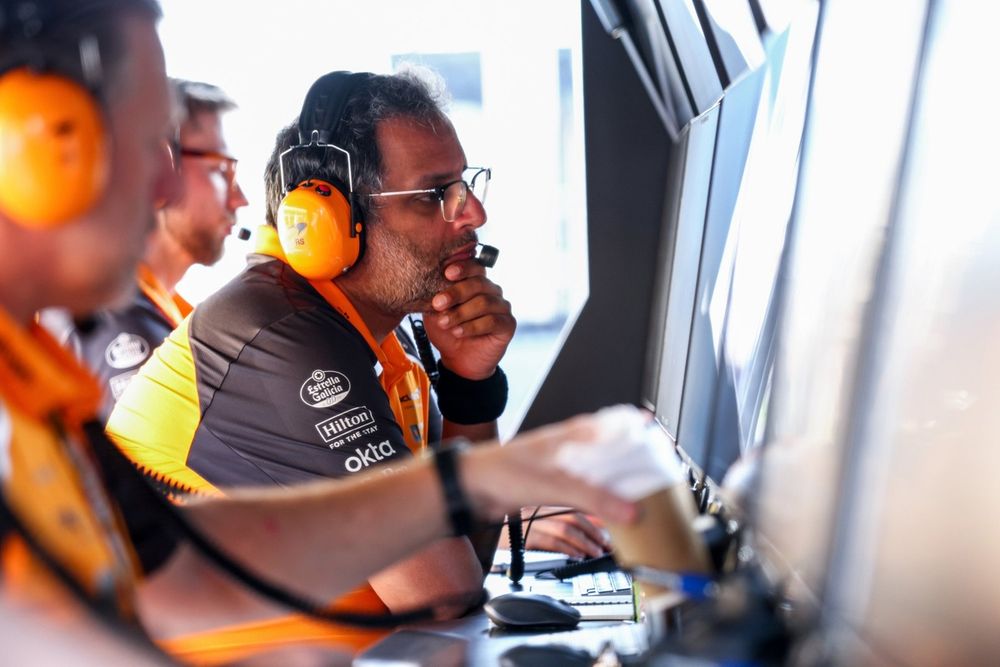
“Every team recognizes how crucial young talent is for the organization. Fresh ideas and perspectives significantly contribute,” remarked Randy Singh, McLaren’s racing director, in a conversation with Autosport. “We have a well-established graduate program at McLaren, and many individuals who have emerged from it are present at the track this weekend, including Oscar’s performance engineer and our lead strategist. It serves as an excellent pathway for sourcing top talent for the team.
“Programs like STEM Racing are tremendously beneficial for young individuals because they teach various aspects of how a Formula 1 team operates, including design, research, as well as marketing and commercial considerations. All of this experience is incredibly valuable.”
Randy Singh, McLaren Racing Director
Photo by: Peter Fox / Getty Images
When asked what advice he has for young people aiming to make their mark in F1 or the broader motorsport industry, Singh responded: “Being involved in any kind of technical endeavor that requires teamwork—be it STEM Racing, Formula Student, rocketry, or even high-level sports, which also have technical elements—equips you well for a fast-paced environment like F1.
“I wouldn’t restrict individuals to a singular pathway; varied experiences can significantly enhance applications. Often, navigating team challenges is a critical aspect that you might not encounter at university until you enter the professional arena, which is very beneficial.”
Despite the event’s longstanding connection to F1 into its 26th year, founder Andrew Denford believes STEM Racing is only beginning to gain significant traction following its 2024 rebrand. “It’s essential to educate people on the necessity of teaching STEM in schools,” remarked Denford, who also leads the Denford company, which supplies CNC tools for educational use.
“We initiated this in 2000 to spark interest in engineering and manufacturing among kids, originally as Jaguar F1 in Schools. When they withdrew from F1, Bernie Ecclestone permitted us to continue using the F1 branding. It has essentially consumed my life. Now we have 77 countries participating in the program, and the standards keep rising. I must be cautious not to delve into technical jargon, as the participants might surpass my knowledge.”
STEM Racing World Final 2026 Singapore
Photo by: STEM Racing
The surge in F1’s popularity following the Netflix series has correspondingly raised the numbers in the program, with STEM Racing now introducing various foundational school initiatives aimed at children as young as six, each with differing complexity.
When asked about his aspirations for what youngsters might gain from STEM Racing, Denford shared: “We want them to discover their strengths. If you consider all the roles; team principal, aerodynamicist, manufacturing engineer, marketing or project manager, they’ll identify what they want to pursue within that group of six.
“They can refine what they’ve learned and apply it to the broader world.”
The future paths of the 2026 finalists remain uncertain. Some may find their way into the F1 paddock, others into aerospace, while some may embark on entirely different career journeys yet to reveal themselves.
Regardless of their chosen direction, they will approach their futures energized by their experiences in Singapore and the skills they developed throughout their journey.
We want to hear from you!
Let us know what you would like to see from us in the future.
Take our survey
– The Autosport.com Team