Ferrari came to Interlagos with a challenge that, not long ago, would have been hard to envision in this context. After a lengthy season striving for competitive performance, the team seems to have finally uncovered many of the solutions that had eluded them regarding the SF-26 Formula 1 car.
The outcomes from the recent grands prix support this newfound progress, but just as Scuderia has regained its capability to vie for race wins, a sensitive situation has surfaced: the dynamic between Lewis Hamilton and Charles Leclerc on the circuit.
The incident that unfolded during the early laps of the Mexico GP continues to be a topic of major discussion. The clash between the two Ferrari drivers jeopardized a Sunday that might have yielded a significantly different outcome for the team and, crucially, highlighted a strain that does not seem to have lightened since the race concluded.
While speaking to journalists at Interlagos yesterday, Hamilton reiterated his stance from Sunday night in Mexico City. There was no retreat from his assertions nor any attempt to diminish the significance of the occurrences. This indicates that the matter still remains open.
There hasn’t been a chance for the two drivers and team principal Fred Vasseur to convene since the Mexico race. Vasseur has returned to Maranello, while Leclerc has gone to spend time with his family ahead of welcoming his child with his wife, Alexandra. Consequently, discussions have been put off until today, when Leclerc arrives at the Interlagos paddock.
This upcoming meeting holds great significance. It’s not so much about determining who was right or wrong in Mexico, but rather about establishing a guiding principle that both drivers need to adhere to: when a Ferrari is in a winning position, the integrity of the team’s goals must not be jeopardized due to an internal conflict.
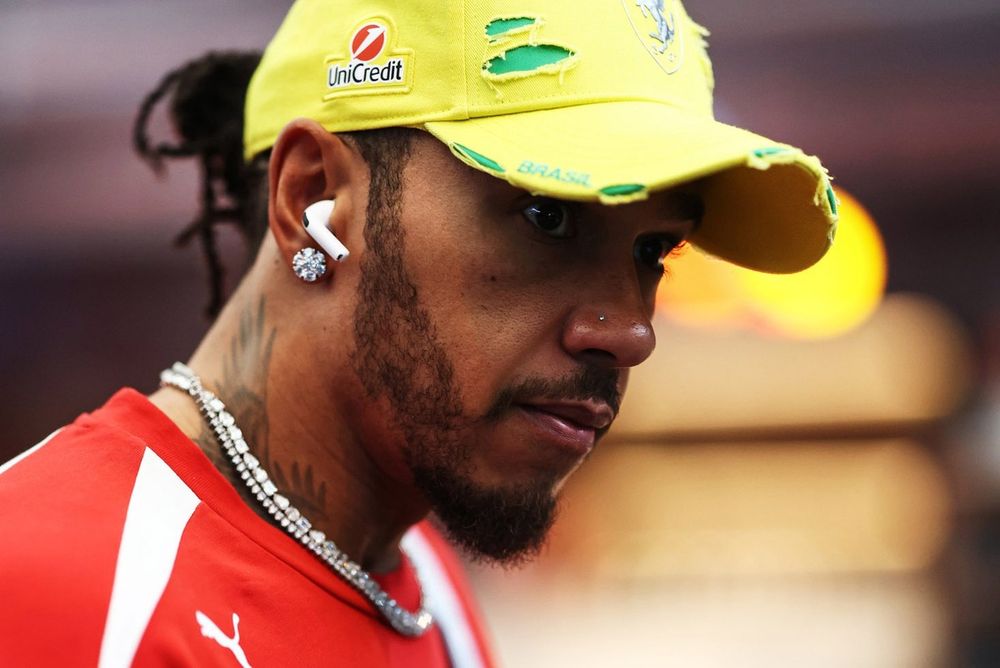
Lewis Hamilton, Ferrari
Photo by: Sam Bloxham / LAT Images via Getty Images
What leads to two drivers, both out of the running for the world championship, reaching such an intense level of tension? The explanation is complex and inevitably involves speculation. Hamilton has spent a considerable portion of his career in a uniquely beneficial situation. Since Nico Rosberg’s retirement at the close of 2016, the British racer has enjoyed signs of strength at Mercedes, a team structured around him. This ideal environment was one where his position was hardly questioned.
Transitioning to Ferrari introduced him to a markedly different atmosphere. Hamilton found himself partnered with a teammate who not only possesses in-depth knowledge of the organization but has also established a robust relationship with Scuderia over the years. For a driver used to being the focal point in his team, sharing that central role can be quite a transition.
Conversely, Leclerc has represented Ferrari since 2019. The Monegasque has faced challenging seasons, acknowledged technical constraints of machines that have often fallen below expectations, and remained a pivotal part of the team’s foundation. It’s entirely reasonable for him to feel he has acquired a status he’s not prepared to relinquish, even with a seven-time world champion in the mix.
Here are two distinct journeys, two assertive personalities, and two drivers motivated enough not to concede. A world championship doesn’t have to be in play to ignite a rivalry; at times, the absence of a shared immediate goal can complicate finding a harmonious balance.
The ironic aspect is that this tension has developed just as Ferrari seems to have addressed many of the issues that plagued its season. Across the last three races, Scuderia has garnered more points than any other team in the constructors’ standings, indicating a substantial change compared to the early part of the season.
The SF-26 has transitioned back into a car that allows both Hamilton and Leclerc to aim for pole positions and victories. However, at this crucial juncture, the team faces the potential risk that an internal feud could undermine the overall result. The events in Mexico illustrated just how precarious the line can be between a competition that spurs on performance and one that could transform a potential win, or even a 1-2 finish, into a squandered chance, resulting instead in second and fourth positions.
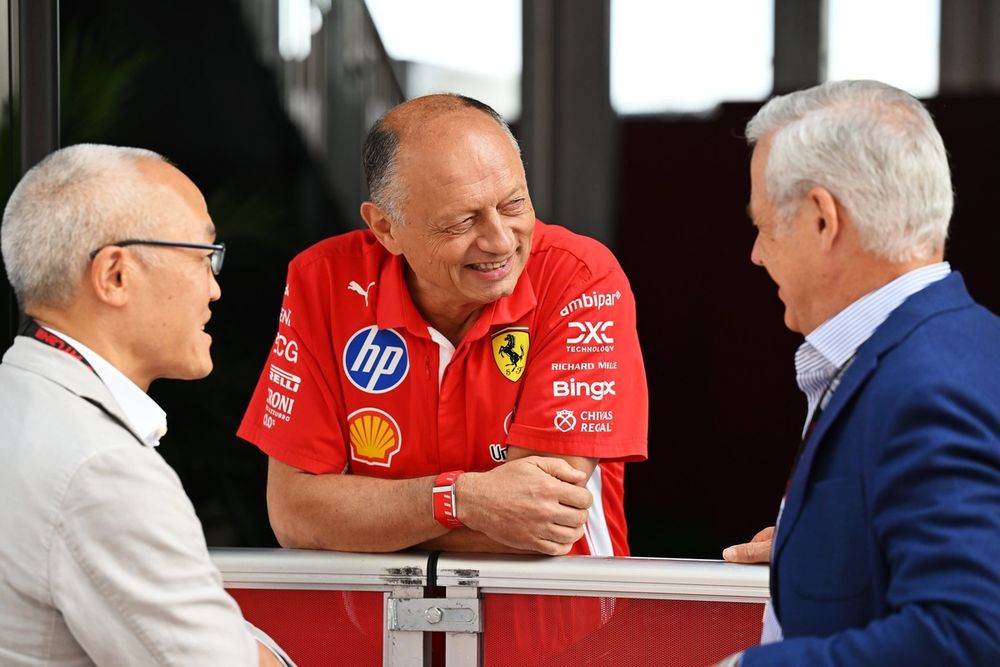
Frederic Vasseur, Ferrari
Photo by: Michael Potts / LAT images via Getty Images
Vasseur’s role
The French team principal now faces one of the most nuanced challenges of his leadership. So far, he has staunchly advocated for his drivers’ liberty to race freely on track, believing that two champions should have the option to compete without undue limitations. This philosophy is logical, yet it hinges on one key requirement: both drivers must acknowledge and respect the boundary where personal rivalry crosses into territory detrimental to the team.
That’s the core agenda for today’s gathering at Interlagos. Hamilton has already made it clear he has no intention of altering his viewpoint. Leclerc’s stance remains to be articulated, as he was not present for yesterday’s media interactions. Vasseur’s role will be to hear both drivers out and, more importantly, to set clear guidelines that leave no room for ambiguity.
However, for this to succeed, the team principal must receive full support from Ferrari’s leadership. This is not merely about backing him in decision-making, even when those decisions are unpopular; it’s about ensuring a unified voice when addressing the drivers—a voice recognized as the ultimate authority.
This principle is critical in managing a team, especially one with drivers possessing the caliber of Hamilton and Leclerc. If directives originate from various individuals, or if there’s even a chance for drivers to seek validation or support elsewhere, the authority of the individual leading the team is likely to be compromised. Ferrari’s leadership must support Vasseur but must also empower him—exclusively—to communicate the team’s position to its drivers. This is the only way to grant decisions full weight and ensure compliance.
Handling two drivers of this level must not be swayed by the gravity of their individual reputations or the potential implications of a decision. If the objective is to restore Ferrari to a position where it can continually contend for championships, the team’s needs should take precedence over individual ambitions. This doesn’t necessarily imply establishing predetermined hierarchies among drivers; rather, it means ensuring decisions made in the best interests of Scuderia are recognized and honored by both drivers without exception.
Another crucial element making the meeting at Interlagos even more significant is that while the 2026 season is nearing its conclusion, Ferrari is already working towards the next championship, aiming to enter the season opener ready to compete for top accolades.
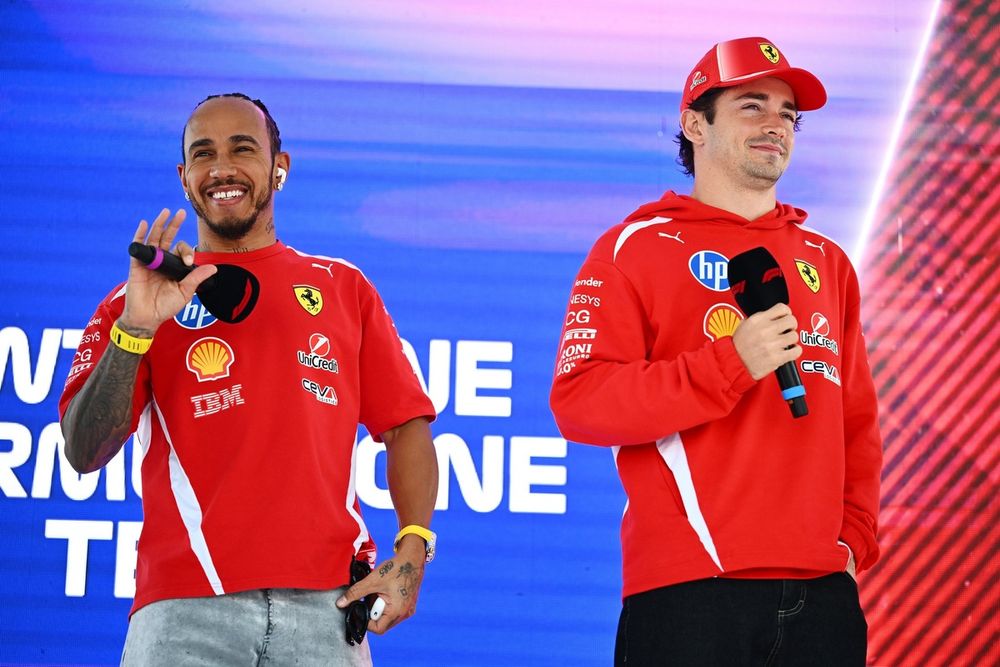
Lewis Hamilton, Ferrari, Charles Leclerc, Ferrari
Photo by: Manuel Eletto / Getty Images
That ambition requires not just a competitive vehicle but also a cohesive atmosphere and an organization where everyone comprehends their role. A possible battle for the world championship would inevitably complicate the management of a rivalry—one that has already demonstrated signs of strain despite the absence of a title to compete for this season.
Hence, the gathering between Vasseur, Hamilton, and Leclerc is about more than simply clarifying what transpired in Mexico. This might mark the pivotal moment when Ferrari lays down the guidelines for how its drivers will collaborate moving forward.
The SF-26 appears to have rediscovered its competitive edge. Now, it’s the team’s responsibility to ensure that, when the opportunity for victory arises, its drivers do not turn it into another lost occasion.
We want to hear from you!
Let us know what you would like to see from us in the future.
Take our survey
– The Autosport.com Team