According to departing commissioner Don Garber, David Beckham initiated the momentum for Major League Soccer, and Lionel Messi is now keeping it moving, elevating MLS into a tournament that holds its own against top divisions globally.
Since taking the helm in 1999, the chief who transformed MLS almost completely—overseeing packed modern arenas, billion-dollar franchises, and global icons like Messi—now harbors hope that Harry Kane might eventually move to America to play in the league while realizing his goal of becoming an NFL kicker. “I would absolutely love to see him pull that off,” Garber remarks.
At 33, Kane is poised to sign an extension with Bayern Munich, yet he has expressed a desire to prolong his career for several years, taking inspiration from his friend and NFL legend Tom Brady, who remained active until age 44. Notably, seven NFL franchise owners also hold stakes in MLS clubs. With Messi guiding the charge, the North American league continues its upward trajectory. “Our goal was to build a league that would make players of Harry Kane’s caliber think, ‘That is where I want to play,'” Garber explains.
Garber: ‘The appreciation for the sport in America has grown significantly’
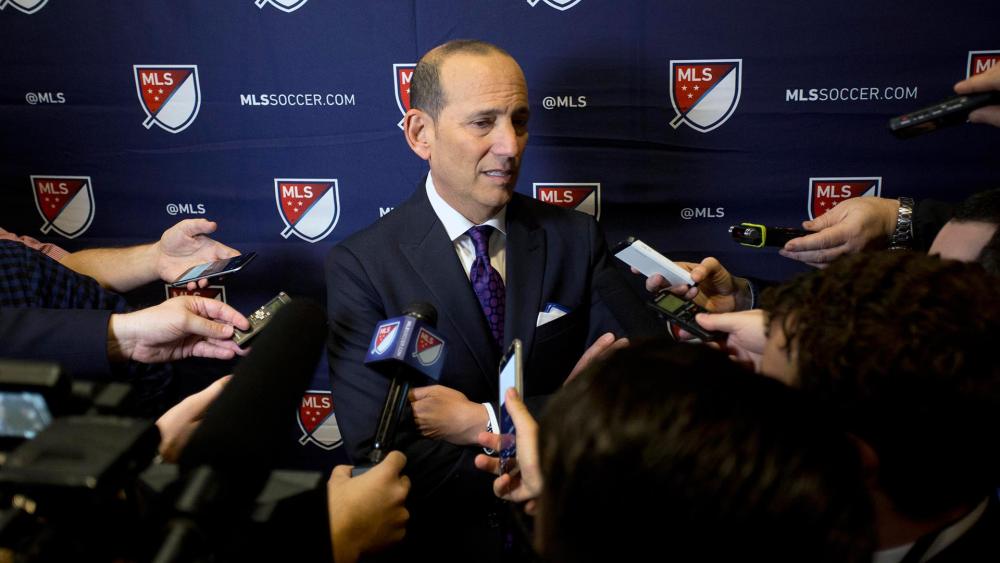
During a brief trip to London, the native New Yorker contemplated the massive influence of the World Cup on the sport in the US, particularly regarding the country’s growing reputation as a true footballing nation.
He notes, “Following the World Cup, the perception has shifted completely, and there is far greater admiration for the progress in the United States. I recall visiting here in the past and being met with utter disbelief. People wondered, ‘Who is this American attempting to establish a soccer league?’ In the UK especially, skeptics doubted we could succeed. But then we entered a period of speculation about David Beckham’s potential arrival.” Ultimately, Beckham joined the LA Galaxy, sparking a massive transformation.
“David guided this competition toward earning real standing and status. He moved to Los Angeles while still in his prime. Negotiations began around 2006, leading to his arrival in 2007. Just a few years earlier, we were discussing potential liquidation.” Indeed, the league had come close to shutting down in 2001.
Consequently, Beckham’s signing was a watershed moment. “His family brought an incredible energy to Los Angeles. I still recall his welcome reception, where the city’s most prominent actors and public figures gathered to greet him. On top of that, his performances on the pitch were outstanding. He proved to the global audience that our league is competitive, enjoyable, and worthy of respect. It proved we could secure elite talent, which subsequently drew stars like Thierry Henry to the New York Red Bulls in 2010, followed by many others.
“Without David’s impact, MLS might not even exist today. However, the league would never have achieved its current global status and captured the world’s attention without Lionel Messi. I am constantly amazed by his fierce drive, his dedication to playing the full 90 minutes no matter the scoreline, his absolute commitment to both Inter Miami and Argentina, and his role as an exemplary teammate.
“It’s wonderful to watch him interact with his children on the pitch. I recently spoke with a prospective MLS investor who resides in the same neighborhood.” Messi, along with his spouse and three boys, lives in Fort Lauderdale, close to the training ground of Inter Miami. “His firstborn is part of the Inter Miami youth academy, playing alongside this investor’s child. The father heads to practice sessions and finds Lionel right there, along with Jordi Alba last season, and Luis Suarez now. They are simply fathers eager to engage with the growing soccer community in America.”
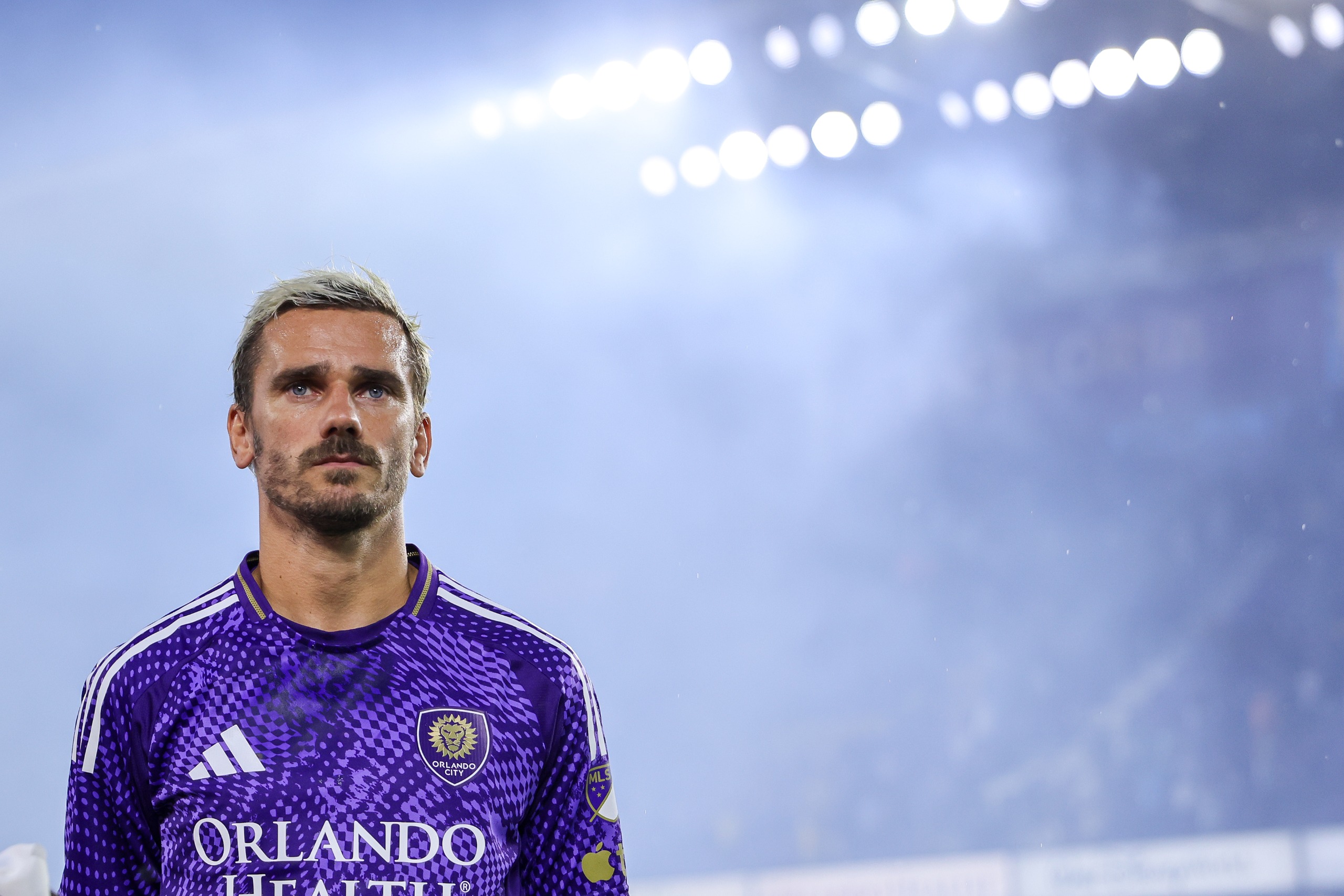
Garber also highlights Antoine Griezmann, 35, who is having a great time in Florida with Orlando City. “He is thrilled with life in Orlando, attending NBA games and delivering strong performances. There used to be a narrative that older players were past their prime and only succeeded here because the league lacked quality. Yet, Messi performs in MLS, goes to the World Cup, and nearly claims the Golden Ball.”
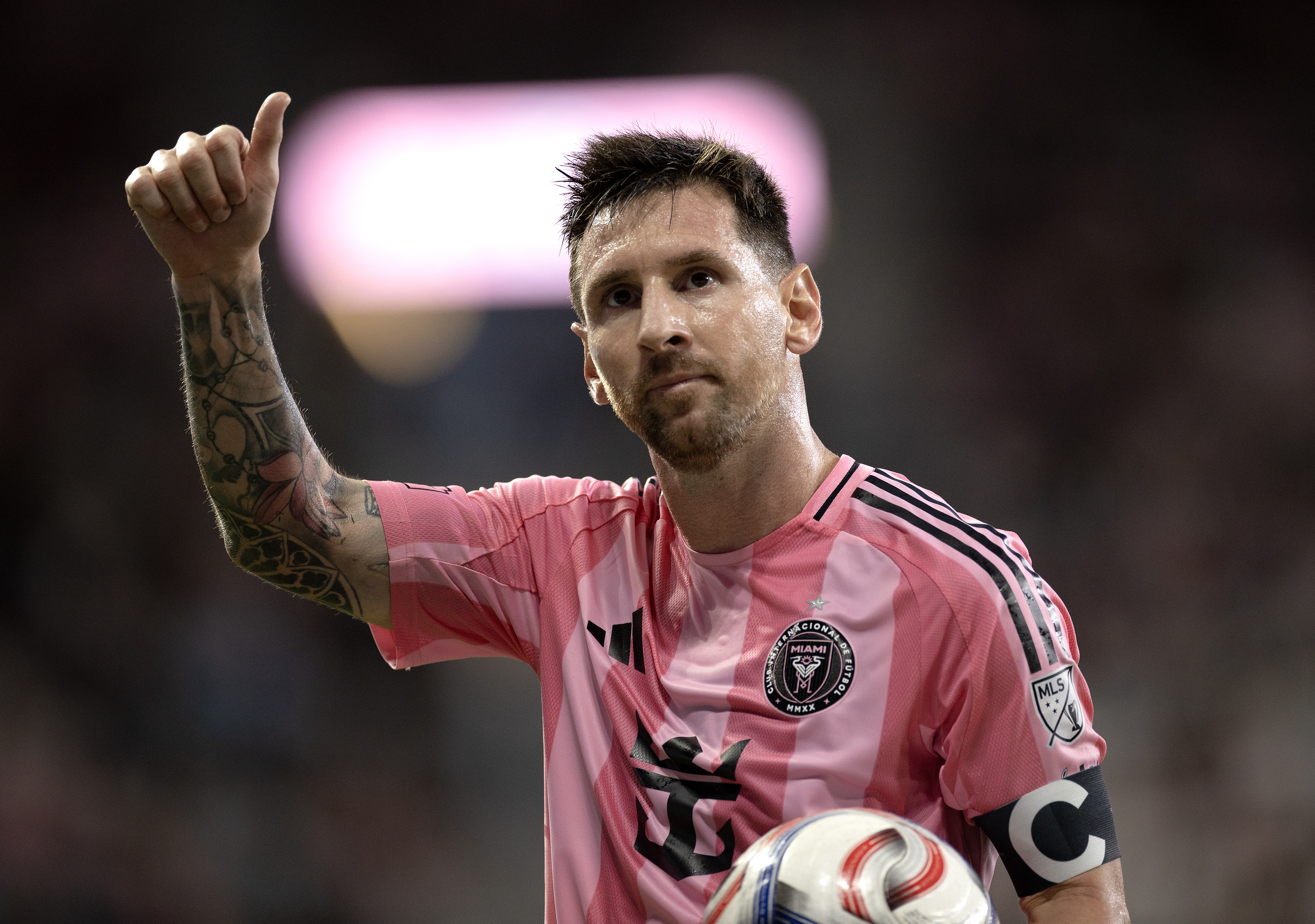
Following an emotional final appearance for Argentina in Buenos Aires, Messi is heading back to Florida for Sunday’s clash with DC United. The events on Tuesday at El Monumental deeply touched Garber. “It was incredibly moving to witness how the city honored him. He is a sportsman, not a religious leader! But he is an extraordinary sportsman. The entire nation embraces him like family because of his character and competitive spirit. He remains modest, reserved, and focused.”
When asked if Messi once gestured disapprovingly at him regarding an officiating decision, Garber chuckles. “I get gestured at by players constantly! It only becomes news because it’s Messi. Ultimately, it is a privilege that youngsters watching our games can say they witnessed him score live. We are fortunate to experience these legends in real time.”
With Messi playing in the US, Garber notes: “His legacy is permanently etched into the story of MLS. His impact transcends any arena, club owner, or commissioner. He arrived with high expectations and fully met them, which is rare. We are proud to be the division he chose to join.”
Garber is eager to keep expanding the league’s profile, a objective that his incoming successor, Harvard MBA graduate and LAFC co-founder Larry Berg, is set to carry forward. “We must increase our competitive edge so that our teams can qualify for the Club World Cup and actually win matches. Miami secured a victory against Porto in 2025. It’s about more than just showing up; we want the football world to believe MLS teams can truly challenge global giants. Can we match up against clubs like Chelsea or PSG today? There is still a significant gap to bridge. However, the financial backing is there—we simply need to elevate our standard of play.”
Domestic talent is consistently coming through. The US men’s national team secured victories against Peru, Chile, Mexico, and Canada in four recent exhibition matches. Rising prospects such as Cavan Sullivan, Julian Hall, Justin Ellis, and Mathis Albert made valuable contributions. “The display from our youth players is highly promising,” Garber notes. Sullivan, the 17-year-old forward from Philadelphia Union, is scheduled to join Manchester City upon reaching his 18th birthday.
“While I would prefer to keep him in our league indefinitely, I expect that future talents of his level might remain past age 18. Given his performance level at 17, interest from European clubs is natural. He is far from an isolated case; Julian Hall, the 18-year-old representing New York Red Bulls, has been in exceptional form, netting three goals during this period. Historically, a single standout would emerge and generate surprise. Today, we have numerous prospects coming through, which highlights the success of our developmental pathway.
“I hope to see more of our homegrown players competing in the elite ranks, specifically starting for major teams in the Champions League. Sullivan is currently among our top earners, which represents a shift in strategy. Previously, we struggled to prevent young talents from leaving at 15. A similar situation is unfolding with Chelsea acquiring FC Dallas’s 15-year-old sensation, Benji Flowers, who will move to Cobham once he turns 18.”
In an increasingly global transfer market, when questioned about the prospect of a unified global league, Garber expresses skepticism. “Whenever clubs bypass their domestic leagues or sacrifice traditional matchdays, it harms the local football culture, which is precisely what makes the English system so special. For instance, a colleague of mine supports Burnley and remains completely devoted to them, regardless of which division they compete in.
“If we alter the system such that clubs lose their deep-rooted, generational ties to their communities for the sake of higher financial returns, it could be damaging. The true value lies in what these clubs represent to their local areas and the shared experiences of families attending games together.
“I opposed the proposed European Super League initially, and my stance remains unchanged. If the goal is a broader global tournament, FIFA’s Club World Cup already serves that purpose.” Having recently hosted the event, the US is well-positioned for future tournaments. “Our previous hosting of the World Cup was highly successful, and our infrastructure features world-class, large-capacity stadiums.”
Acknowledging the skepticism in England toward franchise-style leagues that operate without relegation or promotion, Garber defends the MLS model: “Consider our rapid expansion without those traditional systems. It is impossible to relegate clubs that are actively constructing their foundations. We have incoming ownership groups investing upwards of $1.5 billion into new infrastructure, squads, and training facilities, and there is simply no secondary tier established to accommodate them if they were relegated.”
Looking back at the league’s progression over his 27-year tenure, Garber concludes: “In the past, when I attended the Champions League final and the pre-match dinner, I was usually seated with representatives from obscure UEFA nations. Today, I find myself sitting at the head of the table.”