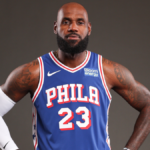
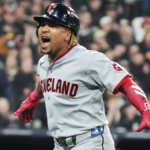
According to various reports, DeMar DeRozan is set to play his 18th NBA season with the Denver Nuggets after committing to a one-year, league-minimum contract. The seasoned swingman will link up with Nikola Jokic and Jamal Murray in Denver to help address the opening at forward after the Nuggets sent restricted free agent Peyton Watson to the Cleveland Cavaliers via a sign-and-trade earlier this week.
The 37-year-old veteran spent his previous two years representing the Sacramento Kings, registering averages of 20.3 points, 4.3 assists, and 3.4 rebounds per contest with shooting splits of 48.6/32.5/86.2. The Kings released DeRozan earlier this summer, which allowed him to enter free agency.
Following an early exit in the opening round of the postseason, Denver is hoping that DeRozan, Cameron Johnson, and Aaron Gordon can establish a formidable wing rotation to slot in between Jokić and Murray.
DeRozan gives them an extra scoring threat and self-creator on the court, though his integration with this specific Nuggets lineup looks a bit awkward on paper.
To start, DeRozan’s primary offensive limitation has consistently been his outside shot, whereas Denver’s system relies on its perimeter players to space the floor so the Jokić-Murray tandem can dominate. Watson connected on 41.1% of his attempts from deep last season. By contrast, DeRozan hit only 32.5% of his tries from long range, preferring instead to take most of his attempts from the mid-range area.
Denver’s quiet offseason feels like a challenge to Nikola Jokić’s patience
Brad Botkin
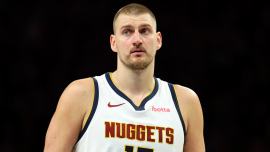
Beyond that, Denver’s offensive flow is highly dependent on Jokić’s playmaking, with the rest of the team playing off his cues. While DeRozan spent more time off the ball with the Kings, he still generated over 61% of his two-point field goals unassisted. Conversely, Watson received assists on 65.2% of his inside-the-arc makes last season, making the task of blending these contrasting styles a compelling challenge for the coaching staff.
On a more positive note, DeRozan could be the engine for the second unit, which has historically been a major weakness for Denver during the Jokić era. His talent for hitting difficult shots might not be necessary when sharing the floor with Jokić, as those lineups usually generate higher-quality opportunities. However, whenever the three-time MVP rests, DeRozan’s value to the team increases dramatically.
How head coach David Adelman manages DeRozan’s minutes and how quickly the wing acclimates to playing with Jokić will go a long way in shaping Denver’s success for the 2026-27 season. Aaron Gordon is a stellar example of someone who accepted a reduced playmaking role next to Jokić and flourished, but that transition isn’t easy for everyone, especially for a star who has achieved as much individual acclaim as DeRozan.
Denver supporters are already feeling uneasy about the front office’s approach to roster construction during Jokić’s peak seasons, and parting with Watson has only fueled worries about their willingness to go all-in on securing another title with the world’s top player.
Whether it’s fair or not, DeRozan will shoulder plenty of expectations to keep the franchise in the championship picture in a tough Western Conference alongside the San Antonio Spurs and Oklahoma City Thunder, despite signing for the league minimum.