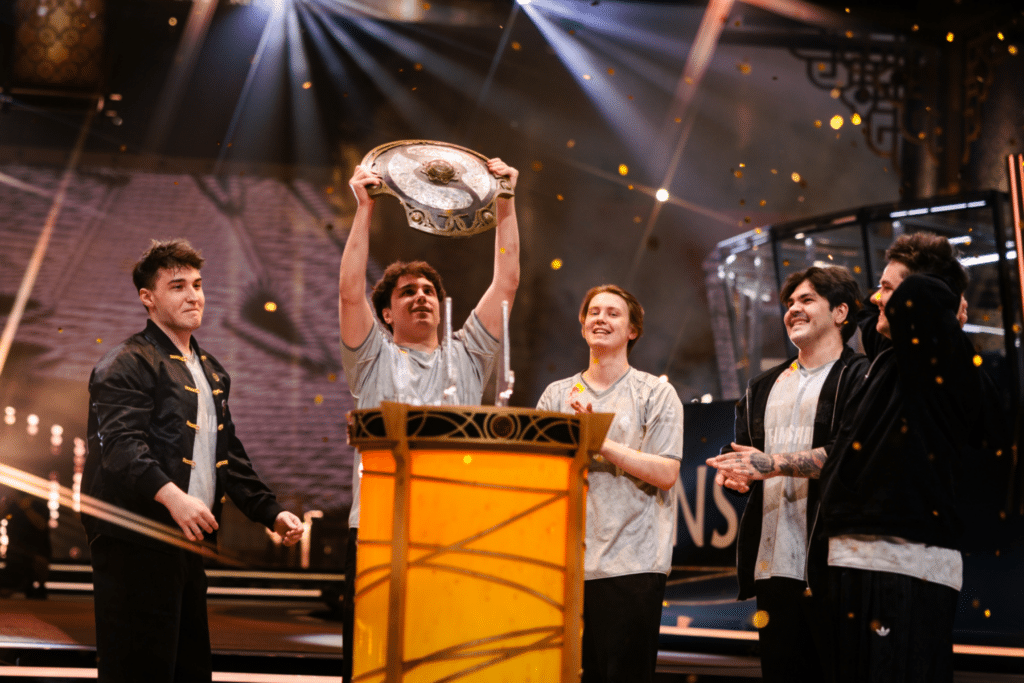
Heading into the grand final of The International 2026 (TI 2026), Team Spirit held an unusual psychological edge: they knew precisely what it was like to be defeated by TEAM VISION.
During the group phase, they suffered a clean 2–0 sweep at the hands of VISION, followed by a tight 2–1 loss in the upper bracket semifinals. Yet, after fighting their way back by crushing Liquid, BoomBoys, and Yandex in the lower bracket, Spirit cracked the code, overcoming the heavy favorites in a thrilling 3–2 series to secure an unprecedented third TI championship.
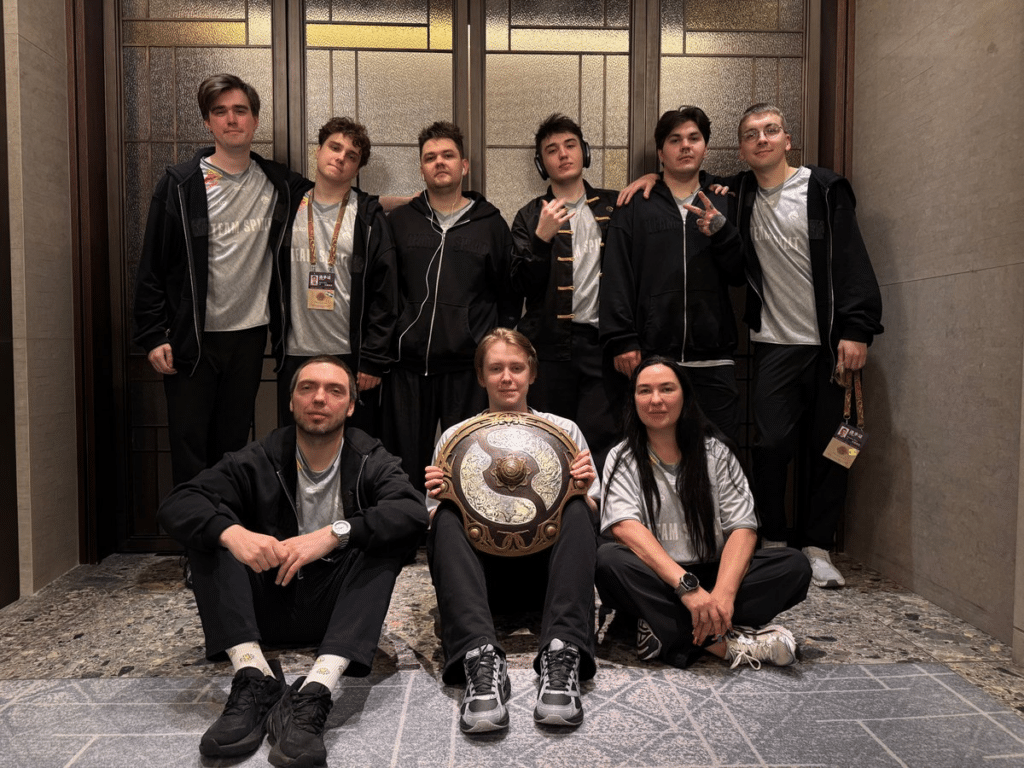
Below is a breakdown of how each Team Spirit member played a crucial part in achieving this historic third Aegis of Champions.
Yatoro: The king asserts dominance over the prince
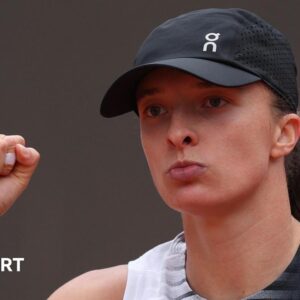
Even before hoisting the Aegis in Shanghai, Illya ‘Yatoro’ Mulyarchuk was widely considered the most legendary carry in the history of Dota 2. Nevertheless, the crown for the tournament’s absolute best performer in that role remained highly contested.
The rising star of TEAM VISION, Alan ‘Satanic’ Gallyamov, had dominated the group phase, shattering records and dismantling almost everyone in his path. This elevated the stakes of the grand final—it wasn’t just a match, but an epic clash between the all-time great and the current sensation. The reigning monarch versus the young successor.
Ultimately, Yatoro demonstrated that his throne is secure, guiding Spirit to become the sole lineup to overcome Satanic and TEAM VISION in a full series throughout TI 2026—achieving this feat when the ultimate prize was on the line.
Yatoro steps up in high-stakes moments
Drawing on his championship pedigree, Yatoro exhibited the cool composure of a two-time International winner, navigating chaotic teamfights with flawless execution. He perfectly gauged his boundaries in high-tension moments where any minor misstep would have shattered Team Spirit’s dream of making history.
While Satanic possessed flashy and explosive mechanics, Yatoro demonstrated how invaluable veterancy becomes when the competitive pressure reaches its absolute peak.
Despite Satanic leading the group stage metrics, Yatoro asserted his dominance during the main bracket. He topped the charts for carry players by ranking first in average kills (11.44), KDA (12.83), GPM (871), XPM (982), and building damage (15,607), all while maintaining the lowest average death count (2.31).
Larl: The foundation of the squad
Denis ‘Larl’ Sigitov is frequently the target of blame when Team Spirit falls short, with detractors claiming he was simply dragged along to his second TI trophy. However, he deserves far more recognition than he gets.
In contrast to other prominent midlaners, Larl realizes he doesn’t have to hog the spotlight. Sharing the stage with veterans like Yatoro and Magomed ‘Collapse’ Khalilov means space is limited. Rather than hogging resources or hunting for clip-worthy plays, he executes his role quietly and efficiently.
His approach to the game isn’t designed to solo-carry matches. You rarely witness him completely shut down opponents in the early lane, but his positioning and map awareness are pristine—and he remains cool under fire. This steadiness was fully on display during the fifth game of the finals.
Larl rises to the occasion in game five
Playing Pangolier, Larl was involved in 31 out of Team Spirit’s 34 kills, registering a massive 91% kill participation rate to lead his roster in the final game.
Additionally, he wrapped up the event with 13 different hero picks, sharing the tournament lead for versatility with Yandex’s Alimzhan ‘watson’ Islambekov and Ilya ‘CHIRA_JUNIOR’ Chirtsov. This vast pool enabled Spirit to switch tactics effortlessly without pigeonholing Larl into a narrow set of heroes.
While Team Spirit boasts top-tier superstars, maintaining that caliber of play requires a selfless anchor like Larl to keep the entire machine running smoothly.
Collapse: Unrivaled in the offlane
Collapse keeps cementing his legacy among the all-time greats of Dota 2. Despite taking a competitive hiatus earlier in the year, he still showed up to the event as the undisputed king of the offlane.
His lane dominance, clutch decision-making, strategic insight, and predictive skills place him in a league of his own. His performance speaks for itself.
His clutch instincts were highly evident in the final game against TEAM VISION. Just as Satanic’s Juggernaut cast Omnislash, Collapse reacted instantly by placing a Lotus Orb on Larl. This split-second decision bounced the ultimate back, neutralizing VISION’s biggest threat and allowing Team Spirit to seize control of the skirmish.
In addition to regularly outclassing his lane matchups, Collapse is a nightmare to ban out. He can seemingly pilot any hero in the offlane, demonstrating this by deploying 12 different characters during the event—the highest count among all offlaners. This expansive repertoire rendered targeted bans virtually useless.
not me: The newcomer embraces the symbolic haircut
Alexey ‘not me’ Kosmynin was the latest recruit to join Team Spirit, moving up from their development team, Yellow Submarine. Remarkably, he had only accumulated roughly three months of top-tier professional experience prior to making his debut on the grand stage in Shanghai.
Watching not me play is akin to observing a predator on the hunt.
He constantly roams the map to initiate plays, hunting down isolated targets and creating strategic advantages. The young talent consistently produced incredible highlights, such as snatching an Aegis using a stolen Sleight of Fist on Rubick, and hitting Satanic with a crucial, long-range Sacred Arrow during the championship-deciding fight.
Beyond the actual gameplay, Team Spirit is legendary for their traditional hair-shaving ritual at TI.
Yatoro set the trend by shaving his head during their championship run in 2021. This year, however, Yatoro spared his locks, passing the torch to the newcomer, not me, who stepped up. He shaved off his beard ahead of the grand final, keeping Spirit’s peculiar good-luck charm alive.
Trading his beard for an Aegis of Champions in his very first TI? Most would call that an excellent bargain.
Rue: The quiet catalyst
Though superstars like Yatoro, Collapse, and not me capture the headlines with spectacular plays, Aleksandr ‘rue’ Filin’s crucial contributions cannot be overlooked.
As one of the youngest members alongside not me, rue transitioned from the soft support role to hard support just three months prior to the tournament. With very little runway, his adaptation was spectacular—especially considering who he was supporting.
He had to quickly form a cohesive lane partnership with Yatoro, the most decorated carry in history, while adapting to the strategic needs of a world-class squad. Despite the immense stress, the coaching staff entrusted him with highly complex heroes like Winter Wyvern on the grandest stage.
Even rival players like Team Falcons’ Andreas ‘Cr1t-’ Nielsen noted the immense difficulty of his task.
Although rue remained a stable force throughout the event, his defining moment occurred in the fifth game of the finals.
In the ultimate engagement, rue used Nightmare to save Yatoro’s Lifestealer with flawless timing, shielding him from TEAM VISION‘s burst damage and enabling a devastating counter-attack. In a razor-thin match, this decision arguably secured the championship for Team Spirit.
Miposhka: The drafting architect
Yaroslav ‘Miposhka’ Naidenov remains a cornerstone of Team Spirit’s legacy. After guiding the team to two championships as captain, he shifted to a coaching role, offering vital tactical support from the sidelines.
Throughout the finals, Miposhka and the support staff avoided overcomplicating their drafts, choosing clean, straightforward strategies that players could execute with confidence.
When TEAM VISION locked in Ember Spirit in game one, Spirit countered immediately by drafting Slark. Up to that point, Slark had appeared only five times in the tournament—exclusively as a lane counter to Ember—maintaining a flawless 100% win rate across those matches.
The pick forced TEAM VISION to shift Ember Spirit into the safe lane, where the hero failed to generate any real impact. Consequently, Spirit controlled the map and cruised to an easy victory to start the series.
Lifestealer emerges as the crucial pick
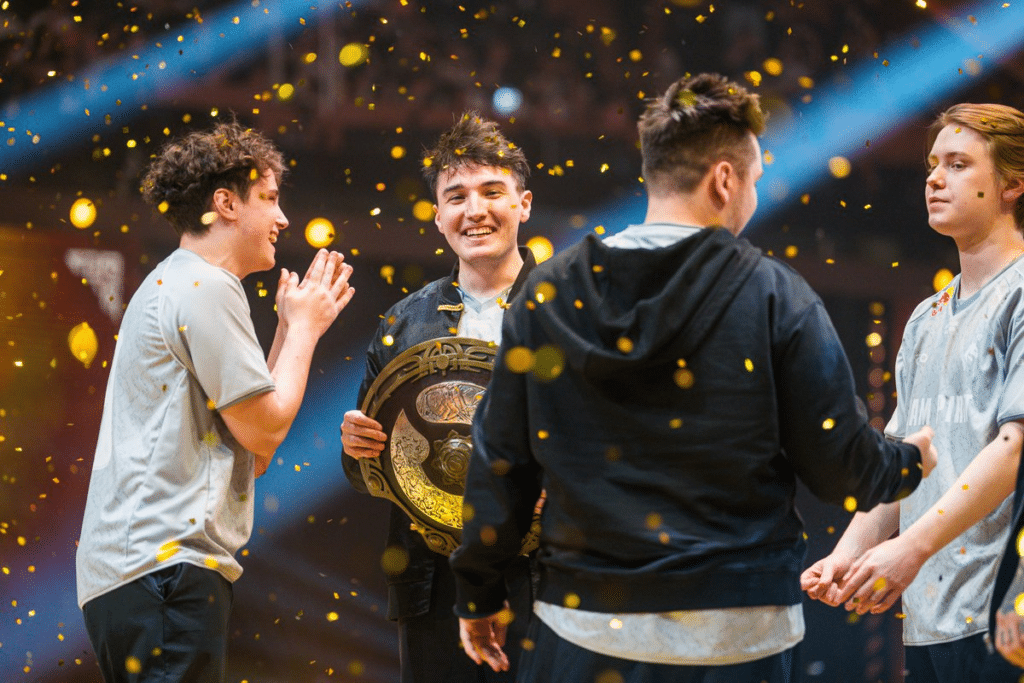
The coaching staff noted that TEAM VISION secured wins in games two and four using Lifestealer. To prevent Satanic from playing it in the final match, Spirit fast-picked the hero for Yatoro instead.
In long grand finals, the established meta often breaks down, replaced by draft trends unique to the matchup. Lifestealer became the focal point of the finals, securing a win in every match the hero was drafted.
In the final game, Miposhka prioritized Bane in the first phase—a hero Spirit had selected just twice before during the event. Since the series revolved around the performance of Yatoro and Satanic, Bane served as an ideal tool to control the enemy carry via Nightmare and Fiend’s Grip.
While these choices weren’t overly flashy, they served their purpose. The pressure of a TI grand final can make execution difficult, so Miposhka focused on simple, reliable setups rather than over-drafting, enabling his team to execute their win conditions cleanly.
Summary of the historic win
Team Spirit’s championship run at TI 2026 wasn’t a solo carrying effort. Their victory was built on a collective understanding, with each competitor executing their specific role perfectly.
Yatoro performed at his peak in the decider, Larl offered a steady presence, Collapse delivered game-winning plays, the newcomers not me and rue played fearlessly, and Miposhka stayed ahead in the draft war.
Having fallen to TEAM VISION in earlier rounds, Spirit adapted to conquer the matchup when it mattered most. Yatoro remains the king of the carry role, but his triumph in Shanghai was a complete team effort.