The Formula 1 Spanish Grand Prix unfolded precisely in the manner many competitors had anticipated. On Saturday, Max Verstappen remarked that he failed to spot even one chance for passing, telling Dutch journalists, “Just hand me the track layout,” implying he would implement extensive modifications.
Come Sunday, passing proved nearly impossible, leaving a distinct atmosphere in the paddock post-race: while the Madrid circuit offers excitement during a single qualifying lap, particularly for those behind the wheel, the actual racing spectacle was exceptionally dull.
When Autosport mentioned that numerous journalists in the press room nearly drifted off during the inaugural race at the IFEMA venue, Gabriel Bortoleto admitted: “I nearly dozed off myself!”
Even the Grand Prix victor, Kimi Antonelli, echoed this sentiment. Although the series leader relished the qualifying session, he found no enjoyment in the race itself.
“It certainly fails to produce passing zones and fails to encourage you to attempt a maneuver, since eighty percent of the time it could result in a collision,” the Mercedes competitor observed after the checkered flag.
“Particularly at the second chicane, had I committed to the turn, Lando and I would have collided, likely ending up in the barriers and obstructing the track. It certainly would have ended badly.
“Consequently, I believe certain turns require alteration to generate better overtaking zones, because as it stands, while it is enjoyable for a single hot lap, you are completely trapped in procession during the race.”
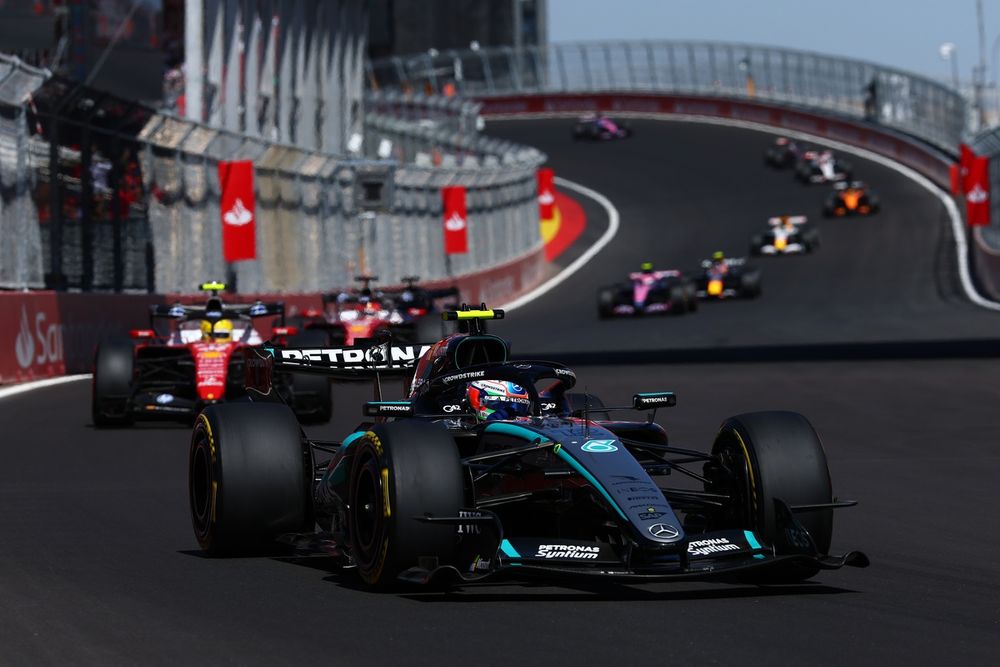
Antonelli remarks that passing attempts in Madrid are highly likely to cause accidents
Photo by: Clive Mason / Getty Images
The grid had anticipated these issues beforehand, particularly because the track architects had not consulted them during the design phase. Verstappen pointed out that such feedback was only requested in Jeddah after the circuit was deemed hazardous in its debut season, unlike modern additions like the Madrid track.
Moving forward, competitors hope to see this approach revised. Among them is Haas racer Oliver Bearman, who suffered a major accident during Saturday’s final practice session, preventing him from participating in qualifying.
“Simply examining the map makes it obvious that this layout is highly unsuitable for competitive racing,” Bearman commented when questioned by Autosport regarding the absence of passes.
“Honestly, when you turn up and look at the design, you wonder what they expect us to achieve. It is quite disappointing.”
In his view, a pair of elements contribute to this issue, rendering offensive maneuvers incredibly challenging while making defensive driving effortless.
“Not only are there numerous extended, combined corner exits where traction is extremely difficult to find, but the entries are also combined. It becomes very simple to defend aggressively or even hazardously, making it nearly impossible to pull off a move.
“We brought this to the FIA’s attention on Friday, and a solution must be found to make the circuit more engaging, because while it is undoubtedly thrilling to drive, the racing itself is incredibly lackluster.”
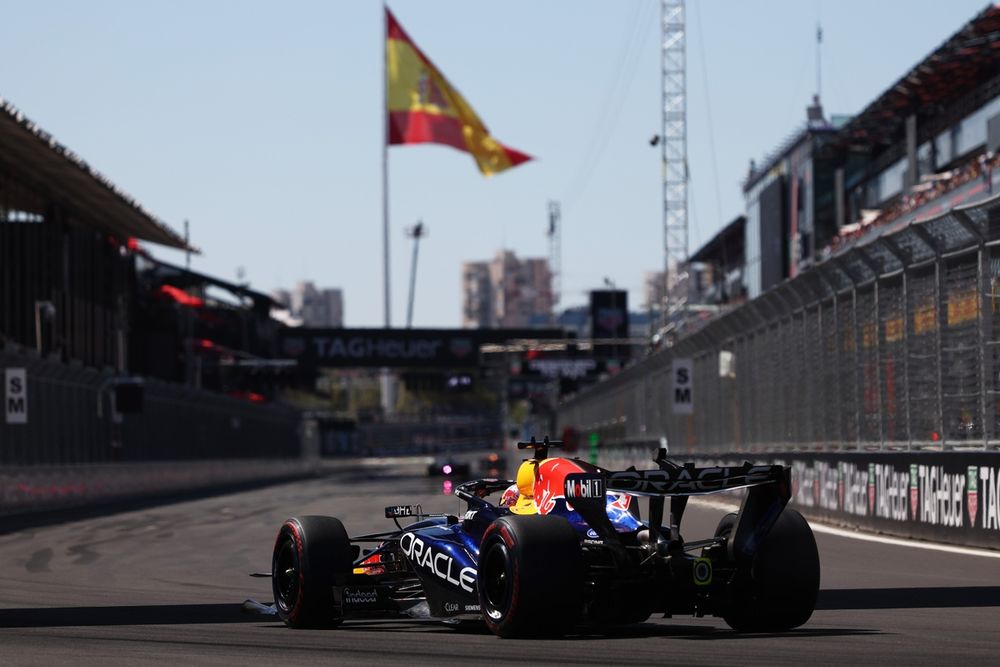
Verstappen previously noted on Saturday that passing chances seemed non-existent
Photo by: Peter Fox / Getty Images
Alex Albon concluded that the concerns Bearman identified from the blueprint were swiftly validated during the support category races over the weekend.
“I trust there will be a willingness to introduce some layout adjustments for next season,” the Williams racer remarked. “Ultimately, if Formula 3 machinery is unable to pass, you can guarantee there will be zero overtaking throughout the entire event.
“I believe only a few minor alterations are required to resolve the issue. Aside from that, it is actually a decent venue. It is quite enjoyable to drive, though as the sessions showed, the actual racing is rather tedious.”
Three key zones for improvement at the Madrid circuit for 2027
Although Albon suggests that only slight modifications are required for the 2027 edition, various drivers put forward multiple recommendations over the weekend, initiated by the Williams driver himself.
“Much of the issue lies between Turn 3 and Turn 5. That entire section should be redesigned, perhaps with more linear braking zones. That chicane needs to go; it might look dramatic, but it ruins the racing,” Albon explained.
“Furthermore, despite being impressive, the banking at Turn 13 isn’t delivering the desired effect. Perhaps Turn 13 should be modified into a slower bend with a more substantial braking area.”
Beyond the fact that the chicane at Turns 5 and 6 hampers passing, Bortoleto experienced an additional issue during Sunday’s race.
“Specifically, the bump at Turn 5—enduring that for 50 laps leaves you with a severe headache by the finish. It is certainly grueling on the physical side,” the Audi driver explained.
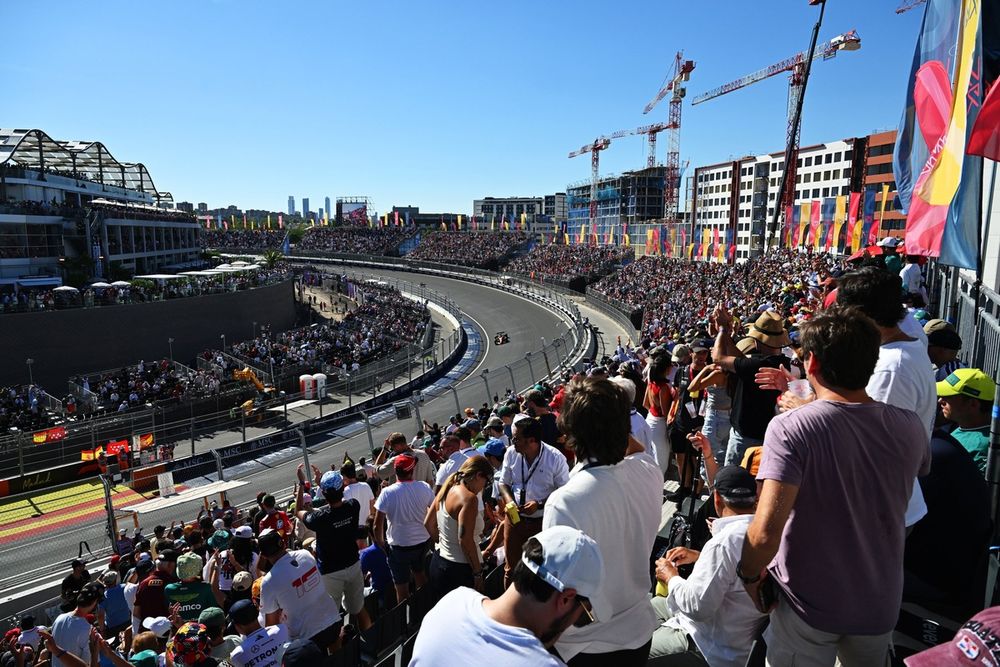
Competitors believe turns 5 and 6 require modifications, while Albon notes the banking fails to provide sufficient assistance
Photo by: Michael Potts / LAT Images via Getty Images
In addition to the Turn 5 area—which drivers identify as the main bottleneck—Lando Norris proposed an alteration for the final sector of the track.
“I believe there are highly apparent modifications they ought to implement. Turns 18 and 19 should be eliminated completely as they serve no purpose. Extending the straight directly into a hairpin would be far better. It baffles me how anyone could review this layout and call it perfect. There is definitely massive room for improvement.”
Such an adjustment would align with what the defending world champion regards as an exemplary layout: the Circuit of the Americas.
“In my opinion, it is not an outstanding racing venue. While exciting in qualifying, a direct path from Turn 17 to Turn 20, incorporating a broader entry similar to Turn 1 or Turn 10 in Austin—a massive hairpin—would drastically improve things. This would open up genuine overtaking opportunities and make the race far more engaging.
“Some modifications are straightforward while others are more complex, such as the section from Turn 5 to 7. It is difficult to pinpoint the ideal solution. Having to negotiate a bend while braking essentially undermines the core mechanics of racing. Consequently, they could apply simple adjustments alongside more demanding ones, and I sincerely hope they do so to make the event much more thrilling for the audience.”
Alongside revisions to Turns 5-6 and 18-19, competitors are lobbying for another modification: a condensed pit lane designed to foster multi-stop races and expand strategic options.
Share your thoughts with us!
Tell us what content you would like to see here going forward.
Participate in our poll
– The Team at Autosport.com