The opening of the 2026 Formula 1 season’s inaugural wet-weather Grand Prix dissolved into utter confusion. Race leader Max Verstappen was the initial driver to experience a sudden power loss while navigating the formation laps at low speed behind the safety car, closely followed by Lewis Hamilton grinding to a halt and a chain reaction of other competitors doing the same.
Officials had no choice but to halt the formation lap by waving the red flag, resulting in a forty-minute postponement before spectators could witness any actual racing.
Nikolas Tombazis, the FIA’s single-seater director, verified to various news outlets, including Autosport, that the disruption was triggered by a software glitch in the system provided by the governing body, which had been jointly designed with the teams over several seasons.
“Due to the lack of wet track sessions this year, we were unable to conduct the level of comprehensive software testing we desired. A unique convergence of factors ultimately triggered this particular error,” Tombazis explained in a hastily arranged press briefing after the event.
“Essentially, several vehicles moved at extremely slow speeds and nearly stopped during the warm-up lap. This created a compression effect down the field, causing certain cars to grind to a near-total halt. The software glitch subsequently blocked the power unit from resetting and allowing the drivers to resume driving.”
This issue is intimately tied to the regulation that caps electrical deployment at 250kW when racing in wet conditions.
Even though multiple organizations—including Red Bull and Racing Bulls—had trialed the necessary code, it was never evaluated under safety car protocols, meaning it had never been subjected to such minimal velocities.
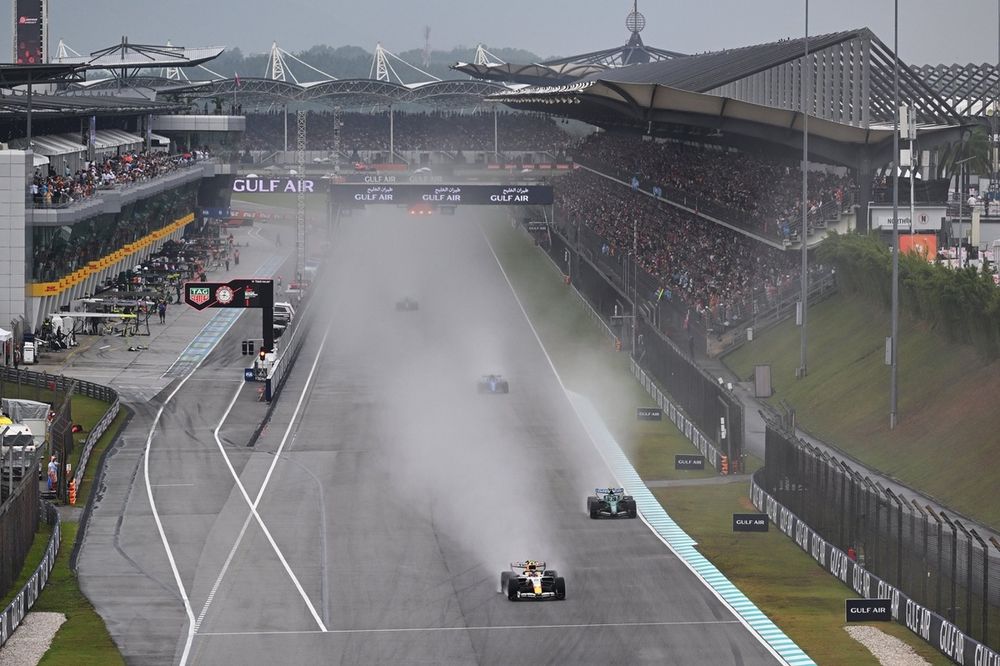
Aston Martin’s Fernando Alonso and Racing Bulls driver Liam Lawson
Photo by: Sam Bagnall / Sutton Images via Getty Images
These low velocities occurred in specific micro-sectors at the Sepang International Circuit, triggering a domino effect of technical failures.
“The issue arose predominantly in sections where maximum power was restricted. While the precise speed threshold remains unclear, cars dropping below that limit fell into an operational loop, preventing them from accelerating again and making them appear stranded.”
On track, competitors were left with the sensation that their gas pedal had been disconnected, an experience Haas rookie Oliver Bearman described to reporters with visible astonishment.
“I have never encountered anything quite like it. It was shocking to realize… I had no idea the FIA possessed the capability to override our accelerator input. To be honest, it was quite alarming,” the Haas driver remarked.
“My accelerator simply went dead. It felt completely uncoupled, with the engine just sitting at idle. It was incredibly bizarre and quite a shock.”
A major point of inquiry is why the traditional combustion engine was impacted as well, given that this should not occur during low-speed running. While the FIA has yet to release an official explanation, early theories suggest the glitch redirected all throttle commands toward battery regeneration for the MGU-K, leaving drivers with zero engine response when pressing the pedal.
Initially, teams running Mercedes power units seemed to escape the worst of the trouble compared to rival manufacturers, but Tombazis clarified that this was not due to any design advantage. Instead, it was purely a consequence of the exact speeds maintained through particular track sectors.
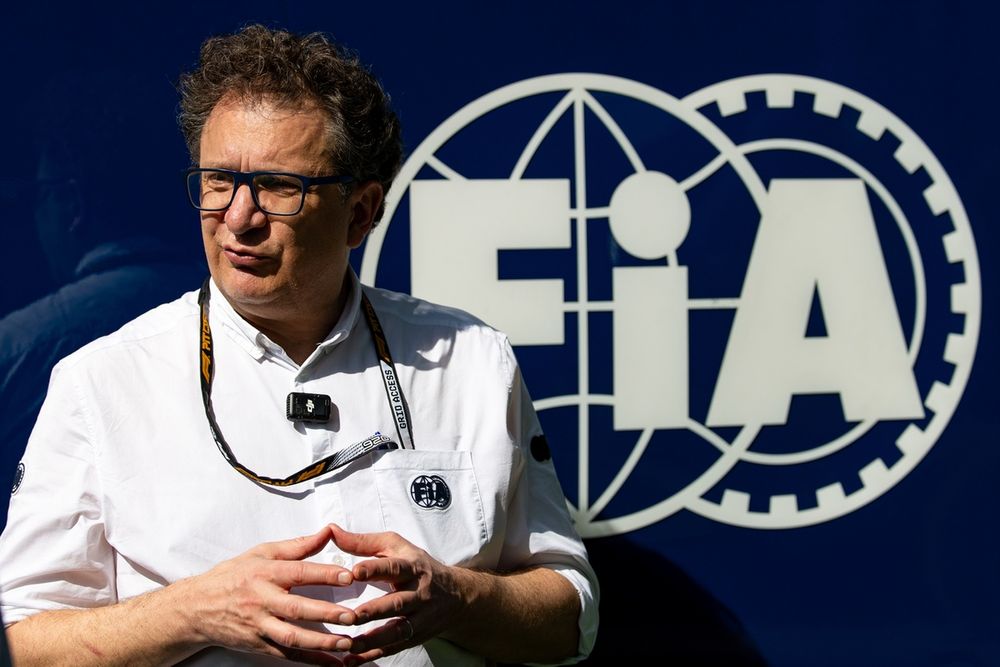
Nikolas Tombazis from the FIA
Photo by: Kym Illman / Getty Images
“The field didn’t decelerate uniformly during the warm-up lap. Because of the accordion effect, Max dropped his pace significantly at the head of the pack, forcing trailing drivers to anchor on their brakes in surprise. This variance meant only certain vehicles triggered the software glitch while others avoided it entirely.”
The method behind the FIA’s rapid software hotfix for F1 teams
The governing body was forced to move swiftly to ensure the event near Kuala Lumpur could begin, as Tombazis detailed when questioned by Autosport.
“Thankfully, our technical staff identified the root cause of the problem almost immediately. I believe the patch was implemented highly professionally, even though it was a race against the clock. Our main goal was to restart the track action promptly, and our response window was remarkably tight,” he noted.
“While it wasn’t a flawless remedy and we obviously lacked the time to run validation tests on the changes, it was the most effective way to manage the crisis in that moment.”
In execution, the patch involved the FIA disabling the electrical output restrictions—specifically the 250kW cap—within the precise micro-sectors where crawling speeds had triggered the software crash. While clearly not a robust long-term resolution, this temporary workaround was essential to get the Grand Prix underway.
“We bypassed the power limitations in specific areas of the track,” Tombazis confirmed. “We obviously did not have the luxury of several days to refine the software; we had mere minutes. Fortunately, we implemented the change successfully without jeopardizing driver safety, competition integrity, or sporting equity.”
What caused the system failure to occur?
Following the FIA’s patch release, every competitor had to upload the revised software to their cars, accounting for the lengthy delay before the track went green. Although this intervention rescued the event in Malaysia, questions remain as to how the FIA overlooked this vulnerability during pre-season development and why it remained dormant until the sixteenth round of the calendar.
“The system had undergone evaluation, but simply not under those exact parameters,” Tombazis defended. “We were caught off guard by the cars dropping to such minimal velocities, which had not been factored into our simulation models.”
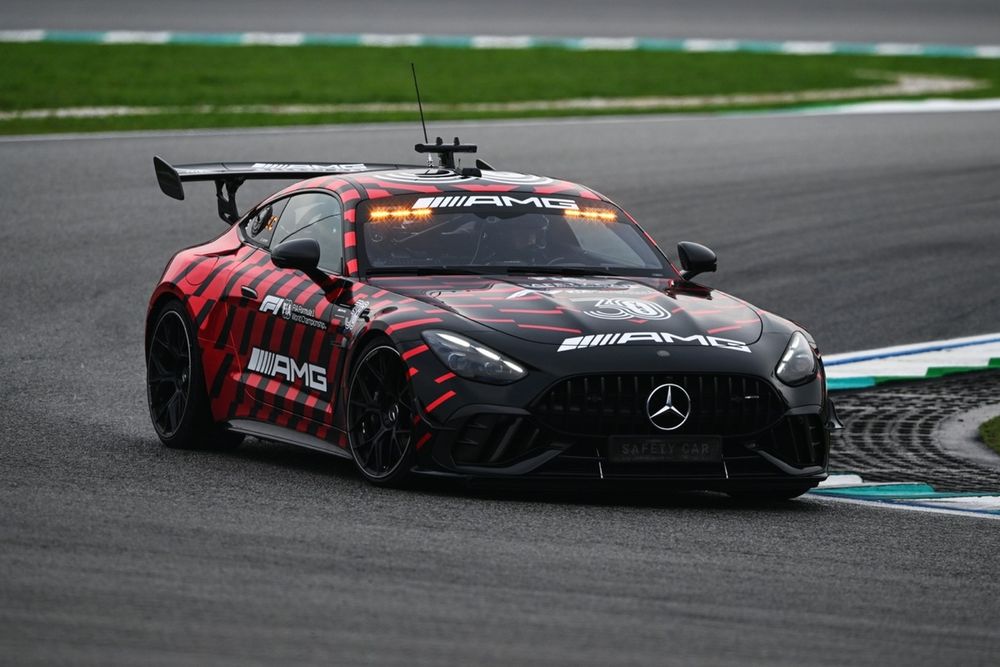
The official FIA Safety Car on track
Photo by: Rudy Carezzevoli / Getty Images
The minimal speeds in question were naturally never reached during the tire testing sessions where the code was trialed. However, critics point out a glaring oversight: wet-weather races frequently trigger safety car interventions, making low-speed running highly probable. Many wonder if the FIA should have foreseen this scenario, pointing to it as a major lapse in planning.
When posed this question by Autosport, Tombazis countered: “Ultimately, every software glitch stems from human error. No program is completely immune to defects or the need for patches; even a standard personal computer receives system updates every few days to resolve hidden bugs.”
“Naturally, the goal is always to foresee these issues, but occasionally a highly unusual sequence of variables slips through the cracks and causes a failure. Had we been allocated more development and track-testing time, we likely would have detected and resolved the issue before it disrupted a race weekend.”
Despite having identified the underlying issue and deployed a provisional solution, the governing body must conduct a thorough internal review to guarantee a similar system crash never recurs.
“We would certainly prefer a less complex system, but managing such massive quantities of electrical power introduces significant complications. Given that the grand prix concluded only an hour ago, we have not yet conducted a comprehensive post-mortem to determine how to prevent this from repeating.”
“After every Grand Prix weekend, we hold an in-depth review to analyze critical system vulnerabilities. This was clearly a major point of failure, and we must take steps to eliminate it going forward.”
“Can I promise there will never be another software issue? For this precise bug, yes; for software anomalies in general, no. However, we will work tirelessly to prevent any future occurrences.”